Selecting the right resin is crucial for production efficiency and profitability in polymer processing. Different polyethylene resins offer varying performance, and not every grade is suitable for all applications. This guide helps converters, film manufacturers, and sourcing managers identify the best options for their needs.
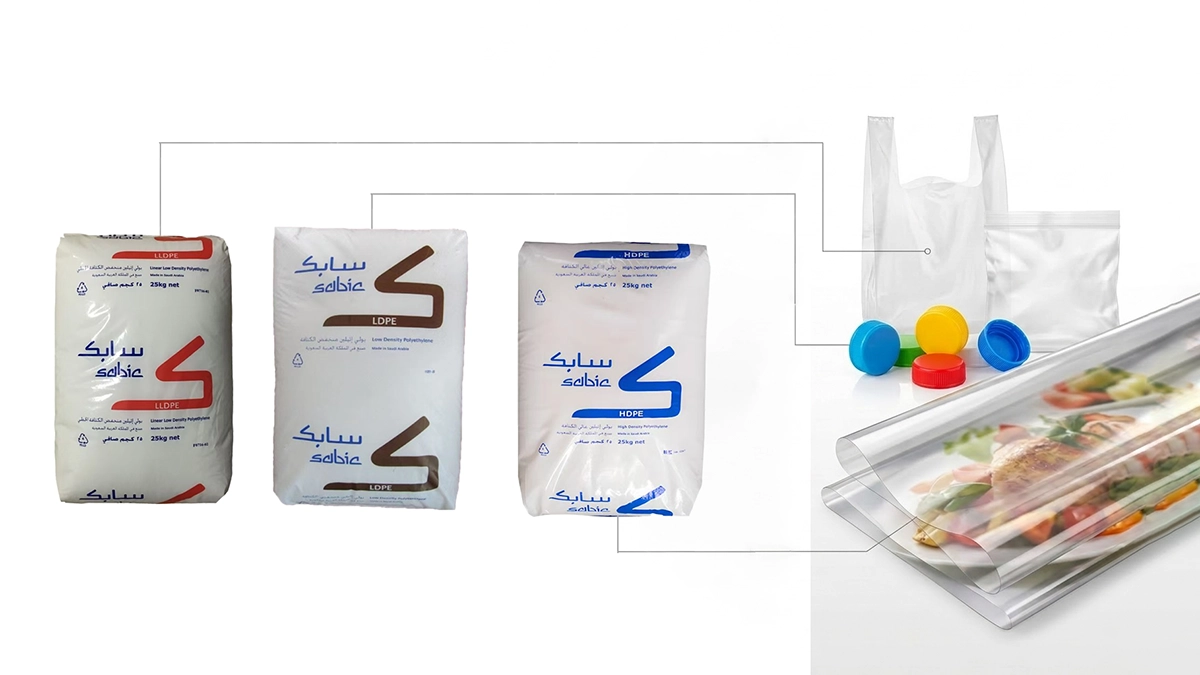
Why choose SABIC PE? Its global reputation for consistent quality, precise processability, and broad performance versatility ensures that your production lines run efficiently while meeting regulatory and customer requirements. Different density classes (LLDPE, LDPE, HDPE) offer distinct mechanical and thermal properties, enabling targeted solutions for flexible packaging, rigid molding, or industrial films.
With this guide, we will first explore SABIC PE categories, then dive into technical specifications, grade comparisons, and practical application recommendations—helping you make informed resin selections with confidence.
📖 Quick Navigation: Jump to Section
Popular SABIC PE Grades & Core Applications
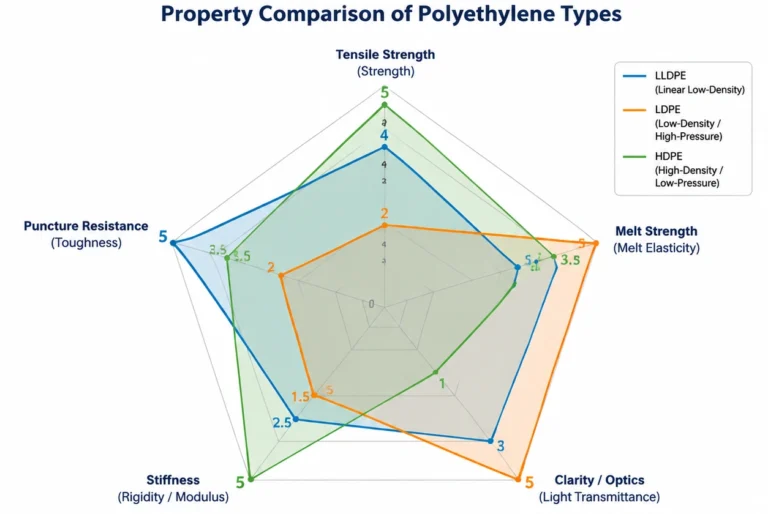
SABIC divides its Polyethylene portfolio into three primary categories—Linear Low-Density Polyethylene (LLDPE), Low-Density Polyethylene (LDPE), and High-Density Polyethylene (HDPE)—each engineered for specific manufacturing methodologies and product performance standards.
SABIC LLDPE: Exceptional Strength and Down-Gauging Potential
Linear Low-Density Polyethylene delivers the outstanding tensile strength, puncture resistance, and elongation properties required for modern flexible packaging and stretch film production.
SABIC LLDPE 118NJA
- Type: Butene-copolymer (C₄) grade (TNPP-free, no slip, no antiblock additives)
- Core Characteristics: Utilizes a specialized TNPP-free (Tris(nonylphenyl)phosphite-free) stabilization system, ensuring compliance with the strictest international food-contact regulations.
- Best For: Premium food packaging, lamination films, co-extrusion barrier structures, and industrial packaging destined for export markets (such as North America and Europe) with strict chemical-free mandates.
SABIC LLDPE 118NE
- Type: Butene-copolymer (C₄) grade (no slip, no antiblock additives)
- Core Characteristics: Delivers remarkable melt drawability, excellent puncture resistance, and toughness. The absence of slip or antiblock agents allows converters to customize friction levels during blending.
- Best For: Industrial stretch wrap, heavy-duty shipping bags, agricultural liners, and general-purpose co-extruded films.
📌 Deep-Dive Technical Comparison: Struggling to choose between these two similar grades? Read our hands-on technical breakdown: SABIC LLDPE 118NJA vs 118NE: What’s the Difference and How to Choose? to understand which stabilizer package fits your machinery and export regulatory compliance.
SABIC LDPE: Excellent Optical Clarity and Melt Strength
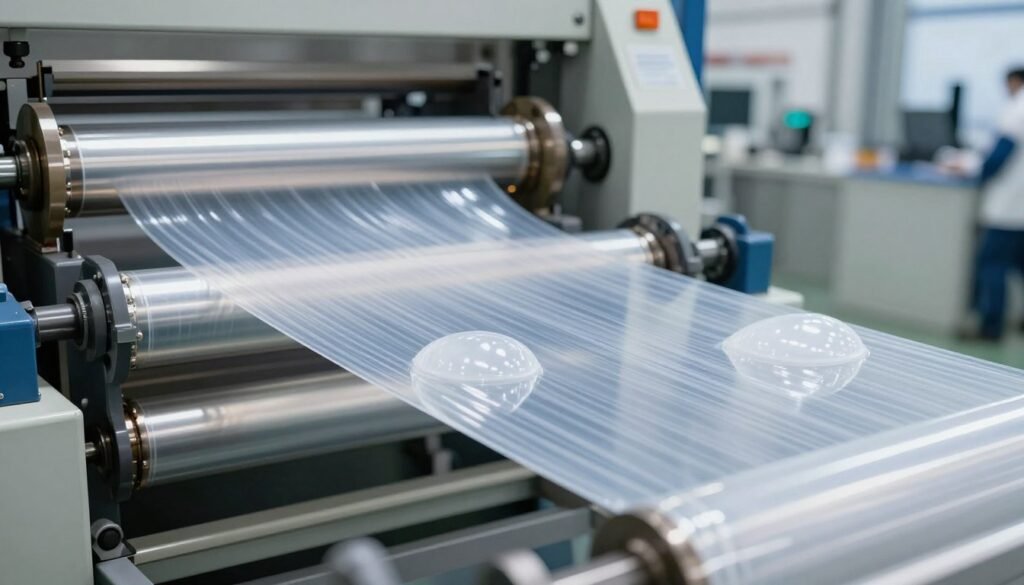
SABIC’s Low-Density Polyethylene grades target applications requiring high optical clarity, ease of processing, and excellent melt strength—critical properties for maintaining bubble stability on blown film lines.
SABIC LDPE HP2022
- Core Characteristics: Combines superb processability and excellent drawdown with superior optical clarity (low haze and high gloss).
- Best Applications:
- Flexible packaging (e.g., snack wrappers, bakery films)
- Food wrapping (retail fresh foods)
- High-clarity shrink films (visual shelf appeal critical)
- Lamination films (maintaining sealing integrity)
SABIC HDPE: High Stiffness and Chemical Resistance
High-Density Polyethylene provides the high rigidity, environmental stress crack resistance (ESCR), and mechanical toughness required for high-performance rigid packaging.
SABIC HDPE F00952
- Type: High-molecular-weight HDPE (HMW-HDPE)
- Core Characteristics: Features outstanding stiffness, impact strength, and processing stability under high-shear conditions.
- Best For: Ultra-thin, high-strength shopping bags, heavy-duty trash liners, and multi-wall sack inner liners.
SABIC HDPE ICP5602
- Core Characteristics: Formulated specifically for injection molding and organoleptic applications, delivering exceptional taste and odor neutrality alongside superior stiffness.
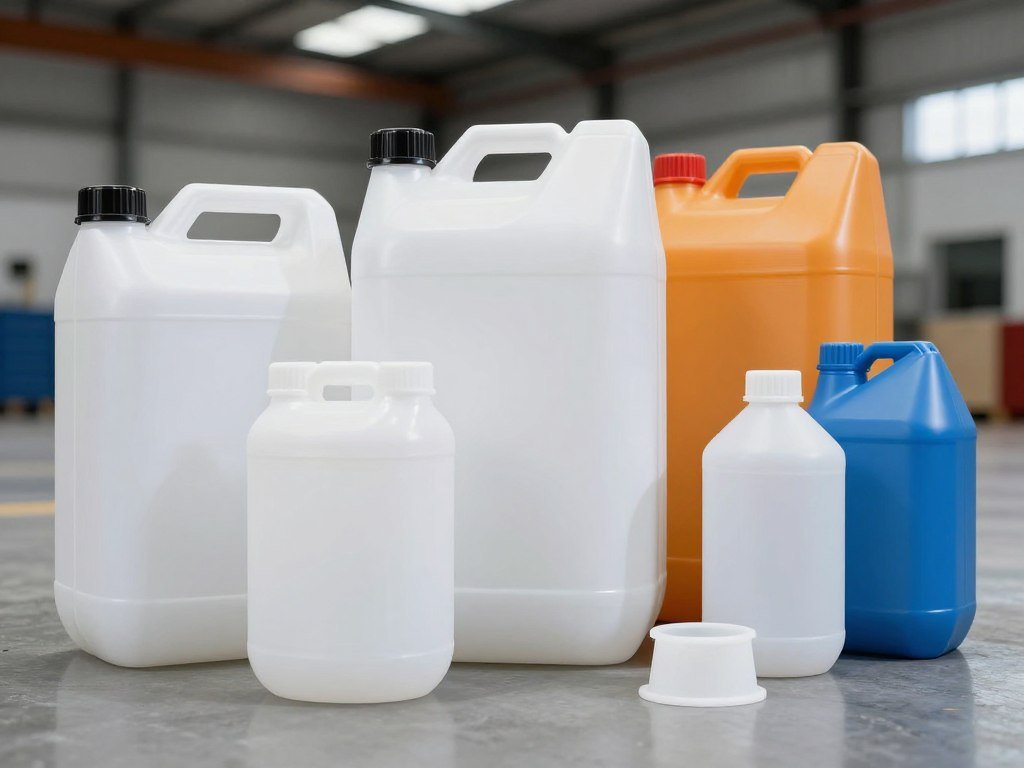
- Best For: Beverage caps, food closures, and thin-walled packaging.
Technical Specifications, Performance Benchmarks & Equivalents
To better understand each grade’s performance, we summarize key technical parameters such as Melt Flow Rate (MFR) and density below. Refer to this table when considering applications or comparing global equivalents.
Detailed mechanical properties and global equivalent options for each grade are fully expanded below the table.
| Grade Name | Polymer Type | Density (g/cm³) | MFR(g/10 min 190°C/2.16kg) | Direct Global Equivalents(Dow / ExxonMobil / Sinopec) | Processing Method | Primary Application |
| SABIC 118NJA | LLDPE (C₄) | 0.918 | 1.0 |
| Blown Film | Food Lamination & Export Films |
| SABIC 118NE | LLDPE (C₄) | 0.918 | 1.0 |
| Blown Film | Heavy-Duty Sacks & Industrial Liners |
| SABIC HP2022 | LDPE | 0.922 | 2.0 |
| Blown Film / Lamination | High-Clarity Shrink & Food Film |
| SABIC F00952 | HMW-HDPE | 0.952 | 0.05 |
| Blown Film | High-Strength Retail & Trash Bags |
| SABIC ICP5602 | HDPE | 0.956 | 2.0 |
| Injection Molding | Beverage Caps & Food Closures |
📊 Key Mechanical Benchmarks & Processing Notes
SABIC LLDPE 118NJA Premium Food-Grade
| Tensile Strength: | 35 MPa | Haze: | 10% (with additive MB) |
| Dart Impact: | 110 g | ||
💡 Processing Note: Engineered for absolute regulatory compliance using a specialized TNPP-free stabilization system. Serving as a seamless drop-in replacement, it guarantees zero chemical migration for strict global export markets.
SABIC LLDPE 118NE Industrial Toughness
| Tensile at Break: | 35 MPa | Haze: | 12% |
| Dart Impact: | 110 g | ||
💡 Processing Note: Formulated completely slip-free and antiblock-free. This gives plant engineers 100% flexibility to calibrate precise Coefficient of Friction (COF) levels for agricultural and heavy-duty shipping sacks.
SABIC LDPE HP2022 High-Clarity & Melt Strength
| Tensile at Break: | 22 MPa | Haze: | 5.5% (Exceptional Optics) |
| Dart Impact: | 90 g | ||
💡 Processing Note: Combines outstanding optical properties (low haze, high gloss) with high melt strength. It maintains excellent bubble stability on high-speed blown film lines for high-gloss retail shrink packaging.
SABIC HDPE F00952 High-Molecular-Weight
| Tensile at Yield: | 27 MPa | Haze: | Opaque |
| Dart Impact: | 200 g (High Mechanical Toughness) | ||
💡 Processing Note: Engineered specifically for high-strength extrusion. High melt stability allows for aggressive down-gauging to produce ultra-thin, tear-resistant shopping bags and heavy-duty liners.
SABIC HDPE ICP5602 Organoleptic Closure Grade
| Tensile at Yield: | 28 MPa | ESCR (F50): | 25 Hours |
| Flexural Modulus: | 1250 MPa | ||
💡 Processing Note: Injection molding grade with strict organoleptic testing. Delivers flavor and odor neutrality, making it the industry standard for mineral water and carbonated drink bottle caps.
💡 Related Technical Guide: Interested in the detailed molecular mechanics and blending formulas behind successful film thinning? Explore our comprehensive guide on How to Optimize Your Blown Film Thickness via LLDPE/LDPE Blending.
- From Dowlex 2045G to SABIC 118NJA: Processing temperatures can remain identical (typically 190 °C–220 °C), but we recommend monitoring the back pressure closely. SABIC 118NJA exhibits a slightly narrower molecular weight distribution, which may result in a minor increase in shear response at high output rates.
- From ExxonMobil LD 150 to SABIC HP2022: Thanks to matching melt index and density profiles, this is a true drop-in replacement. No mechanical adjustments are required, and bubble geometry will remain fully stable under legacy cooling air settings.
Cost Optimization: Finding Alternatives and Blending Strategies
Resin sourcing goes beyond brand preference; it requires active cost-performance optimization. Downstream converters routinely apply two primary strategies to lower raw material costs and mitigate supply chain disruptions:
The Art of Blending: Down-Gauging and Performance Boosting
Film manufacturers often use pure LDPE to maintain bubble stability and ease of processing. Adding LLDPE (such as SABIC 118NJA or 118NE) to the LDPE matrix can enable thinner films without compromising performance.
How it Works:
To visualize why this blend works so effectively, it helps to look at the polymer chains at a molecular level:
- Short-Chain Branching (SCB) in LLDPE: LLDPE has uniform short branches (C₄ butene comonomers) that link crystalline regions. This molecular structure distributes stress evenly, providing the exceptional tensile toughness, puncture resistance, and tear strength that pure LDPE lacks.
- Long-Chain Branching (LCB) in LDPE: In contrast, LDPE contains long, highly branched chains. These long-chain branches entangle easily, giving the polymer its characteristic high melt strength and excellent bubble stability during extrusion.
Practical Outcome (Achieving Cost & ESG Sustainability Double Win):
By blending LLDPE with LDPE, reducing the film thickness from 50 μm to 40 μm (a 20% down-gauging) maintains identical drop-dart impact and tear strength.
For film manufacturers, this delivers a dual advantage:
It directly slashes raw material consumption per square meter (lowering manufacturing costs), while simultaneously reducing the product’s overall carbon footprint.
This assists downstream brands in meeting increasingly strict global ESG packaging mandates and reducing plastic tax liabilities in export markets like the EU and North America.
Equivalents and Cross-Referencing: Overcoming Supply Bottlenecks
Single-source procurement strategies expose processing plants to sudden supply shortages and localized price spikes. We help converters establish robust material substitution matrixes:
- Seamless Substitutes: When regional shipments of SABIC LLDPE 118NJA face delays, we identify exact functional equivalents from global producers (such as ExxonMobil, Dow, or premium domestic petrochemical plants) matching the original melt flow, density, and additive profile.
- Zero Downtime: Planned substitutions prevent costly machinery shutdowns, eliminating the need for extensive screw-speed or temperature profile recalibrations.
Processing & Troubleshooting: Optimizing Your Extrusion and Molding Lines
High-performance resins still require precise process optimization. When switching grades or introducing blending strategies (like adding LLDPE 118NJA to LDPE), converters often run into processing challenges.
Here is a quick troubleshooting reference designed by our technical team to keep your lines running at maximum efficiency:
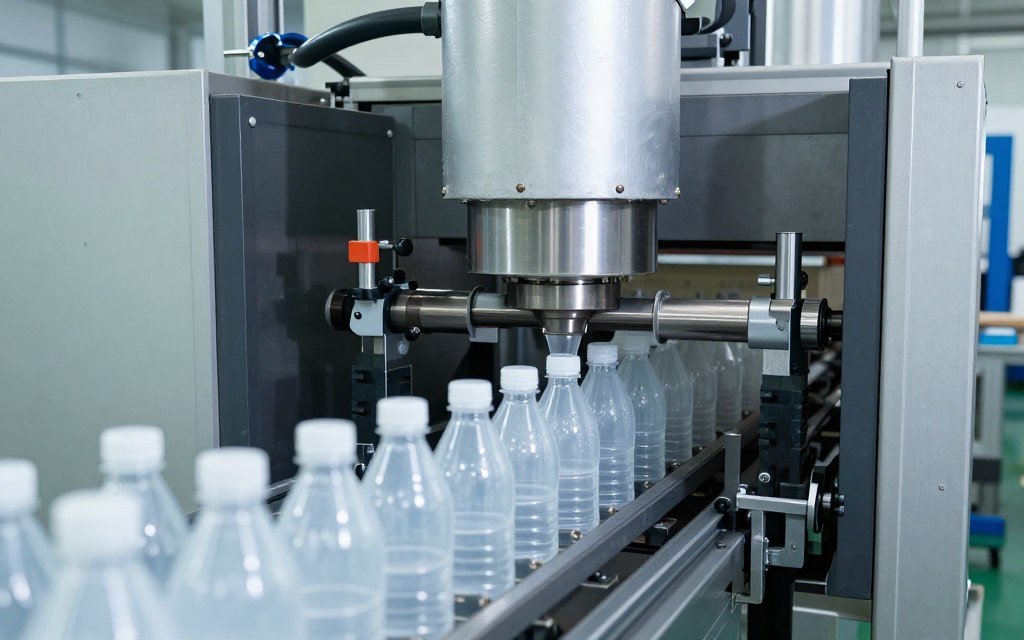
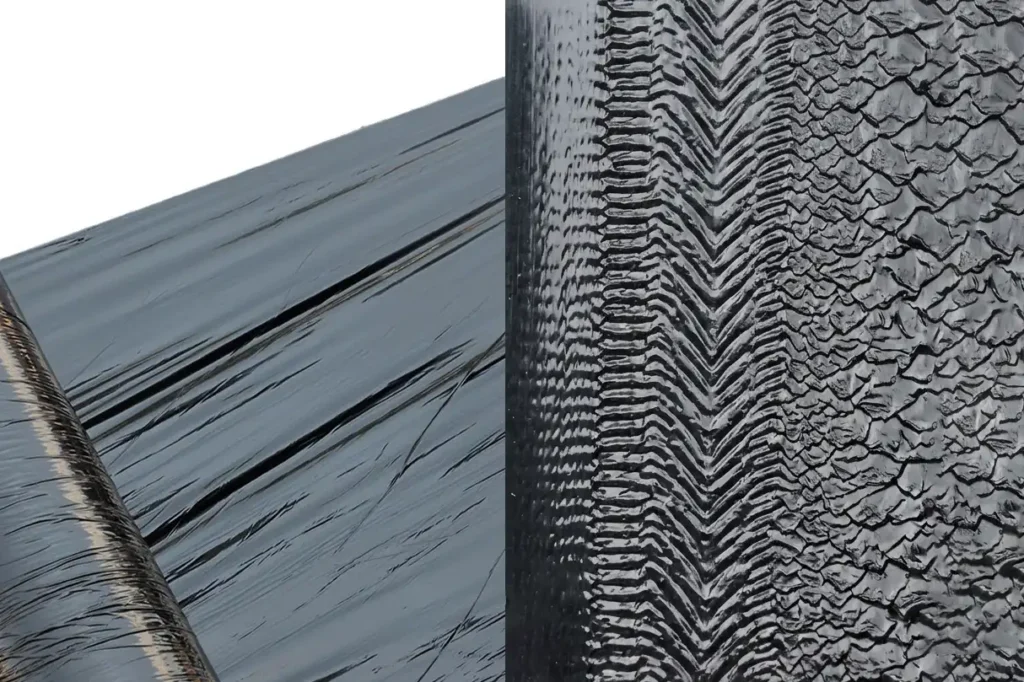
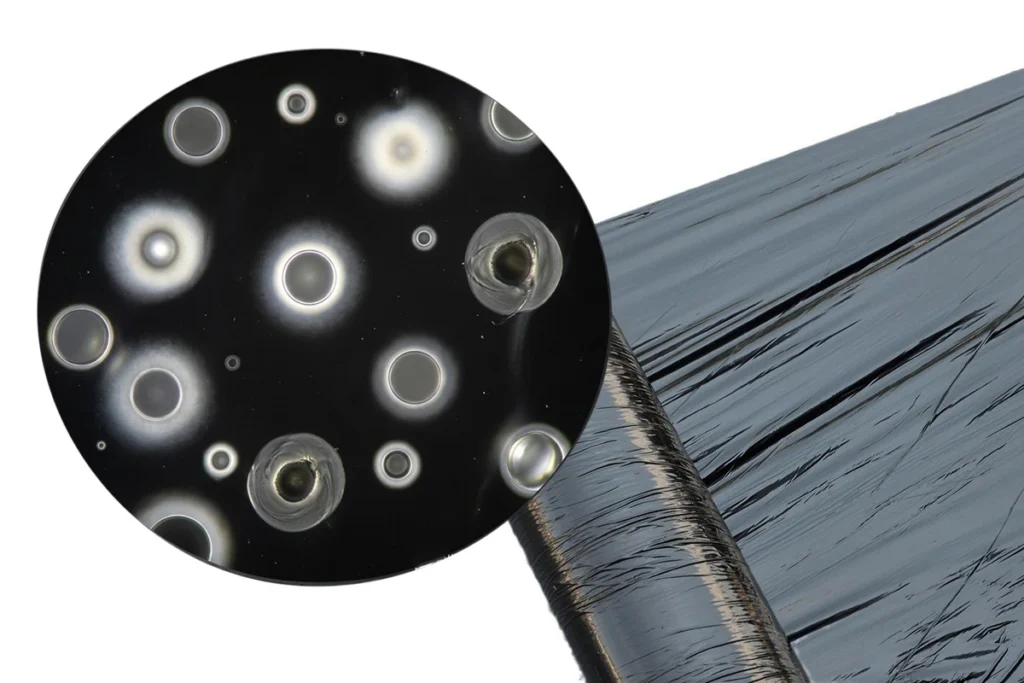
1. Melt Fracture ("Sharkskin" / "Orange Peel" on Film Surface)
⚠️ The Cause: When processing narrow molecular weight distribution resins like SABIC LLDPE 118NJA at high shear rates, the polymer melt slips at the die wall, causing surface distortions.
- Lower Temperatures: Slightly lower the extruder temperature in the feed zone and increase the die temperature by 5°C–10°C.
- Optimize Die Gap: Increase the die gap (recommended gap for LLDPE is 1.8 mm–2.5 mm).
- Apply PPA: Introduce a Fluoropolymer-based PPA masterbatch at 1.0%–1.5% to eliminate melt slip.
2. Excessive Gel Formation ("Fish Eyes" or "Crystals")
⚠️ The Cause: Gels are often caused by thermal degradation (burnt polymer) due to dead spots in the extruder, or poor blending of incompatible viscosity resins (e.g., mixing low-MFR LLDPE with high-MFR LDPE improperly).
- Implement a strict purging schedule using high-molecular-weight purging compounds during transition shutdowns.
- Ensure proper shear mixing by utilizing a barrier screw design or upgrading your mixing head.
- Match the melt indices (MFR) of your blend components as closely as possible (ideally within a ratio of 2:1).
3. Poor Bubble Stability in Blown Film
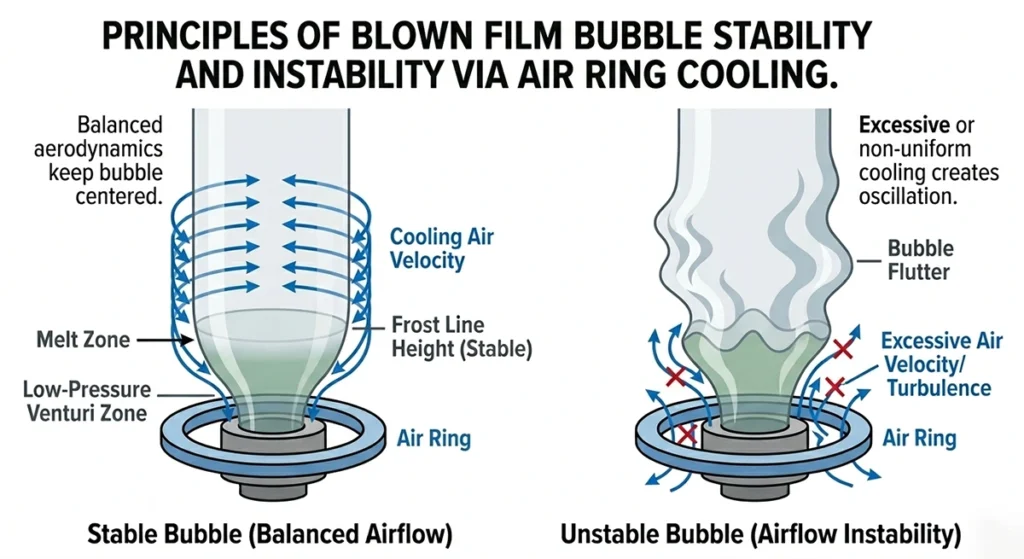
⚠️ The Cause: LLDPE (like SABIC 118NE) lacks the long-chain branching of LDPE, meaning it has lower melt strength. When running pure LLDPE or high-LLDPE blends, the bubble may sway or collapse under high-speed cooling air.
- Adjust the blow-up ratio (BUR) to a stable range of 2:1 to 2.5:1.
- Lower the frost line height by adjusting the air ring velocity and height.
- Blend in 10%–20% of high-melt-strength LDPE (such as SABIC HP2022) to drastically improve melt elasticity and bubble stability.
💡 Struggling with a specific defect on your production line?
Our team doesn’t just sell resin—we help you run it. Our polymer engineers can help you optimize your screw temperature profiles, die gaps, and LLDPE/LDPE blending ratios for a seamless, defect-free trial.
Sourcing SABIC PE: Why Choose Us
Navigating these technical adjustments and formula optimizations is significantly easier when you have the right supply partner. Beyond offering raw engineering support to resolve plant defects, we ensure your production lines never experience downtime due to material shortages, volatile logistics, or inconsistent resin lots.
Branded polymer pricing is highly transparent, but actual supply availability is not. Processing facilities require a dependable distributor that guarantees authenticity, consistent supply, and logical shipping solutions. Here is how we support your manufacturing needs as a dedicated distributor of branded polymer resins:

100% Genuine Branded Resins
Premium Quality Guaranteed: We deliver 100% original, unadulterated SABIC resins directly in their authentic manufacturer packaging. To ensure absolute production safety and compliance, every single shipment we dispatch is backed by full factory batch traceability and official Certificates of Analysis (COAs).
Strategic Shanghai Logistics Hub
Fast Global Dispatch: Adjacent to the Shanghai port area, our warehouse leverages proximity to a global shipping hub. For overseas buyers, this cuts domestic haulage by 3 to 5 days, provides immediate customs access, and secures priority booking—minimizing supply chain bottlenecks and preventing factory downtime.
Flexible Sourcing & Low-MOQs
Optimized Cash Flow: Avoid tying up capital in multi-ton mill mandates. We offer flexible, buyer-friendly supply solutions tailored to your scale, including mixed-grade container consolidation, smaller trial volumes starting from just 1 pallet, and localized cargo matching to keep your operations agile.
Expert Technical Consultation
Formulation & Troubleshooting: We do more than distribute; we partner. Our technical team works directly with your engineers to analyze product-specific resin properties, optimize custom formulations, suggest viable alternative grades, and actively troubleshoot production defects like melt fracture and gels.
📩 Request a Custom Resin Recommendation & Quote
Resin performance is defined by your product’s unique requirements—whether you need specific down-gauging formulations, FDA-compliant food lamination webs, or high-rigidity closures.
Ready to optimize your production costs without risking film performance or molding quality?
Tell us your target film thickness, application, and compliance requirements. Our engineers will match you with the ideal SABIC PE grade and provide a customized volume quote.
Conclusion
Selecting the ideal polyethylene grade is never just about matching a density value or a melt flow index on a datasheet. For modern plastic converters and packaging manufacturers, true production efficiency lies at the intersection of consistent material processability, intelligent down-gauging strategies, and a bulletproof supply chain.
Whether you are upgrading to SABIC LLDPE 118NJA to clear strict global food-contact export mandates, leveraging SABIC LDPE HP2022 for high-speed, high-clarity shrink lines, or blending resins to drive down material costs, having a highly responsive technical and logistics partner is what keeps your plant profitable.
🔑 The Sales Plastics Assurance:
As your strategic sourcing partner operating from the gate of the Shanghai Port, we do not just ship bags of polymer. We deliver uncompromised batch-to-batch traceability, tailored material consolidation, and on-the-ground engineering support to resolve extrusion defects before they impact your bottom line.
Let us help you take the guesswork out of your next production trial. Explore our tailored grade recommendations below and secure consistent, high-performance resins for your manufacturing lines.