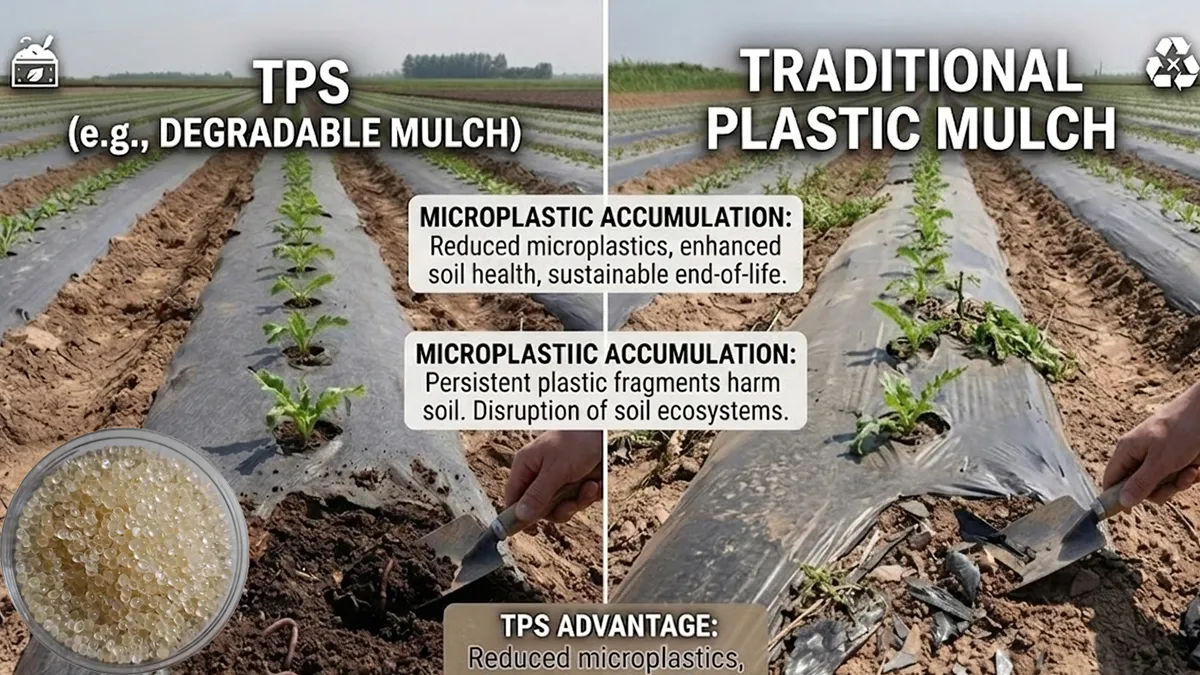
Starch-based biodegradable plastics are gaining significant attention in the global shift towards sustainable materials. As renewable alternatives to traditional plastics, they offer promising benefits for reducing environmental impact.
"While the focus is often on their biodegradability, it is essential to also consider their materials, applications, and commercial viability."
Read: Materials, Applications, and Commercial Reality →The Reality of Degradation
Natural Environment vs. Industrial Composting
Natural Environments
In ecosystems like soil or oceans, degradation is significantly slower. These environments rarely maintain the consistent temperature, humidity, and oxygen levels required for rapid microbial activity.
Industrial Facilities
Optimal conditions (50-60°C) accelerate the process, typically achieving full breakdown within a few weeks. Disposal environment remains the primary factor in effectiveness.
Compostability Standards
Global benchmarks ensure materials are environmentally safe and leave no harmful residues.
European standard: Must degrade within 12 weeks in industrial conditions without harmful residue.
U.S. standard: Requires materials to fully degrade within 180 days in a composting environment.
Home vs. Industrial Composting
The critical difference lies in control. Home composting operates at lower temperatures (30-40°C) and limited humidity, making it suitable for food scraps but challenging for bioplastics.
- Industrial: Optimized humidity and high heat (50-60°C).
- Home: Slower process, sensitive to external weather.
Recommendation
"Starch-based plastics are best processed in industrial composting settings to ensure effective and rapid degradation."
Carbon Footprint
Production emissions come primarily from agricultural processes (cultivation, harvesting, and transport). Life cycle analysis (LCA) shows these are generally lower than petroleum-based counterparts.
The Microplastics Risk
While they don't typically produce microplastics under industrial composting, incomplete degradation in natural environments can lead to the formation of particles smaller than 5mm. Promoting certified materials is key to mitigating this risk.
Conclusion
Starch-based biodegradable plastics offer several environmental advantages over petroleum-based plastics. By understanding composting standards and degradation conditions, manufacturers and consumers can make more informed decisions, ultimately contributing to a more sustainable plastic industry.