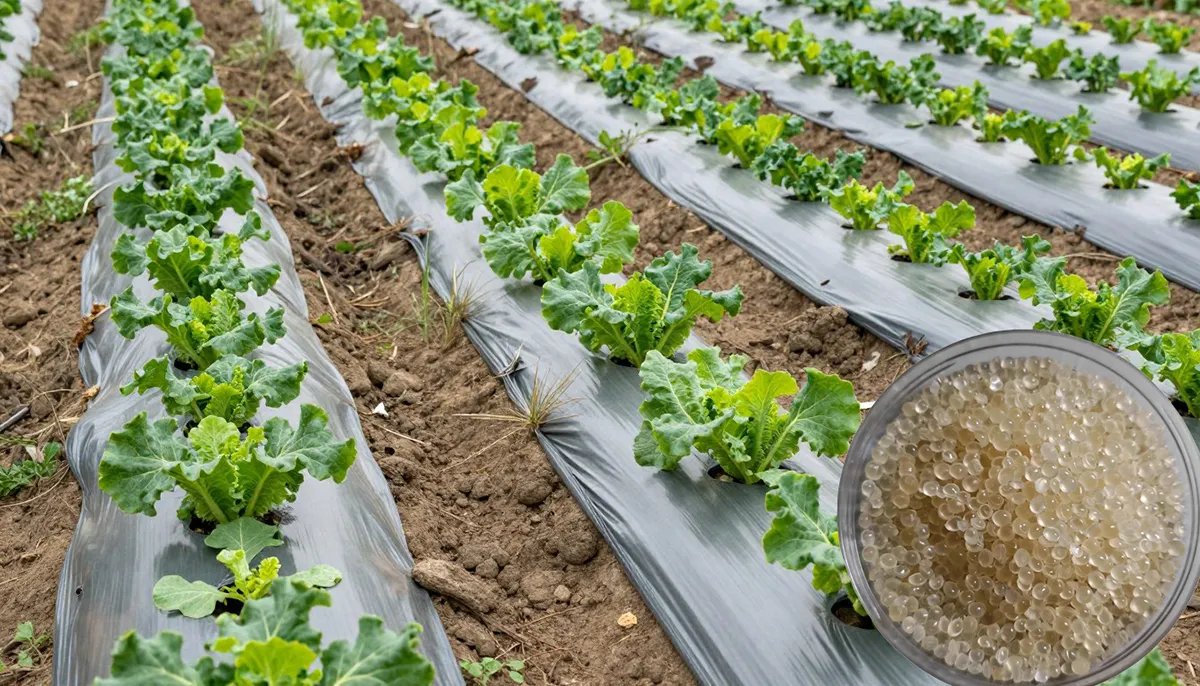
Agriculture faces a critical bottleneck: the urgent need to eliminate plastic waste without eroding seasonal yields or operational margins. Conventional polyethylene (PE) films effectively regulate soil temperature and moisture, yet they leave a legacy of persistent microplastic contamination and impose heavy post-harvest retrieval costs on growers.
Thermoplastic Starch (TPS) formulations offer a sophisticated, soil-integrated alternative for agricultural biodegradable film. These starch-based mulch films provide a sustainable solution to plastic pollution.For those looking to understand the fundamental science behind the material, we recommend reading our foundational guide on What is Thermoplastic Starch (TPS)? Properties, Processing, and Uses before exploring its specific agricultural applications. These high-grade blends deliver the tensile strength and thermal retention required for early-season crop protection, while ensuring seamless drop-in compatibility with existing blown-film extrusion lines. Unlike traditional synthetic polymers, TPS-based films undergo complete microbial mineralization—returning to the soil as water and CO₂ without the labor-intensive burden of disposal.
Global supply chains are experiencing a rapid paradigm shift toward circularity. Driven by stringent environmental mandates and expanding agricultural infrastructure in North America, Europe, and Asia, the transition to biodegradable mulch has evolved from a niche preference into a strategic necessity. To help film manufacturers and agricultural stakeholders navigate this shift, this analysis evaluates the technical advantages of TPS reinforcement, details the total cost of ownership (TCO), and outlines the certification pathways necessary for compliance.
Performance Analysis: Why Starch-based mulch films are the practical choice for growers
Reliability in the field dictates whether a sustainable alternative can truly displace conventional plastics. Thermoplastic Starch (TPS) functions not merely as an eco-friendly filler, but as a robust performance-modifying component. When integrated with polymer matrices like PBAT or PLA, it optimizes both biodegradation kinetics and cost-efficiency.
Mechanical Strength and Durability During Service Life

Agricultural applications demand that mulch films withstand high-speed mechanical installation and fluctuating environmental stresses. Formulated TPS-polyester blends achieve a sophisticated balance of tensile strength (typically 15–30 MPa) and impressive elongation at break (200–500%). These specifications ensure the film maintains its structural continuity during tractor-mounted laying and throughout the critical early growth phases of the crop.
Moisture Regulation and Barrier Optimization
Retaining soil moisture remains a primary functional mandate. While native starch is inherently hydrophilic, molecular grafting and blending with hydrophobic polyesters significantly reduce water vapor permeability. Strategic TPS loading—typically optimized at 30–50%—delivers moisture retention rates that mirror conventional PE performance within a 5–10% margin. This ensures consistent hydration for root zones, particularly in arid or semi-arid cultivation environments.
Key factors affecting moisture performance
- TPS fraction and starch modification
- Film thickness and layflat overlap
- Hydrophobic polymer ratio (PLA, PBAT) and additives
- Environmental humidity and soil type

Precision Degradation: The "In-Situ" Disposal Advantage
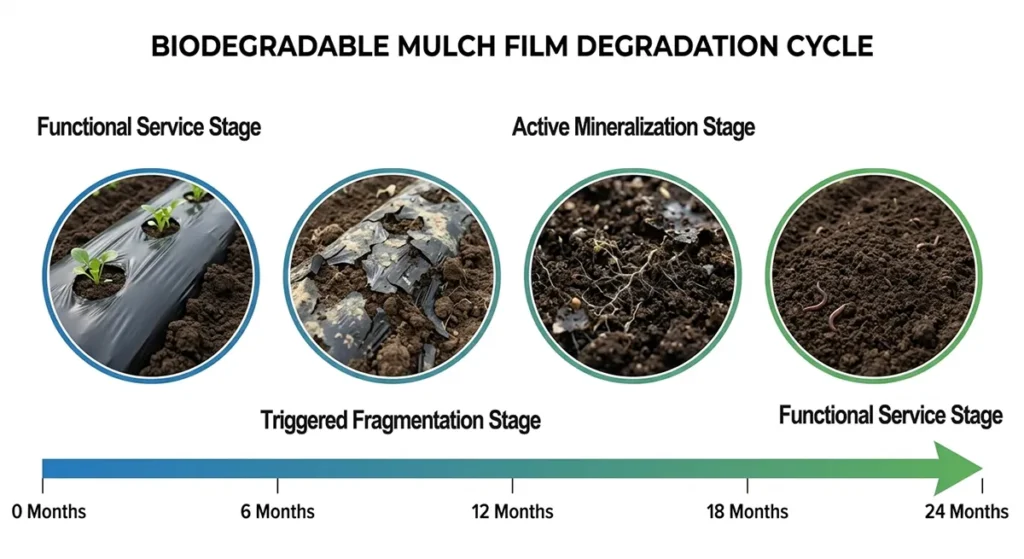
The defining advantage of TPS-based films lies in their programmed end-of-life. TPS-reinforced materials are specifically engineered for microbial mineralization, turning the film back into nutrient-rich biomass.
| Degradation Stage | Typical Timeline | Physical & Biological Transition |
| Functional Service | 0–6 Months | High structural integrity; active UV resistance and weed suppression. |
| Triggered Fragmentation | 6–12 Months | Loss of mechanical cohesion; microbial colonization of starch domains. |
| Active Mineralization | 12–18 Months | Rapid mass loss; conversion into H₂O, CO₂, and nutrient-rich biomass. |
| Soil Integration | 18–24 Months | Zero macro-plastic residue; complete return to the carbon cycle. |
Technical Deep Dive: For a granular look at how these molecular kinetics translate to actual harvest outcomes, explore our comprehensive guide: Biodegradable Mulch Films with TPS: Agronomic Excellence and Functionality. This resource includes detailed maize and potato field trials and soil health impact assessments.
Thermal Regulation and Weed Management
Controlling the soil microclimate is essential for maximizing yields. Black-pigmented TPS films achieve near-total opacity (light transmission <1%), effectively neutralizing weed competition without chemical intervention. Furthermore, the thermal emissivity of these films facilitates soil warming of 2–5°C above bare-ground baselines, accelerating the development of high-value crops such as strawberries, melons, and solanaceous vegetables.
UV Stability and Regional Adaptation
Managing the trade-off between UV resistance and biodegradability is critical for localized success. Modern TPS formulations incorporate advanced light stabilizers that protect the polymer chain from photo-oxidative stress during the growing season, while ensuring that once the crop is harvested and the film is incorporated into the soil, the degradation process proceeds unhindered.

Comparative Performance: TPS versus Other Biodegradable Polymers
TPS-based films strike a performance–cost balance: starch lowers raw material cost and speeds biodegradation, while partners like PLA and PBAT add mechanical strength. Pure PLA films offer high mechanical performance but tend to biodegrade more slowly in ambient soil. PHA polymers biodegrade well in soil but remain costly for large‑area agricultural use. For many mulch film applications, starch‑containing blends deliver the best mix of performance, biodegradability, and commercial cost.
Advantages and considerations of TPS films include:
Advantages
- Lower raw material cost through starch content
- Accelerated biodegradation in soil environments
- Processable on adapted blown‑film equipment
- Renewable feedstock reduces fossil dependency
Considerations
- Moisture sensitivity during storage and processing
- Need for polymer blending and compatibilizers to meet mechanical targets
- UV stabilization required for reliable service life
Overall, starch‑based biodegradable mulch films provide a practical pathway for growers seeking the agronomic benefits of mulch without the long‑term soil impact of conventional plastic films.
Unsure which TPS blend fits your specific crop cycle?
Consult our technical specialists for a customized formulation analysis.”
Cost Optimization: Achieving Competitive Pricing without Compromising Quality
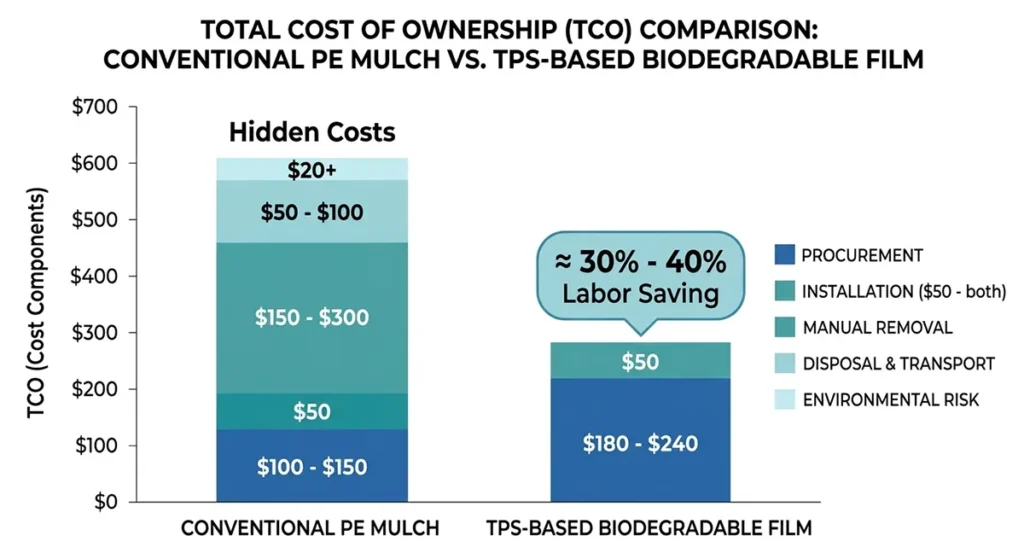
Financial viability remains the ultimate catalyst for the mainstream adoption of sustainable agriculture. While the initial procurement price of biodegradable resins often commands a premium over conventional polyethylene, integrating TPS creates a strategic pathway to bridge this gap. By shifting the procurement focus from “price per kilogram” to “Total Cost of Ownership (TCO),” manufacturers and growers can unlock significant operational savings.
The Raw Material Advantage
Raw materials typically account for 50–65% of a film manufacturer’s operational expenditure. Leveraging industrial-grade starch—which maintains a significantly lower and more stable price floor compared to synthetic polyesters like PBAT or PLA—provides an immediate fiscal buffer. Strategic blending, where TPS constitutes 30–50% of the weight, effectively dilutes the cost of premium biodegradable polyesters.
| Material Component | Estimated Price Range (USD/MT) | Strategic Role in Formulation |
| Industrial Starch | $400 – $800 | Primary cost-reduction agent; renewable carbon source. |
| PBAT / Polyesters | $2,500 – $4,000 | Provides mechanical flexibility and water resistance. |
| Compatibilizers | Premium | Ensures interphase bonding and melt strength. |
Strategic blending, where TPS constitutes 30–50% of the weight, effectively dilutes the cost of high-performance biodegradable polyesters. This optimized ratio allows manufacturers to produce high-authority mulch films that remain competitive even in price-sensitive regional markets.
Holistic Economics: Beyond the Purchase Price
Evaluating the feasibility of TPS films requires a comprehensive analysis of downstream expenses. Traditional PE mulch necessitates labor-intensive retrieval, specialized transport, and escalating landfill fees—often adding $200–$550 per hectare to the total expense.
- Operational Savings: TPS-based films eliminate the post-harvest labor bottleneck, allowing growers to reallocate resources toward yield-enhancing activities.
- Fiscal Resilience: Utilizing bio-based feedstocks reduces exposure to the volatility of the petroleum market, ensuring more predictable seasonal margins.
- Regulatory Positioning: Early adoption mitigates the risk of future plastic taxes or environmental remediation fines, providing a “first-mover” advantage in green-certified supply chains.

Production Efficiency and Processing Yields
Maximizing the ROI of TPS formulations also depends on manufacturing precision. These materials are engineered for moderate-temperature processing (140–170°C), reducing energy consumption per ton produced. Advanced modified starch grades now offer improved thermoplasticity, allowing for higher loadings without compromising the “bubble stability” during blown-film extrusion. Minimizing scrap and utilizing controlled regrind levels (up to 15%) further refines the unit economics.
Industry projections indicate a narrowing price delta as global capacity for biodegradable polyesters expands and starch modification technologies mature. In regions where labor costs are high or environmental mandates are robust, TPS-based films have already reached or surpassed cost parity with traditional systems when TCO is accurately measured.
Request a Customized Cost-Benefit Analysis
Would you like to see how TPS integration affects your specific production line? Contact our technical consultants to receive a comparative TCO model based on your regional labor rates and current resin procurement costs.
Production and Processing: Alternative Solutions for Existing Blown Film Equipment
Successful processing of Thermoplastic Starch (TPS) formulations relies on precise thermal management rather than costly equipment replacement. These materials typically exhibit shear-sensitive rheology, requiring a calibrated temperature gradient to ensure melt homogeneity without inducing thermal degradation.
Parametric Tuning: Optimizing the Extrusion Profile
Target a progressive extrusion profile, typically starting at 130–140°C in the feed zone and peaking at 165–175°C at the die. Maintaining lower melt temperatures compared to pure PLA reduces the risk of hydrolysis and ensures a robust bubble for consistent film gauge. While standard PE screws can facilitate initial trials, implementing barrier screws with a moderate compression ratio (2.5:1 to 3.5:1) enhances the distributive mixing of the TPS and compatibilizers.
Critical Pre-Processing: The Science of Moisture Control
Effective moisture management is the non-negotiable foundation of TPS processing. Starch-based compounds are inherently hygroscopic; failing to achieve target dryness levels can lead to surface defects, loss of mechanical properties, or bubble rupture.
| Component | Critical Moisture Limit | Recommended Drying Protocol |
| Native Starch | < 0.3% | Hot-air desiccant: 80–100°C for 4–6 hrs |
| TPS Compounds | < 0.2% | Desiccant hopper: 80–90°C for 3–4 hrs |
| Polyester (PBAT/PLA) | < 0.05% | High-efficiency desiccant: 60–80°C for 3–5 hrs |
Hardware Optimization: Enhancing Throughput and Quality
While standard PE screws can facilitate initial trials, strategic hardware refinements significantly boost long-term yield and film uniformity.
- Screw Geometry: Implementing barrier screws with a moderate compression ratio (2.5:1 to 3.5:1) enhances distributive mixing of the TPS and compatibilizers.
- Die Configuration: Adjusting the die gap to accommodate the unique swell characteristics of biodegradable melts ensures balanced orientation and improved tear resistance.
- Cooling and Stability: Utilizing Internal Bubble Cooling (IBC) and precision air rings allows for higher line speeds while maintaining the “frost line” stability essential for thin-gauge mulch films.
Phased Upgrade Strategy: A Roadmap to Efficiency
Manufacturers can adopt a modular investment approach to mitigate risk. Prioritizing advanced dehumidifying dryers and PID temperature controllers provides the highest immediate return on quality, followed by specialized screw and die upgrades as production volumes scale.
Operational Best Practices: Troubleshooting and QC
Maintaining a rigorous Standard Operating Procedure (SOP) reduces scrap rates and ensures batch-to-batch consistency.
- Contamination Control: Establish strict purging protocols using high-viscosity HDPE or dedicated purging compounds when transitioning between conventional and biodegradable resins.
- Regrind Management: Incorporating 10–20% internal regrind is feasible, provided the material is re-dried and free from thermal yellowing.
Supply Chain Consideration: Beyond active drying hoppers, optimal performance begins with proper storage. Premium TPS resins must be stored in original, moisture-barrier packaging (such as aluminum-lined bags) within climate-controlled environments. Preventing ambient moisture absorption during transit and warehousing drastically reduces pre-processing time and minimizes extrusion scrap rates.
Unsure about your current screw geometry or temperature settings?
Our engineering team provides on-site or remote technical audits to help you optimize your existing lines for TPS production.
Global Standards & Certifications: Ensuring Compliance and Market Entry
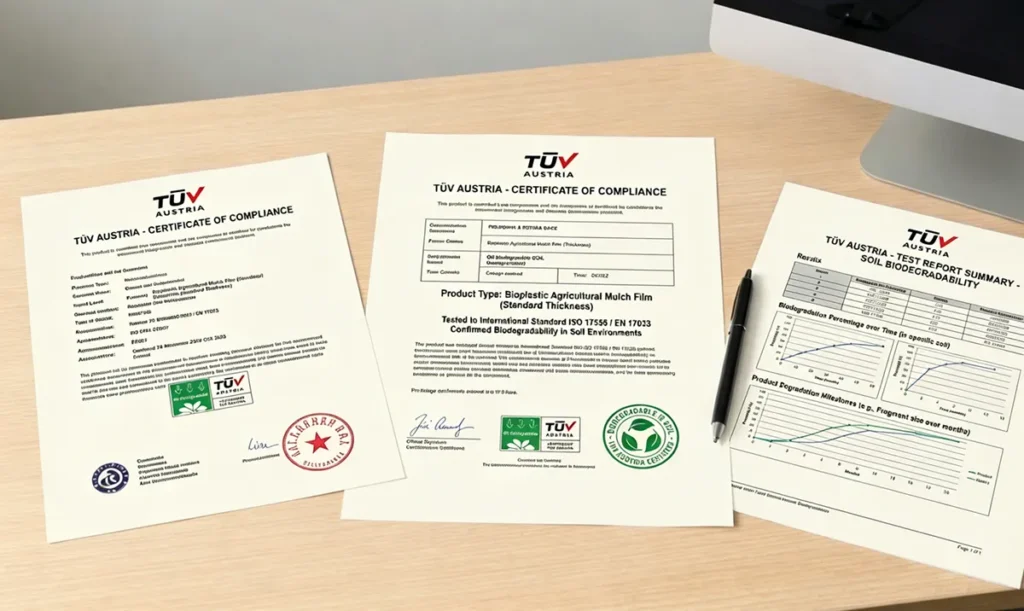
Claims that a mulch film biodegrades require independent verification. Certification against recognized standards gives growers, buyers, and regulators confidence that a product will break down safely in the ambient environment.
Defining the Gold Standard: EN 17033 and Beyond
While industrial composting standards (such as ASTM D6400) ensure materials break down in managed, high-temperature facilities, agricultural mulch films require validation in ambient soil conditions. EN 17033 represents the definitive European benchmark for biodegradable mulch, ensuring that the film integrates into the ecosystem without residual microplastic accumulation or ecological toxicity.
| Regulatory Standard | Target Environment | Core Compliance Criteria | Strategic Advantage |
| EN 17033 | Open Soil | ≥ 90% biodegradation within 24 months; strict ecotoxicity & heavy metal limits. | Mandatory for premium EU agricultural markets. |
| ISO 17556 | Soil/Laboratory | Respirometric measurement of oxygen demand/CO₂ evolution. | Foundation for international soil-degradability claims. |
| ASTM D6400 | Industrial Compost | High-temperature mineralization (58°C); disintegration within 12 weeks. | Facilitates entry into municipal organic waste streams. |
Scientific Validation: The Four Pillars of Testing
Certified TPS-based films undergo exhaustive laboratory and field assessments to ensure no permanent impact on soil health:
- Biodegradation Analysis: Precise measurement of carbon-to-CO₂ conversion by soil microorganisms under localized temperature regimes.
- Physical Disintegration: Monitoring the mechanical breakdown of film fragments to ensure zero macro-plastic interference with subsequent tilling.
- Terrestrial Ecotoxicity: Rigorous plant growth assays (e.g., cress or barley tests) to confirm that degradation by-products support, rather than inhibit, soil fertility.
- Chemical Fingerprinting: Screening for restricted substances, ensuring formulations remain PFAS-free and compliant with global heavy metal thresholds.
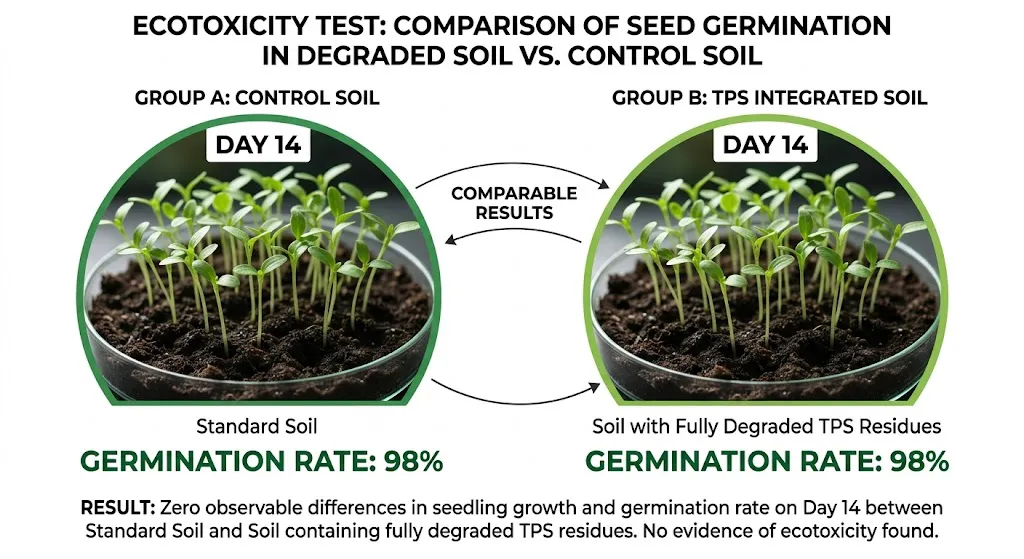
Transitioning to certified TPS solutions often unlocks specialized financial levers. Many regions, including China and several EU member states, provide direct subsidies or preferential procurement for films meeting national biodegradable standards (e.g., GB/T 35795). Utilizing pre-validated raw materials streamlines the 6-to-24-month testing cycle, significantly reducing the administrative burden on film producers.
Global regulatory bodies are increasingly penalizing “oxo-degradable” and non-certified plastics that contribute to microplastic persistence. By adopting TPS formulations that meet the most stringent microbial mineralization benchmarks, manufacturers shield their operations from evolving environmental taxes and potential “Greenwashing” litigation.
Conclusion
Transitioning to Thermoplastic Starch (TPS)-based biodegradable mulch films represents a definitive upgrade in agricultural film manufacturing. By harmonizing high-performance crop protection with spontaneous soil integration, TPS formulations resolve the historic tension between agricultural productivity and environmental preservation.
When evaluated through the lens of Total Cost of Ownership—factoring in the elimination of retrieval labor, landfill fees, and environmental liabilities—TPS-based solutions become highly competitive assets. For film manufacturers, leveraging drop-in TPS blends ensures a low-friction entry into the rapidly expanding biopolymer market, capturing market share among a growing tier of eco-conscious stakeholders.
Further Reading: Moving beyond physical fragmentation to true biological metabolism. Explore our analysis on Environmental Integrity: The Biochemically Driven Pathway of TPS .