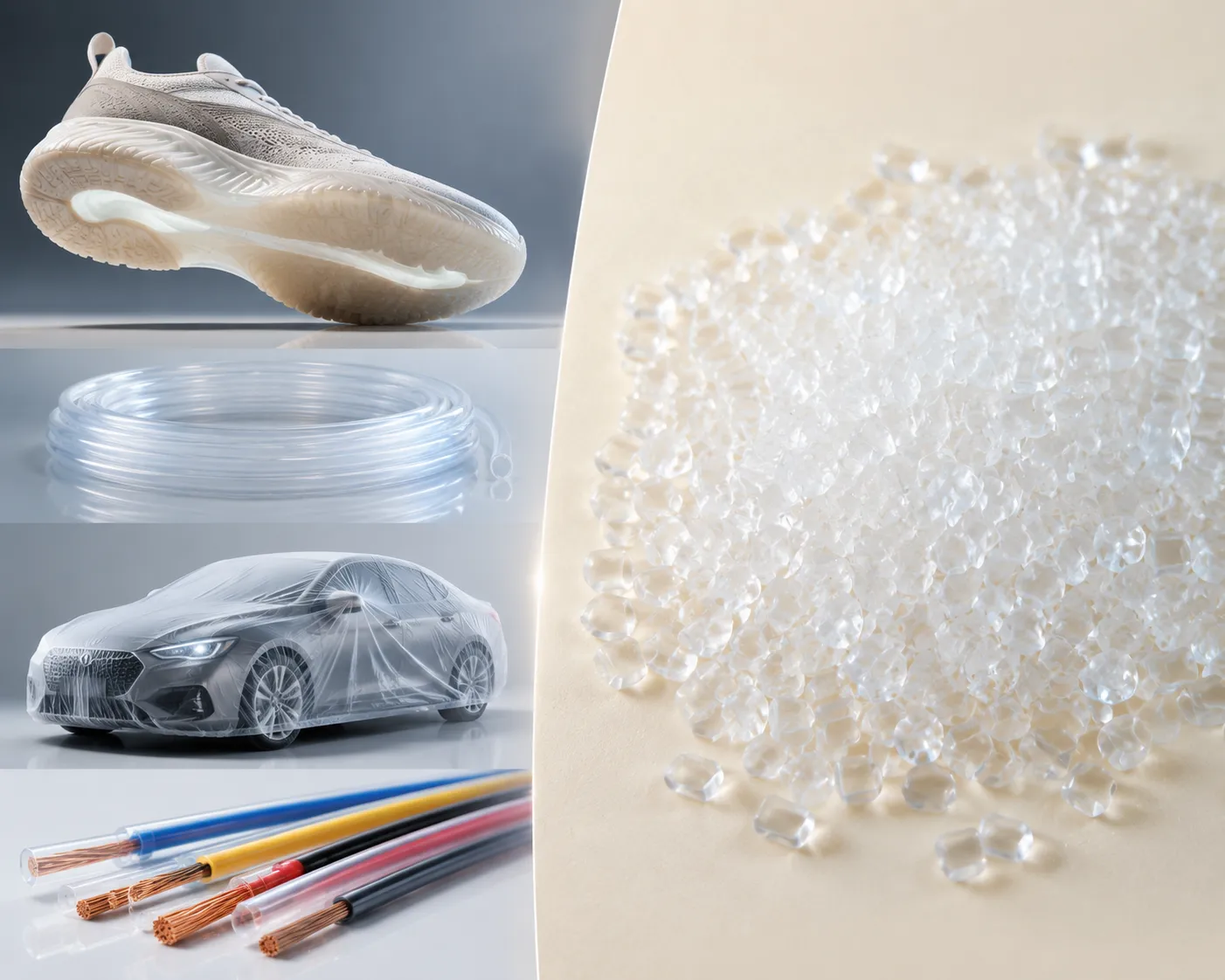
Selecting the right thermoplastic polyurethane (TPU) grade is critical to product performance, manufacturing efficiency, and long-term reliability. TPU offers a unique combination of flexibility, abrasion resistance, chemical resistance, and processability, making it a popular choice for applications ranging from footwear and consumer products to industrial components and automotive parts.
However, TPU is not a single material. Grades vary significantly in chemistry, hardness, mechanical properties, and processing behavior. A grade designed for flexible films may be unsuitable for load-bearing components, while a material optimized for wear resistance may not meet transparency or processing requirements.
This guide explains the key factors involved in TPU grade selection, including material chemistry, hardness, performance requirements, and major commercial TPU families, helping engineers and buyers make more informed material decisions.
4 Steps to Selecting the thermoplastic polyurethane(TPU) Grade
Effective TPU selection follows a structured decision hierarchy. Each step filters the available material universe based on fundamental compatibility criteria. This systematic approach prevents overlooking critical specification requirements while efficiently narrowing options to optimal candidates.
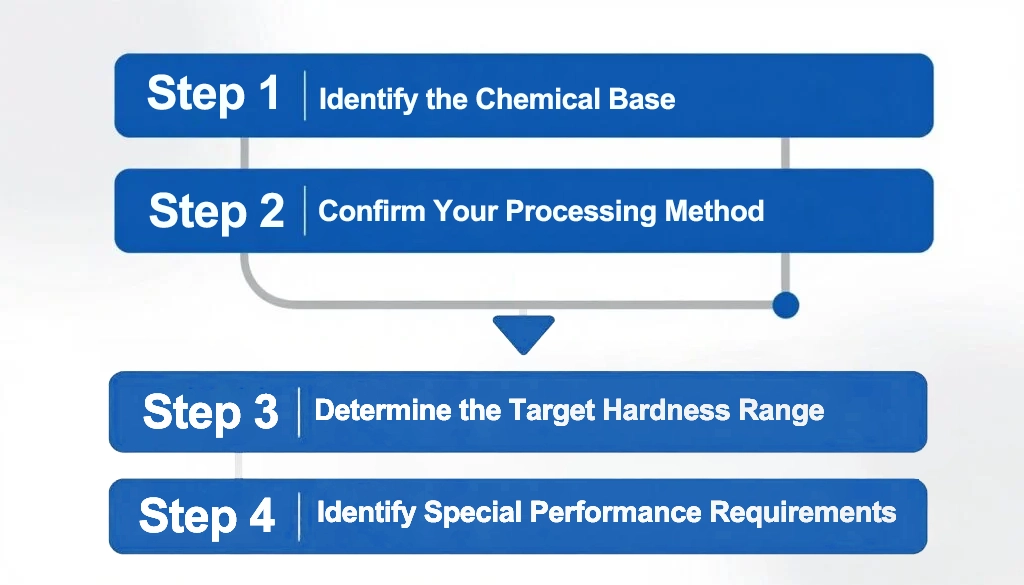
The sequence progresses from broad material family classification to specific performance requirements. Initial steps eliminate incompatible chemical bases and processing methods. Subsequent refinement targets hardness specifications and specialized properties. This hierarchical filtering delivers manageable shortlists for detailed technical evaluation.
The four-step methodology applies across industries and application types. Whether designing consumer products, industrial equipment, or automotive components, this framework ensures comprehensive consideration of critical specification factors. We examine each step in detail.
Step 1: Identify the Chemical Base (Polyester vs Polyether vs Polycaprolactone)
The soft segment chemistry fundamentally determines TPU environmental resistance and mechanical characteristics. (For a detailed technical breakdown of how these hard and soft block segments behave as an elastomer under service temperatures, refer to our comprehensive thermoplastic polyurethane molecular structure analysis)Three primary chemical families dominate commercial TPU production: polyester-based, polyether-based, and polycaprolactone-based formulations. Each family exhibits distinct performance profiles that dictate suitability for specific service conditions.
The decision is primarily driven by the application environment:
| TPU Type | Key Strength | Typical Environment | Common Applications |
|---|---|---|---|
| Polyester TPU | Oil & abrasion resistance | Oil, fuel, mechanical stress | Industrial parts, shoe soles, cable jackets |
| Polyether TPU | Hydrolysis & low-temp flexibility | Water, humidity, outdoor exposure | Medical tubing, outdoor cables, diving gear |
| PCL-based TPU | Biocompatibility | Medical & specialty environments | Medical devices, high-end applications |
Quick Selection Logic
- Oil / fuel exposure → Polyester TPU
- Water / humidity exposure → Polyether TPU
- High biocompatibility required → PCL-based TPU
- Uncertain environment → Polyether TPU (more tolerant option)
Step 2: Confirm Your Processing Method (Injection Molding, Extrusion, or 3D Printing)
Processing method compatibility directly impacts material selection. TPU grades are formulated with specific manufacturing processes in mind. Melt flow characteristics, thermal stability, and rheological properties vary significantly between injection molding, extrusion, and additive manufacturing variants. Selecting a grade optimized for your production method ensures processing efficiency and consistent part quality.
| Process | Key Requirements | Selection Focus |
|---|---|---|
| Injection molding | Flowability, shrinkage control | Higher MFI grades |
| Extrusion | Melt strength stability | Anti-sag, stable viscosity |
| Blown film | Uniform melt distribution | Dedicated film grades |
| 3D printing (FDM) | Dimensional consistency | Printing-specific TPU |
| Solution coating | Solubility behavior | Solvent-compatible TPU |
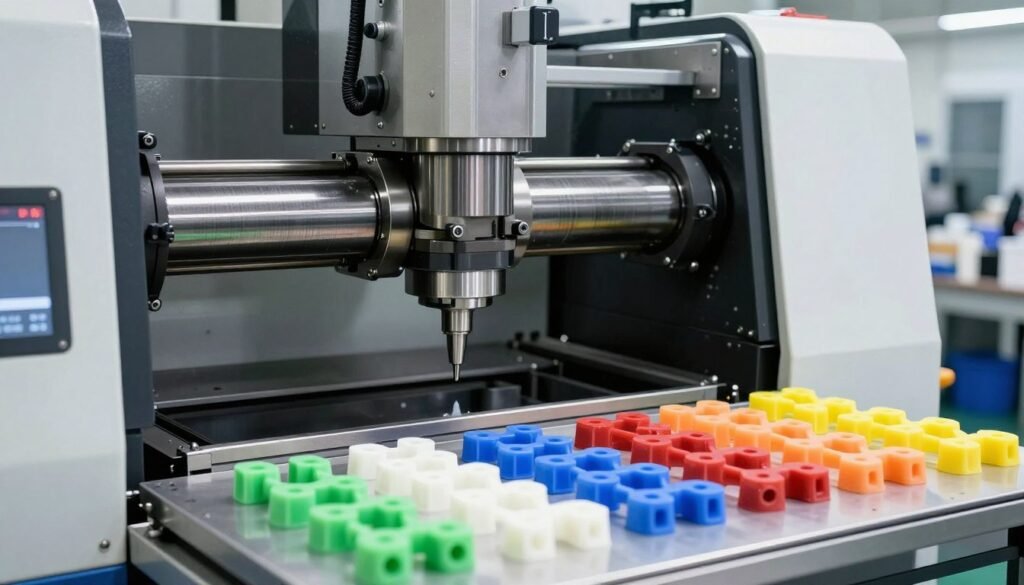
Processing Method Selection Impact
Attempting to process an extrusion-grade TPU through injection molding equipment results in incomplete cavity filling, extended cycle times, and potential machine damage. Conversely, injection-grade materials may exhibit insufficient melt strength for stable extrusion processing. This incompatibility necessitates confirming processing method before final grade selection.
Some TPU manufacturers offer dual-purpose grades suitable for both injection molding and extrusion. These versatile materials provide processing flexibility but may compromise optimal performance in either process. Applications demanding maximum efficiency or pushing performance boundaries typically benefit from process-specific grade selection.
Optimize Your thermoplastic polyurethane Processing Parameters
Our material specialists provide processing parameter optimization for injection molding, extrusion, and 3D printing applications. We analyze your production requirements and recommend grades with proven performance in your specific manufacturing environment.
Step 3: Determine the Target Hardness Range (Shore A vs Shore D)
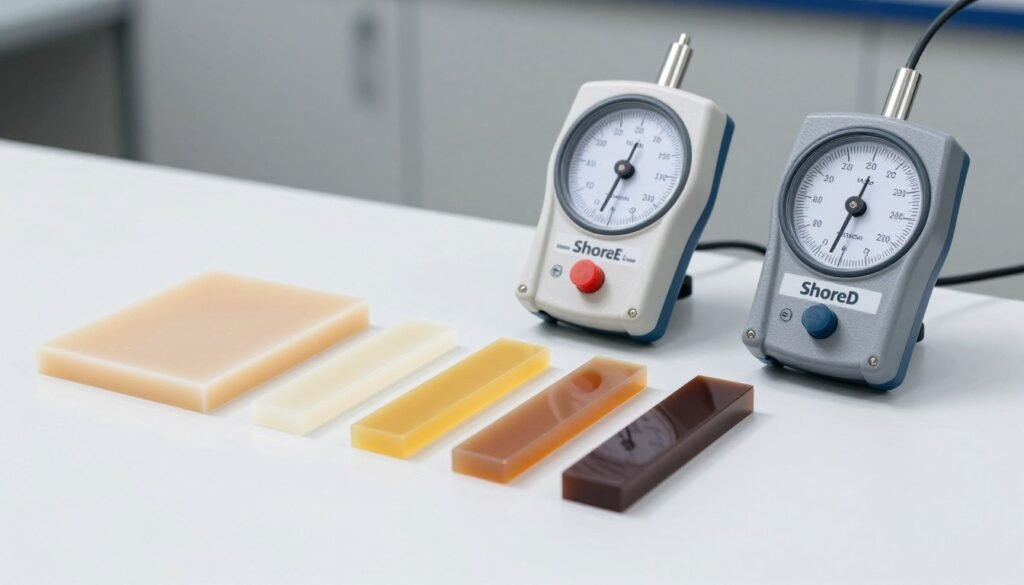
Hardness specification represents the most visible differentiator between TPU grades. This parameter directly correlates with mechanical stiffness, load-bearing capacity, and tactile characteristics. TPU materials span hardness ranges from very soft elastomeric grades through rigid semi-crystalline variants. Understanding Shore hardness scales and their application implications proves essential for appropriate grade selection.
Shore Hardness Scale Fundamentals
Two primary Shore hardness scales characterize TPU materials: Shore A for softer, more elastic grades and Shore D for harder, more rigid formulations. The scales overlap in the 90-95 Shore A range, where measurements transition to Shore D for improved resolution.
Shore A encompasses hardness values from approximately 60A to 98A. Materials in this range exhibit rubber-like flexibility with significant elastic deformation under load. Shore A TPU provides cushioning, vibration damping, and conformability to irregular surfaces. Applications include footwear soles, flexible tubing, and protective padding.
Shore D covers hardness from roughly 30D to 85D. These materials demonstrate greater rigidity approaching engineering thermoplastics while retaining some elastic recovery. Shore D TPU delivers load-bearing capability, dimensional stability, and enhanced abrasion resistance. Typical uses include industrial wheels, structural components, and wear-resistant parts.
| Hardness Range | Material Feel | Typical Applications |
|---|---|---|
| 60A–75A | Gel-like soft | Medical tubing, skin-contact products |
| 75A–90A | Elastic soft | Footwear, cable jackets |
| 90A–98A | Semi-rigid | Seals, rollers, conveyor belts |
| 40D–55D | Rigid flexible | Automotive parts, protective components |
| 55D–75D | Hard rigid | Gears, structural parts |
Key Insight: Optimal wear resistance often occurs in the 80A–90A range rather than the highest hardness levels.
Step 4: Identify Special Performance Requirements (UV, Flame Retardancy, Transparency)
Many applications demand performance attributes beyond fundamental mechanical and chemical properties. Specialty TPU grades incorporate additives or modified chemistries addressing specific environmental challenges or regulatory requirements. Identifying these special requirements early in the selection process prevents costly redesign cycles and ensures compliance with applicable standards.
Flame Retardancy
- Required for: cables, EV charging, automotive wiring, rail components
- Standards: UL94 V-0 / V-1 / V-2
- Trade-off: slight reduction in transparency and mechanical strength
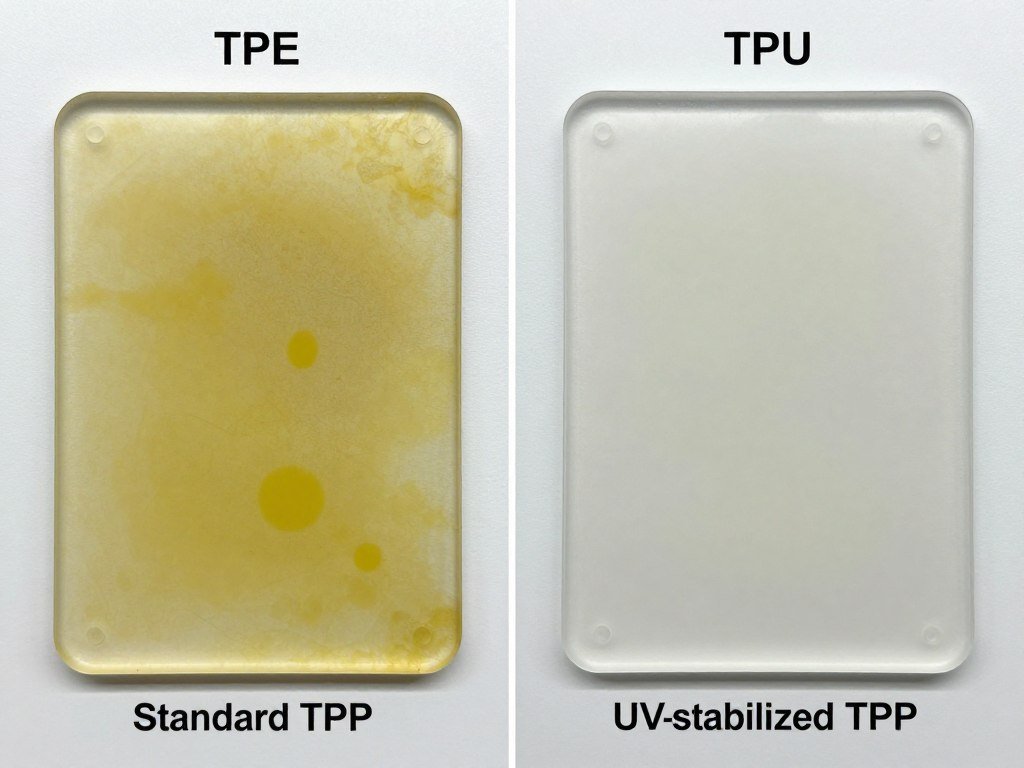
Weather & UV Resistance
- Standard TPU may yellow under long-term UV exposure
- Outdoor use requires HALS-stabilized or aliphatic TPU
- Aliphatic TPU offers best color stability but higher cost
Food Contact & Medical Grade
- Food-grade compliance: FDA 21 CFR / EU 10/2011
- Medical-grade requirements: ISO 10993, FDA DMF
- Industrial grades cannot substitute certified materials
Antistatic / Conductive TPU
- Electronic product packaging and equipment used in explosion-proof areas require control of surface resistivity.
- Antistatic: 10⁶–10⁹ Ω
- Conductive: <10⁶ Ω, Achieved via conductive fillers (e.g., carbon-based systems)
Hydrolysis Resistance
- Polyester TPU may undergo hydrolytic degradation during long-term use in humid environments.
- If the application environment has high humidity but polyester TPU must still be used (e.g., certain oil-resistant applications), modified grades containing carbodiimide hydrolysis stabilizers can be selected.
Quick Reference: Mainstream TPU Brands and Grades
Global and regional TPU suppliers offer extensive product portfolios spanning chemical bases, hardness ranges, and specialized formulations. Understanding major brand families and grade nomenclature systems accelerates material research and supplier communication. This section outlines prominent TPU brands with representative grade examples.
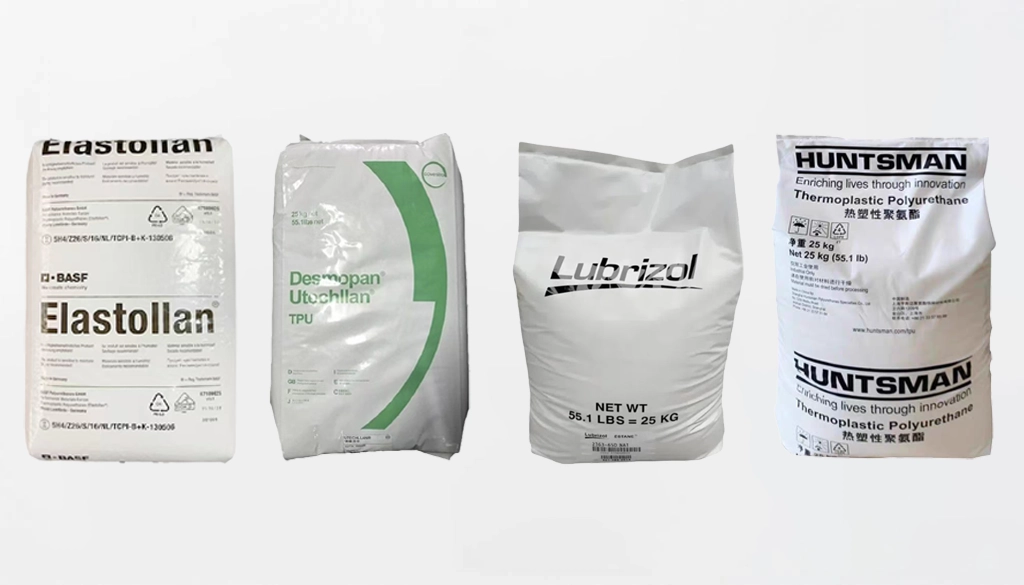
Major Global TPU Manufacturers
Several multinational chemical companies dominate global TPU production with established brand families and comprehensive technical support networks. These suppliers maintain consistent quality standards, broad grade availability, and global distribution infrastructure.
BASF Elastollan
Elastollan represents BASF’s thermoplastic polyurethane brand family encompassing polyester, polyether, and polycaprolactone chemistries. The grade designation system indicates chemistry and hardness through alphanumeric codes.
- Elastollan 1100 Series: Polyether-based TPU for hydrolysis resistance
- Elastollan 600 Series: Polyester-based TPU for mechanical strength
- Elastollan C Series: Polycaprolactone TPU for balanced properties
- Hardness indicated by numerical suffix (e.g., C85A, 1185A, 695A)
- Specialty variants include flame retardant, transparent, and low-temperature grades
Covestro Desmopan
Desmopan TPU from Covestro offers polyester and polyether variants with specialized grades for extrusion, injection molding, and film applications. The product line emphasizes processing versatility and consistent quality.
- Desmopan DP Series: General-purpose injection molding grades
- Desmopan DX Series: Extrusion-optimized formulations
- Desmopan DT Series: Transparent and translucent variants
- Specialty products include UV-stabilized, flame retardant, and soft-touch grades
Lubrizol Estane
Estane TPU provides polyester and polyether chemistry options with particular strength in medical and extruded product applications. The brand maintains extensive regulatory documentation supporting medical device and food contact uses.
- Estane 58000 Series: Aromatic polyester TPU for mechanical performance
- Estane ALR Series: Aliphatic polyester for improved clarity and UV resistance
- Estane 54600 Series: Aromatic polyether offering hydrolysis resistance
- Medical-grade formulations with USP Class VI and ISO 10993 compliance
Huntsman Irogran
Irogran TPU from Huntsman spans polyester and polyether chemistries with emphasis on industrial applications including wheels, films, and cable jacketing. The product range addresses demanding mechanical and environmental requirements.
- Irogran A Series: Polyether TPU for hydrolytic stability
- Irogran S Series: Polyester TPU for mechanical toughness
- Hardness designation integrated into grade names
- Specialized grades for ski boots, inline skates, and industrial applications
| Brand | TPU Chemistry | Key Series | Key Focus |
|---|---|---|---|
| BASF Elastollan | Polyester, Polyether, PCL | 1100 (Polyether), 600 (Polyester), C (PCL) | Hydrolysis resistance, mechanical strength, balanced properties |
| Covestro Desmopan | Polyester, Polyether | DP (Injection molding), DX (Extrusion), DT (Transparent) | Processing versatility, consistent quality |
| Lubrizol Estane | Polyester, Polyether | 58000 (Aromatic polyester), ALR (Aliphatic polyester), 54600 (Polyether) | Mechanical performance, UV resistance, hydrolysis resistance, medical compliance |
| Huntsman Irogran | Polyester, Polyether | A (Polyether), S (Polyester) | Industrial durability, mechanical toughness |
Tips: If the brands listed above do not meet your requirements, feel free to contact us for recommendations for alternative manufacturers’ grades. For cost-effective TPU resin solutions, we can also provide targeted supply options.
5 Critical Parameters to Verify in a TPU Technical Data Sheet (TDS)
Technical data sheets provide standardized performance data enabling informed material selection and design calculations. However, TDS documents vary in completeness and test methodology detail. Certain parameters carry greater weight in determining application suitability and warrant careful verification during grade evaluation.

Hardness
- Key Points: Check the Shore scale (A or D), test standard (ASTM D2240 or ISO 868), dwell time, sample thickness, and measurement temperature.
- Why It Matters: Hardness can vary significantly depending on testing method and conditions. Thin samples or non-standard testing can give misleading values.
- Tip: For accurate comparison across suppliers, ensure identical test methods and conditions.
Tensile Properties
- Key Points: Includes tensile strength at break, elongation at break, tensile modulus, and tensile set.
- Why It Matters: Determines load-bearing capacity, flexibility, and stiffness. Test speed and method affect results, particularly for viscoelastic TPU.
- Tip: Determines load-bearing capacity, flexibility, and stiffness. Test speed and method affect results, particularly for viscoelastic TPU.
Compression Set
- Key Points: Measures permanent deformation after sustained compression. Typically tested at 25% compression at elevated temperatures for a specified duration (ASTM D395 Method B).
- Why It Matters: Critical for seals, gaskets, and cushioning components. Low compression set indicates superior elastic recovery.
- Tip: Verify if testing conditions match actual service conditions.
Abrasion Resistance
- Key Points: Evaluated using standards such as ASTM D4060 (Taber), DIN 53516, ISO 4649, or ASTM D1044. Units include weight loss, volume loss, or haze increase.
- Why It Matters: Determines durability in sliding or wear applications like conveyor parts, shoe soles, or cable jackets. Polyester TPU generally outperforms polyether in abrasion resistance.
- Tip: Select data measured using methods relevant to your application.
Processing Parameters
- Key Points: Includes drying requirements, melt temperature, mold temperature, and melt flow rate (MFR/MVI). Additional guidance may cover screw design, residence time, and purging procedures.
- Why It Matters: Ensures material compatibility with manufacturing equipment and avoids defects.
- Tip: Prefer TDS with processing windows rather than single-point recommendations.
Secondary Parameters to Consider
Depending on application needs, verify additional properties such as:
- Tear resistance, flexural properties, impact strength
- Coefficient of friction, chemical resistance, flammability
- Density
Cross-check TDS data against multiple sources when possible. Supplier technical support can clarify test methodologies and provide additional data not included in standard documentation. Critical applications warrant independent verification testing of candidate materials before final selection.
Conclusion
Thermoplastic polyurethane(TPU) grade selection requires careful consideration of chemistry, processing method, hardness, and special performance requirements. Evaluating these factors systematically helps reduce material risks and ensures products perform reliably under real-world conditions.
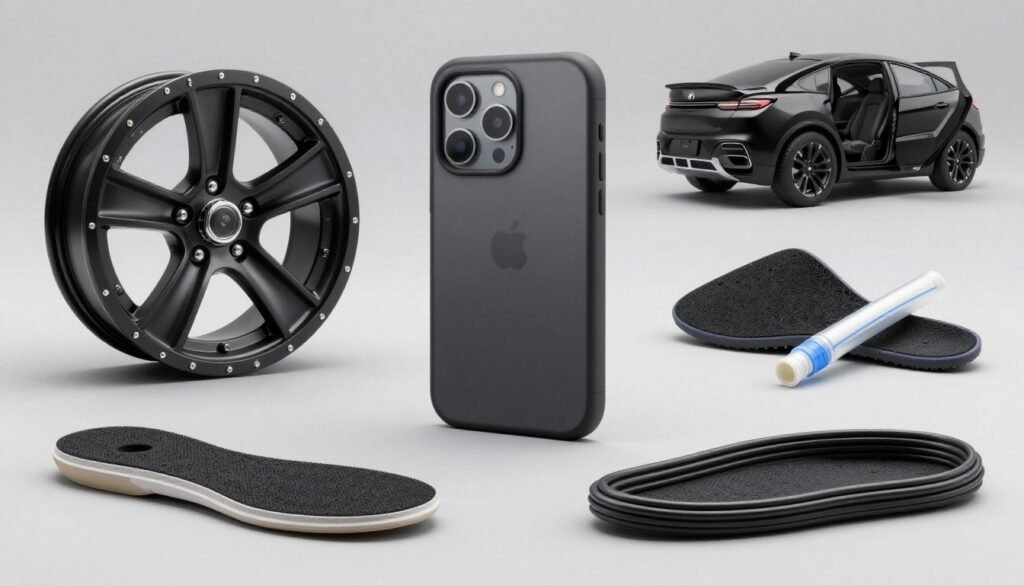
Critical data from technical datasheets, supported by prototype testing and production trials, provides confidence that chosen materials meet application demands. Early identification of environmental, regulatory, and mechanical requirements prevents costly adjustments later in the development cycle.
We offers a broad portfolio of TPU resins, including polyester, polyether, and specialty grades suitable for injection molding, extrusion, film, cable, footwear, automotive, and industrial applications.
Reach out to our technical team to explore suitable TPU materials or request a quotation tailored to your project needs.