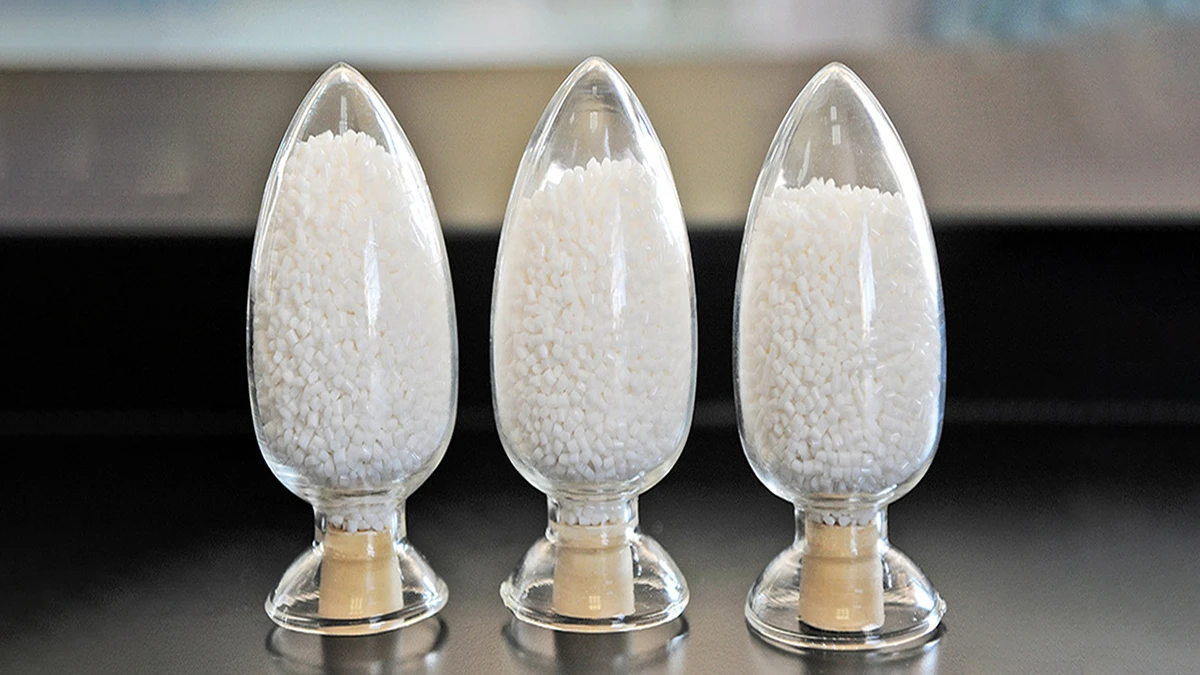
Thermoplastic Polyurethane (TPU) offers excellent abrasion resistance, elasticity, and durability. However, like any engineering material, it also has limitations. Understanding these limitations is essential for selecting the right material and avoiding performance issues in real-world applications.
Not every TPU grade exhibits these disadvantages to the same degree. Performance depends heavily on TPU chemistry, hardness, additives, processing conditions, and the service environment.
Limited Heat Resistance
Softening and creep at elevated temperatures above ~80–85 °C
Specialty gradesMoisture Sensitivity
Processing defects and molecular degradation if not dried
Proper dryingUV Sensitivity
Yellowing and appearance changes in outdoor exposure
Aliphatic TPUHydrolysis Risk
Property loss in hot, humid service environments
Polyether TPUNarrow Processing Window
Greater processing complexity requiring precise controls
Process controlHigher Material Cost
Higher upfront cost vs. commodity plastics like PVC/ABS
Lifecycle cost| TPU Limitation | Typical Impact | Common Mitigation Strategy |
|---|---|---|
| Limited Heat Resistance | Softening and creep at elevated temperatures | Use specialty heat-resistant TPU grades |
| Moisture Sensitivity | Processing defects and molecular degradation | Proper drying and storage |
| UV Sensitivity | Yellowing and appearance changes | Use aliphatic TPU or UV stabilizers |
| Hydrolysis Risk | Property loss in humid environments | Select polyether TPU or hydrolysis stabilizers |
| Narrow Processing Window | Greater processing complexity | Precise process control |
| Higher Material Cost | Increased upfront material expense | Evaluate total lifecycle cost |
Limited Heat Resistance
One of TPU's most important limitations is its relatively modest heat resistance compared with thermoset rubbers and high-performance elastomers. Most standard TPU grades begin to soften and experience creep when exposed to temperatures above approximately 80–85 °C for extended periods.
This characteristic makes standard TPU less suitable for prolonged exposure to high-temperature environments, such as certain under-the-hood automotive applications. Materials such as EPDM rubber, silicone rubber, and fluoroelastomers often provide better long-term thermal stability in these conditions.
Heat resistance can often be improved by selecting higher-hardness TPU grades or specialty heat-resistant TPU formulations designed for demanding thermal environments.
Moisture Sensitivity and Processing Risks
TPU is a hygroscopic material, meaning it readily absorbs moisture from the surrounding environment. If TPU pellets are not properly dried before extrusion or injection molding, absorbed moisture can trigger hydrolytic degradation during processing.
- Melt foaming during processing
- Surface defects and visible bubbles
- Reduced molecular weight and chain length
- Lower mechanical performance of final parts
- Increased scrap rates and material waste
For processors, moisture management is a critical requirement for maintaining consistent product quality.
Proper drying equipment, controlled storage conditions, and well-defined processing procedures can effectively prevent moisture-related defects and preserve material performance.
UV Sensitivity
Aromatic TPU grades are particularly susceptible to ultraviolet (UV) radiation. Prolonged outdoor exposure can cause discoloration, yellowing, and gradual deterioration of appearance. Although mechanical properties may remain acceptable in some applications, color stability is often important for consumer products, transparent parts, and outdoor applications.
When UV stability is critical, manufacturers often choose aliphatic TPU grades or incorporate UV stabilizers and HALS (Hindered Amine Light Stabilizers) into the formulation.
Not Sure Which TPU Grade Is Right?
Our TPU Selection Guide walks you through polyester vs. polyether grades, hardness ranges, and application-specific performance criteria — all in one place.
Hydrolysis Risk in Humid Environments
Hydrolysis resistance varies significantly between TPU chemistries. Polyester-based TPU can be vulnerable to hydrolysis in hot and humid environments. Over time, water molecules may attack the polymer backbone, causing chain scission and a gradual reduction in mechanical properties.
This consideration is especially important for applications exposed to moisture, elevated temperatures, or long service lives.
For a deeper understanding of polyester and polyether TPU chemistry, see our foundational article.
For humid or water-exposed applications, engineers often select polyether TPU grades because of their superior hydrolysis resistance. Hydrolysis stabilizers, such as carbodiimide additives, can also enhance long-term durability. Choosing the appropriate TPU chemistry is often the most effective way to avoid environmental degradation.
Narrow Processing Window
TPU melt viscosity is highly sensitive to temperature changes, resulting in a relatively narrow processing window. If processing temperatures are too low, flowability may be insufficient, leading to incomplete mold filling. If temperatures are too high, thermal degradation can occur rapidly.
Successful processing often requires:
- 1Precise temperature control throughout the process
- 2Proper screw design matched to TPU rheology
- 3Optimized mold temperatures for part quality
- 4Carefully managed residence times to prevent degradation
Manufacturers unfamiliar with TPU processing may require additional process development to achieve consistent production quality.
Careful equipment selection, process optimization, and operator experience can significantly improve manufacturing consistency.
High Surface Friction and Demolding Challenges
Soft TPU grades, particularly those in the 60A–80A hardness range, can exhibit a tacky surface and relatively high coefficient of friction. During injection molding, these materials may adhere to mold surfaces, making part ejection more difficult. Complex geometries can further increase demolding challenges and cycle times.
Appropriate mold design, optimized draft angles, specialized surface finishes, and suitable mold-release technologies can improve demolding performance and production efficiency.
Higher Material Cost
Compared with commodity plastics such as PVC and ABS, as well as some general-purpose TPE-S materials, TPU typically has a higher raw material cost. In addition, drying requirements and tighter processing controls can increase manufacturing expenses.
However, evaluating TPU solely on material price can be misleading. In many applications, its superior abrasion resistance, flexibility, and durability contribute to longer service life and reduced replacement frequency, helping lower the total cost of ownership.
Evaluate TPU on a total lifecycle cost basis rather than raw material price alone. Longer part life and reduced maintenance or replacement frequency often justify the higher upfront investment.
Conclusion
The disadvantages of TPU include limited heat resistance, moisture sensitivity, UV-related appearance changes, hydrolysis risk, processing complexity, demolding challenges, and higher material costs. However, the severity of these drawbacks varies significantly between TPU grades and application environments.
Most TPU limitations can be effectively managed through proper grade selection, formulation design, and process control. The key question is not whether TPU has disadvantages, but whether a particular TPU grade is suitable for the performance requirements of your application.
Despite these limitations, TPU remains one of the most versatile and widely used thermoplastic elastomers in industries ranging from automotive and electronics to footwear and industrial manufacturing. To explore where TPU delivers the greatest value, see our article What Is Thermoplastic Polyurethane (TPU) Used For?