
Transform Your Business with PLA Resin Solutions
Partner with us for high-quality Polylactic Acid (PLA) that's not just better for the planet, but better for your bottom line. We're here to guide you through the sustainable packaging revolution with proven expertise and reliable supply chains.
Get Your Custom Quote Today
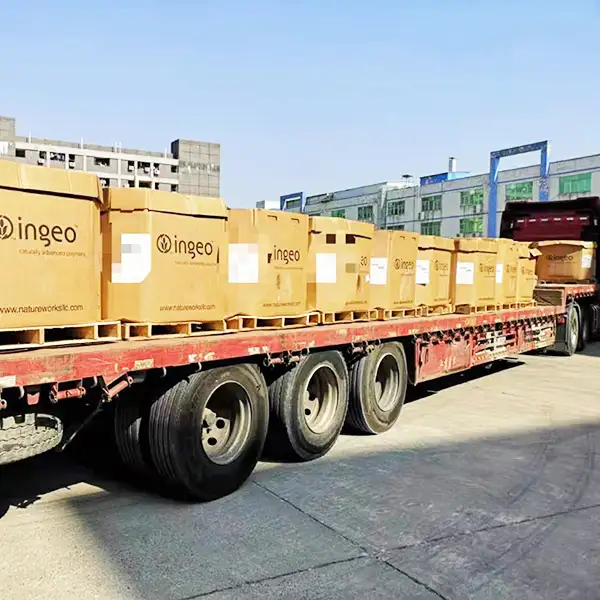
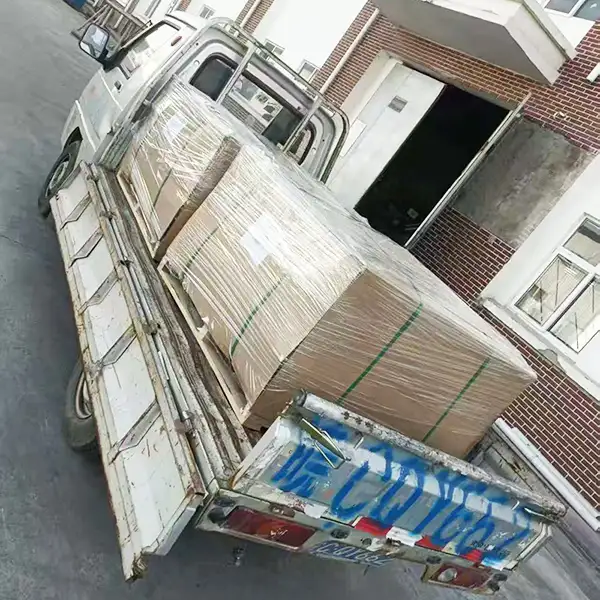
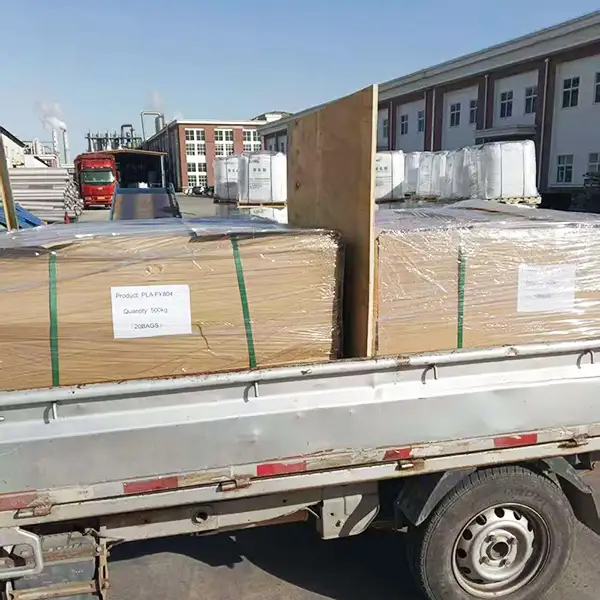
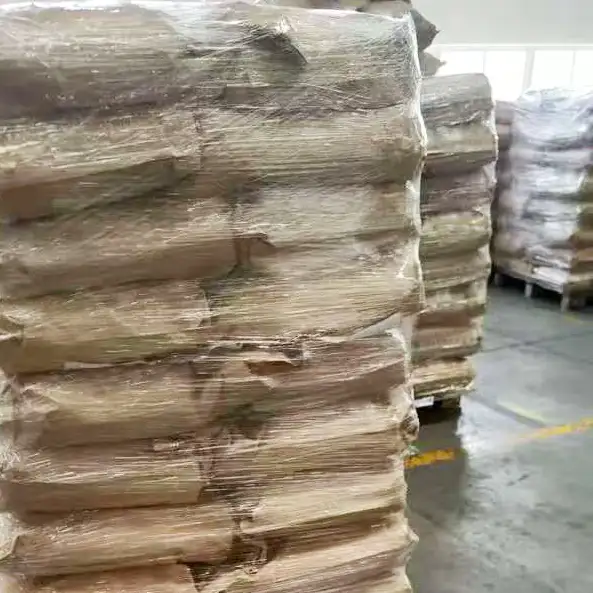
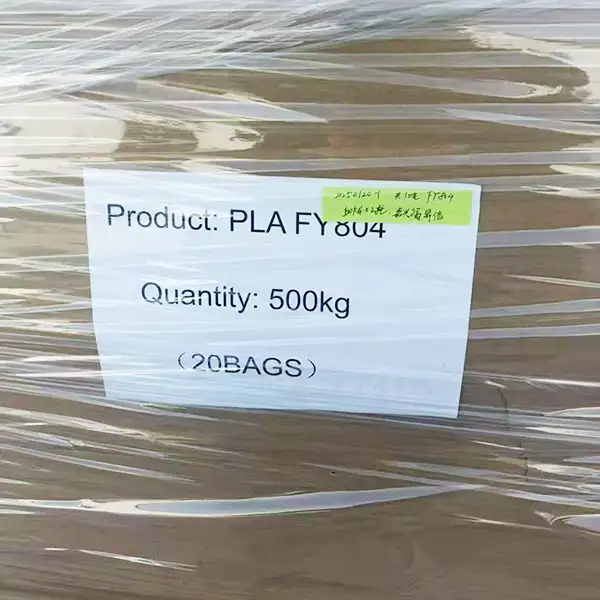
Polylactic acid (PLA resin)
Appearance:
Polylactic Acid (PLA) typically appears as a transparent or translucent polymer, often in natural white or slightly colored forms. It can also be found in various colors when used for applications like 3D printing or packaging.
HS Code: 39077000
Other Names:
Polylactide
Poly(lactic acid)
PLA
Poly(2-hydroxypropanoic acid)
Poly(2-hydroxypropionic acid)
Identifiers:
CAS Number: 26100-51-6
UNII: 529P41F9RT
CompTox Dashboard (EPA): DTXSID20904131
Properties:
Molecular Formula (MF): (C₃H₄O₂)ₙ
Density: 1.24 g/cm³
Melting Point: 150 to 160 °C (302 to 320 °F; 423 to 433 K)
Additional Properties: Biodegradable, compostable under industrial conditions, derived from renewable resources like corn starch or sugarcane.
Sales Plastics offer PLA resins in various grades to suit different applications, including 3D printing, packaging, and disposable tableware. PLA is valued for its eco-friendly properties and versatility. Not sure which grade is right for you? Just drop us a message with your requirements, and our team will get back to you within 24 hours.
Why Your Customers Will Love PLA
Environmental consciousness isn't just a trend - it's becoming a business requirement. PLA gives you the sustainability story your customers demand, backed by real science.
85% Lower Carbon Footprint
Scientifically verified by World Economic Forum - virgin PLA produces only 0.29 kg CO₂-eq per kg compared to conventional plastics.
Multiple End-of-Life Options
Mechanical recycling, chemical recycling, and industrial composting - PLA adapts to your local waste infrastructure.
100% Biobased from Renewable Sources
Made from corn starch and sugarcane, using only 0.013% of global agricultural land - no threat to food security.
Technical Excellence You Can Count On
We know you need reliable performance data. Our PLA consistently meets or exceeds industry standards, giving you confidence in every application.
Mechanical Properties
Certifications & Standards
ASTM D6400 Certified
Meets industrial composting standards - biodegrades 90% within 180 days
FDA Food Contact Approved
Safe for direct food packaging applications
ISO 14001 Manufacturing
Environmental management system certified production
BPI Compostable Certified
Third-party verified compostability credentials
supply Various Grades of PLA pellets
| Grade No. | Manufacturer | Melt Flow (g/10 min) | Peak Melt Temp (℃) | Properties | Application |
| 2003D | NatureWorks | 6 | 145-160 | DOWNLOAD | Transparent extrusion |
| 2500HP | NatureWorks | 8 | 165-180 | DOWNLOAD | High viscosity, crystallization during processing |
| 3001D | NatureWorks | 22 | 155-170 | DOWNLOAD | Medium-flow injection molding |
| 3052D | NatureWorks | 14 | 145-160 | DOWNLOAD | Lubricated medium-flow injection molding |
| 3100HP | NatureWorks | 24 | 165-180 | DOWNLOAD | Medium-flow injection molding |
| 3251D | NatureWorks | 80/35* | 155-170 | DOWNLOAD | Ultra-high flow injection molding |
| 3D700 | NatureWorks | 9.00 – 12.0 | N/A | DOWNLOAD | 3D printing monofilaments |
| 3D850 | NatureWorks | 7.00 – 9.00 | 165-180 | DOWNLOAD | High transparency 3D printing monofilaments |
| 3D870 | NatureWorks | 9.00 – 15.0 | 165-181 | DOWNLOAD | Industrial 3D printing (high heat & impact resistance) |
| 6060D | NatureWorks | 10 | 125-135 | DOWNLOAD | Staple fiber/bico fiber sheath (fibers/nonwovens) |
| 6100D | NatureWorks | 24 | 165-180 | DOWNLOAD | Fibers requiring dimensional stability |
| 6201D | NatureWorks | 15-30 | 155-170 | DOWNLOAD | Dyed fiber applications (continuous filament/staple) |
| 6202D | NatureWorks | 15-30 | 155-170 | DOWNLOAD | Non-dyed fiber applications (nonwovens) |
| 6252D | NatureWorks | 80 | 155-170 | DOWNLOAD | Meltblown fibers |
| 6400D | NatureWorks | 4.0 – 8.0 | 160 – 170 | DOWNLOAD | Monofilament/BCF/industrial multifilament |
| 6752D | NatureWorks | 15 | 145 – 160 | DOWNLOAD | Spunbond sheath polymer |
| 4032D | NatureWorks | 7 | 155 – 170 | DOWNLOAD | High-heat films (semi-crystalline) |
| 4043D | NatureWorks | 6 | 145 – 160 | DOWNLOAD | General-purpose films |
| 4060D | NatureWorks | 10 | N/A | DOWNLOAD | Heat-seal layer for amorphous films |
Versatile Applications for Every Industry
From food packaging to automotive components, PLA is revolutionizing industries. Let us help you find the perfect application for your specific needs.
Packaging Solutions
Food containers, films, bottles, and rigid thermoform packaging that customers love
Automotive Parts
Interior components and under-hood parts with excellent dimensional stability
Textile Fibers
Sustainable textile applications with excellent drape and comfort properties
3D Printing
Premium filaments for prototyping and production with low warping characteristics
Reliable Supply Chain, Global Reach
We understand that consistency and reliability are everything in your business. Our manufacturing partnerships and quality systems ensure you get what you need, when you need it.
2.47M Tonnes
Global bioplastics production capacity in 2024, growing to 5.73M tonnes by 2029
58% Utilization
Current industry capacity utilization ensures room for growth and supply flexibility
Global Network
Strategic partnerships with leading manufacturers across North America, Europe, and Asia
Raw Material Sources
Corn Starch
64%
Primary feedstock with excellent availability and cost-effectiveness
Sugarcane
26%
Sustainable alternative with superior thermal properties
Other Sources
10%
Cassava and other renewable feedstocks for specialized applications
Why Partner With Us?
We're not just another supplier - we're your strategic partner in the sustainable materials journey. Here's what sets us apart and why leading companies trust us with their PLA needs.
Consultative Approach
We take time to understand your specific challenges and provide tailored solutions, not one-size-fits-all products.
Quality Assurance
Every batch tested to specification with full traceability and certification documentation.
Reliable Delivery
Consistent supply schedules and inventory management to keep your production running smoothly.
Technical Support
Expert technical team available for processing optimization and troubleshooting support.
Competitive Pricing
Volume discounts and flexible payment terms that make sense for your business model.
Sustainability Expertise
Help you communicate your environmental benefits and meet sustainability reporting requirements.
We're here to meet all your PLA resin needs
Polylactic acid FAQs
What are the common applications for PLA products?
PLA is versatile and finds use in various applications, including:
Packaging: Ideal for clear food packaging, disposable utensils, and containers due to its transparency and low migration properties.
3D Printing: PLA is one of the most common filament choices because it is user-friendly, emits fewer odors during printing, and provides a smooth finish.
Biomedicine: Due to its biocompatibility, PLA is used in medical implants, drug delivery systems, and tissue engineering.
Disposable Items: Its compostable nature makes it a strong candidate for single-use items where environmental impact is a concern.
Performance data and industry studies continue to support PLA’s use in these diverse sectors.
How does PLA compare to conventional plastics in terms of environmental impact?
PLA offers significant environmental advantages over traditional petroleum-based plastics:
Reduced Carbon Footprint: Production from renewable resources generally results in lower CO₂ emissions compared to conventional plastics.
Biodegradability: In industrial composting facilities, PLA can decompose within months, reducing long-term waste accumulation.
Energy Efficiency: Some studies have found that the overall energy required for PLA production is lower when factoring in the renewable origin of its raw materials.
These benefits are supported by environmental impact studies and sustainability certifications that many manufacturers provide alongside their product documentation.
What are the processing characteristics of PLA?
PLA is favored for its ease of processing and predictable behavior in various manufacturing methods:
Injection Molding & Extrusion: PLA exhibits a consistent melt flow index (MFI), which helps in achieving precise molds and uniform extrudates.
3D Printing: Its low melting point (typically between 150°C and 160°C) and minimal warping make it ideal for desktop 3D printers.
Thermoforming: While PLA is less flexible compared to some other plastics, specialized grades have been developed for improved thermoforming performance.
Data from processing trials support its reliability, with manufacturers optimizing formulas to meet specific processing parameters.
How is quality and consistency ensured in PLA production?
Quality control in PLA production is maintained through a series of rigorous measures:
Raw Material Verification: Suppliers are required to meet strict certifications, ensuring the purity and consistency of biobased feedstock.
In-Process Monitoring: Key variables such as temperature, pressure, and reaction time are closely monitored during polymerization.
Standardized Testing: Final products are subject to standardized tests (e.g., ASTM or ISO) to verify tensile strength, impact resistance, and thermal properties.
Certification and Documentation: Many PLA products come with environmental compliance certifications (e.g., EN 13432) and comprehensive technical datasheets.
These systematic quality control processes guarantee that PLA meets both industry standards and customer expectations.
What considerations should be taken into account when using PLA in various environments?
While PLA offers many benefits, certain limitations should be considered for optimal performance:
Temperature Sensitivity: PLA has a relatively low glass transition temperature (around 55–65°C), which may limit its use in high-temperature applications unless stabilized through blending or additives.
Mechanical Properties: While sufficient for many applications, PLA may not exhibit the same toughness or flexibility as some conventional plastics under extreme stress.
Compostability Conditions: Effective biodegradation typically requires industrial composting conditions; in home composting systems, degradation rates may be slower.
Understanding these factors helps in selecting the right grade of PLA for specific applications while balancing performance with environmental benefits.