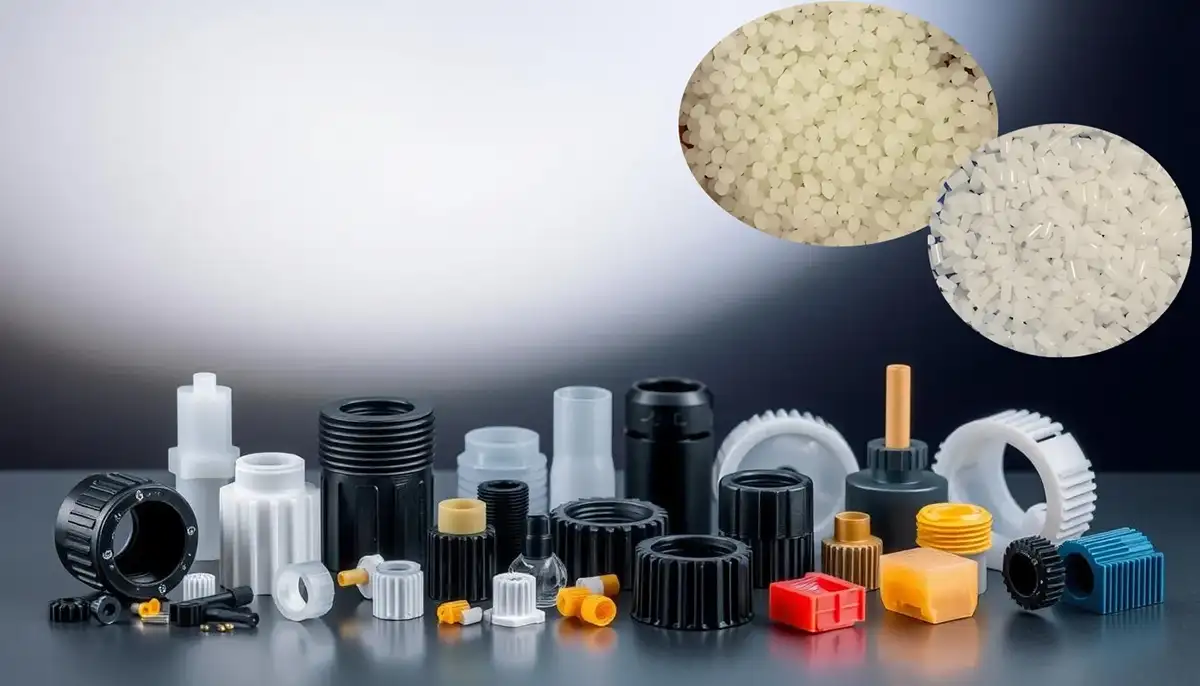
Poly(lactic acid) derives from corn starch or sugarcane and decomposes fully in industrial composting facilities. Each PLA grade targets a specific process, delivering distinct mechanical, thermal, and barrier properties. The sections below map the main processing routes to real-world applications, with verified performance data attached to each family.
Injection Molding
High-flow grades in the 3 series (3251D, 3100HP, 3260HP) contain fast-acting nucleators and chain extenders. Crystallization half-time drops from ~180 seconds in standard PLA to 30–60 seconds. Result: cycle times shorten 20–40%, while impact strength rises above 25 kJ/m² in modified versions.
Daily production now includes:
- Transparent cutlery and coffee capsules (food-contact certified)
- Glossy cosmetic jars and phone accessory shells
- Durable garden tool handles that withstand repeated drops
Case Study: One Northern European tableware producer switched to 3100HP last year and recorded 35% higher cavity output plus an 8% lower total part cost.
Extrusion & Thermoforming
The 2 series backbone—2003D, 4032D, and the Ingeo™ Extend range—raises heat-distortion temperature to 85–120 °C after annealing. Biaxial orientation reaches draw ratios of 7×, yielding films down to 15 μm. Oxygen transmission rates fall roughly 30% below PET at equal thickness.
Current commercial products:
- Crystal-clear salad bowls and fruit trays
- Hot-fill coffee lids and ovenable CPET replacements
- Ultra-thin window-envelope films and compostable labels
Note: Modified-atmosphere vegetable packs gain extra shelf life from the improved barrier.
Fiber & Nonwoven Production
The 6 series (6202D, 6260D, 6302D) spins reliably from 1.2 denier microfiber to coarse monofilament. Melt index stays consistent across broad temperature windows, essential for high-speed meltblown lines. Hydrophilic finishes added post-spinning deliver full strike-through in under 30 seconds combined with fast lateral wicking.
Established uses:
- Dry-touch topsheets in sanitary napkins and pantyliners
- Skin-contact layers in premium baby diapers
- Agricultural ground cover and single-use medical gowns
Multiple global hygiene brands have committed to full PLA topsheet conversion between 2025 and 2027.
Emerging High-Value Segments
- 3D Printing: Filaments 3D850 and 3D860 crystallize rapidly, limiting warpage to one-fifth the level of ABS while maintaining interlayer adhesion.
- Medical: Medical-grade resins (Purasorb PL series) already form resorbable bone screws, sutures, and drug-eluting stents cleared by FDA and CE.
- Automotive: Interior trim now incorporates heat-stabilized PLA blended with flax or hemp; parts have passed VW and BMW durability specs for door panels and parcel shelves.
PLA has moved beyond laboratory promise into daily manufacturing reality. Matching the right grade to the chosen process determines whether a project meets both performance targets and sustainability requirements. Ongoing formulation work continues to close remaining gaps in heat resistance and toughness, widening the material’s reach year by year.Matching the right grade to your equipment and performance needs becomes straightforward with detailed technical data. The complete NatureWorks Ingeo™ injection, extrusion, and fiber grade table—including MFI, D-content, and practical temperature ratings—appears in this companion article:PLA Material: NatureWorks Injection, Extrusion & Fiber Grades