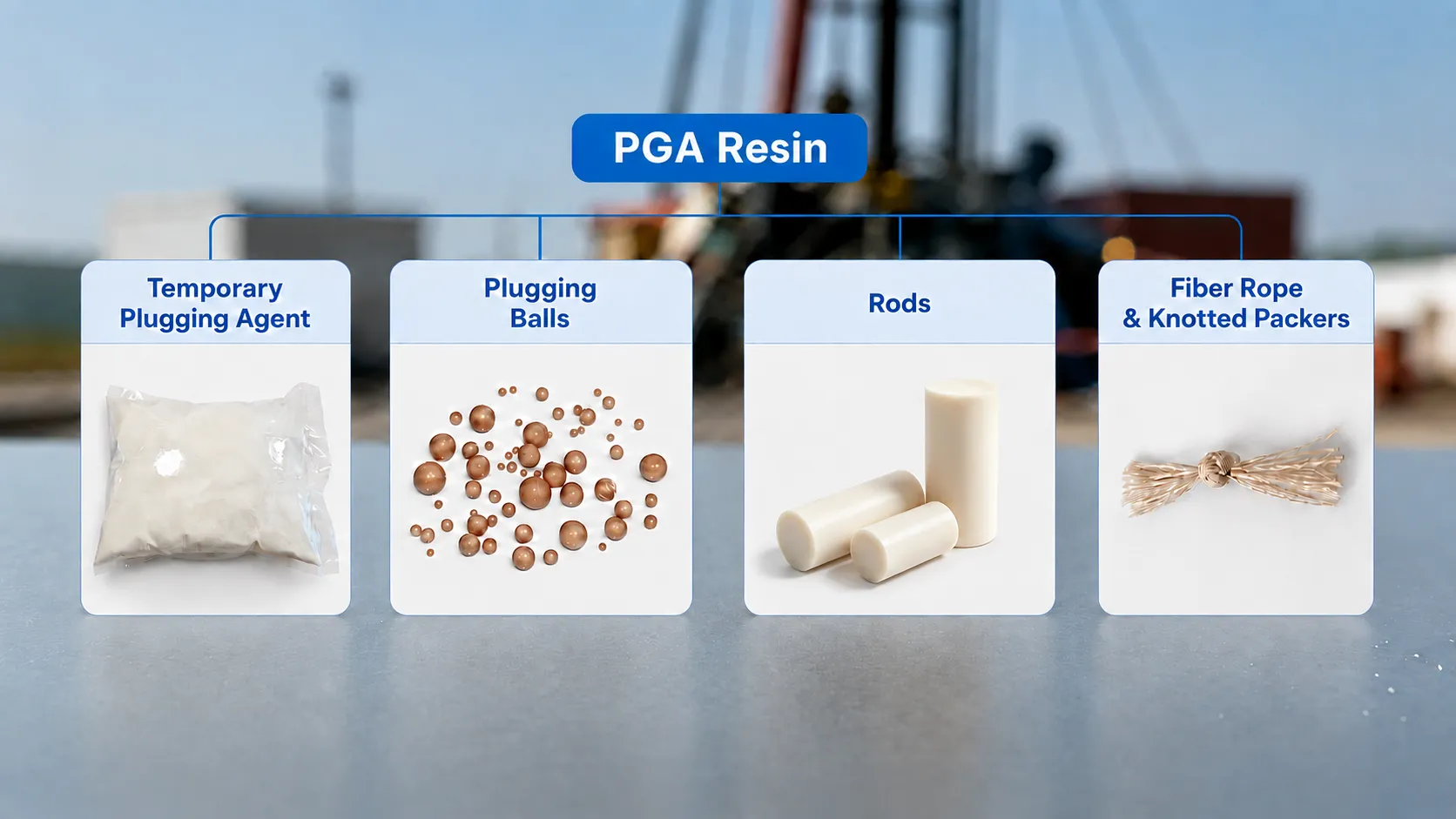
Polyglycolic acid (PGA) has become an important biodegradable polymer for oil and gas applications, particularly in temporary plugging, hydraulic fracturing, and well completion operations. Its combination of mechanical strength and controlled degradation allows PGA-based products to provide temporary downhole performance while gradually breaking down after completing their designed function.
Under suitable wellbore temperature and fluid conditions, PGA products gradually degrade after completing their temporary function. This property enables the development of various degradable oilfield products, including temporary plugging agents, temporary plugging balls (frac balls), degradable tools, and other downhole components.
This guide explores the major applications of Polyglycolic Acid (PGA) in the oil and gas industry, explaining how different PGA-based products support temporary plugging, zonal isolation, and well completion operations. It also discusses application requirements and material selection considerations to help engineers, manufacturers, and procurement professionals identify suitable PGA solutions for different operating conditions.
Why Is Polyglycolic Acid (PGA) Suitable for Oil and Gas Applications?
Oil and gas operations require temporary plugging materials that can withstand high downhole pressures during treatment while degrading reliably after the job is completed. Conventional materials often require milling or retrieval, increasing operational complexity and costs.
Polyglycolic Acid (PGA) addresses these challenges by combining high mechanical strength with predictable hydrolytic degradation, making it one of the most widely adopted biodegradable materials for modern oilfield applications.
High Mechanical Strength for Reliable Downhole Performance

PGA provides the mechanical strength required for demanding downhole environments. Its highly crystalline structure helps maintain structural integrity under differential pressure and compressive loads encountered during hydraulic fracturing and well completion operations.
This combination of strength and dimensional stability allows PGA-based components to maintain reliable temporary support during critical treatment stages.
Predictable and Controlled Degradation
One of PGA’s most valuable characteristics is its controlled degradation behavior. After completing its temporary sealing function, PGA gradually degrades through hydrolysis when exposed to wellbore fluids under suitable temperature conditions. Unlike conventional plugging materials, PGA products can reduce or eliminate the need for mechanical removal in suitable applications, helping simplify post-treatment operations.
The degradation rate can be adjusted by selecting appropriate resin grades and product designs, allowing manufacturers to optimize performance for different reservoir conditions and operational windows. Key factors influencing PGA degradation include:
| Factor | Influence on Degradation |
| Wellbore temperature | Higher temperatures generally accelerate degradation |
| Molecular weight | Lower molecular weight typically degrades faster |
| Polymer crystallinity | Higher crystallinity usually extends service life |
| Component size | Larger components generally require more time to degrade |
| Fluid environment | Water chemistry and pH may influence degradation behavior |
Understanding these factors helps engineers select suitable PGA materials for different oilfield applications.
Operational Benefits for Modern Oilfield Applications
Beyond mechanical performance, PGA provides operational advantages by simplifying temporary downhole operations. Its degradable characteristics help reduce the complexity associated with retrieving temporary components after treatment.
PGA also shows good compatibility with commonly used completion and stimulation fluids under properly designed operating conditions, supporting reliable performance in various well environments.
These material characteristics enable PGA to be used in a variety of degradable oilfield applications. The following sections introduce how different PGA products support temporary plugging, zonal isolation, and well completion operations.
Major Applications of PGA in Oil and Gas
PGA materials are currently used to develop various degradable oilfield products, including temporary plugging agents, temporary plugging balls, degradable bridge plugs, rods, fibers, and fiber-based isolation components.
Depending on operational requirements, PGA resin can be processed into different product forms to support temporary plugging, zonal isolation, and well completion operations. The following sections introduce the major applications of PGA in oil and gas.
PGA Temporary Plugging Agents
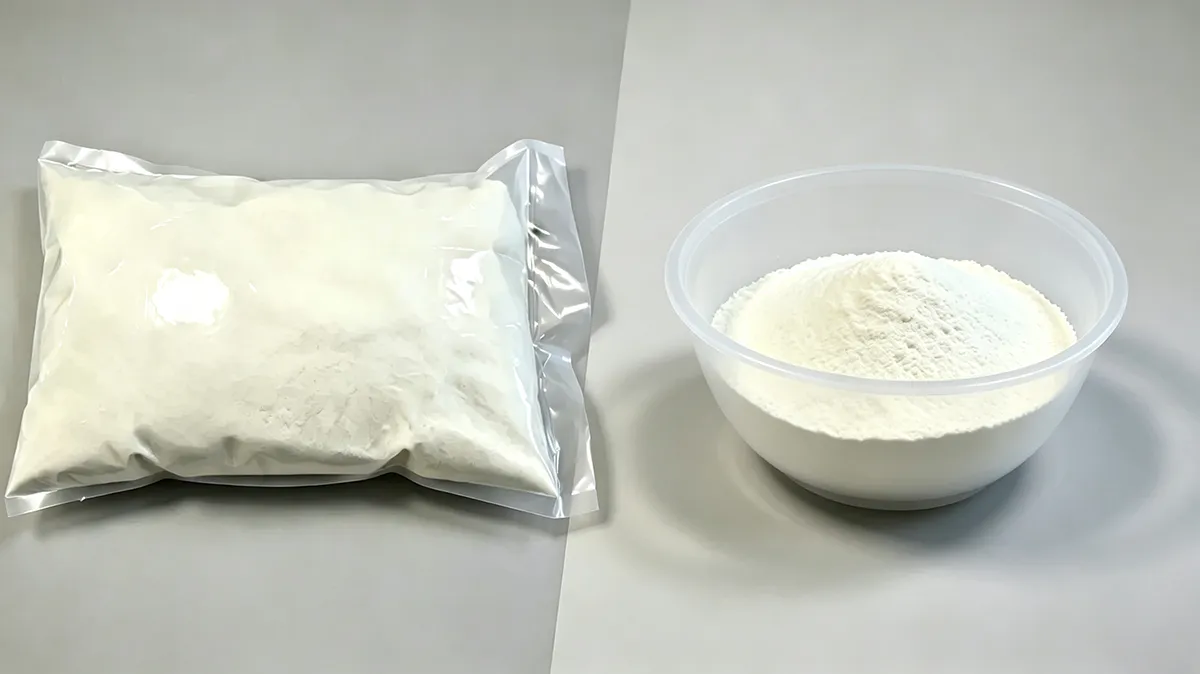
Temporary plugging agents are one of the most important applications of PGA in oil and gas operations, particularly in multi-stage hydraulic fracturing. These materials are used to temporarily block fractures, perforations, or flow paths, allowing operators to redirect treatment fluids into targeted zones and improve reservoir stimulation efficiency.
PGA-based plugging agents work through controlled particle bridging and packing mechanisms. When pumped into the wellbore, PGA particles form temporary barriers under differential pressure, providing effective isolation during fracturing operations. After completing the treatment stage, the material gradually degrades, restoring flow paths without requiring additional milling operations.
Compared with traditional temporary plugging materials, PGA offers advantages including:
PGA Temporary Plugging Agent Grades & Specifications
| PGA Temporary Plugging Agent Grade | Recommended Temperature | Particle Size Options | Dissolution Time | Key Performance |
|---|---|---|---|---|
| Low Temperature Grade | 40°C | 1–5 mm / 20–100 mesh | 2–48 h | Fast degradation for shallow well applications |
| Medium Temperature Grade | 60°C–90°C | 1–5 mm / 20–100 mesh | 2–96 h | Balanced strength and degradation performance |
| High Temperature Grade | 120°C–150°C | 1–5 mm / 20–100 mesh | 6–72 h | Extended stability for deeper formations |
| Ultra High Temperature Grade | 180°C | 1–5 mm / 20–100 mesh | 8–60 h | Designed for challenging high-temperature wells |
PGA Temporary Plugging Balls
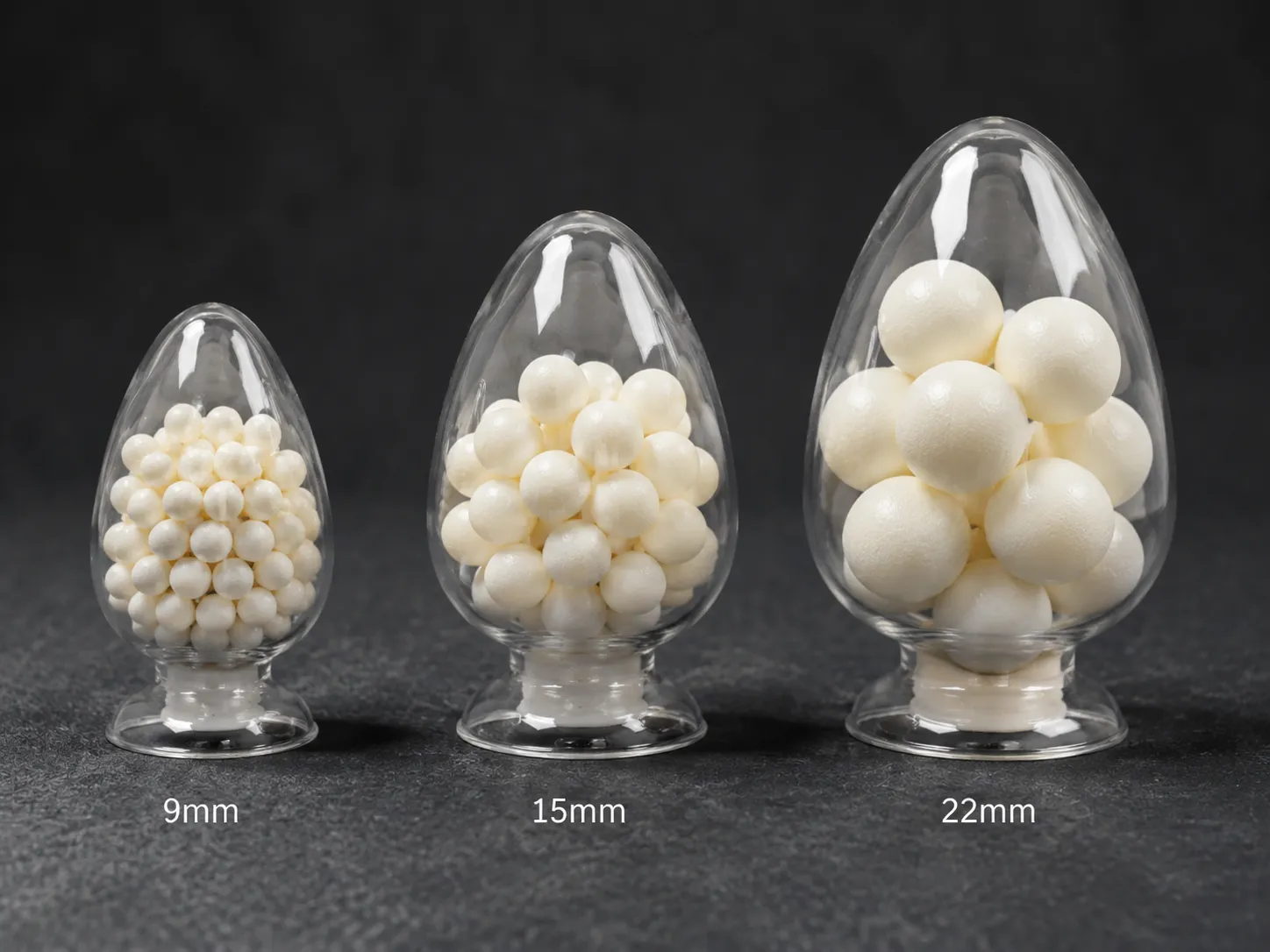
PGA temporary plugging balls are designed for ball-drop completion systems, providing temporary isolation during fracturing operations before controlled degradation.
During operation, PGA balls provide mechanical isolation by seating in designated restrictions or sleeves. Their high structural integrity allows them to withstand treatment pressures during fracturing stages. After completing their function, the balls gradually degrade according to the designed degradation profile, eliminating the need for conventional retrieval or milling.
Key advantages of PGA frac balls include:
PGA Plugging Balls Specifications by Temperature Range
Low-Temperature Range (40°C - 60°C)
Designed for low-to-moderate temperature well conditions, providing reliable temporary plugging and controlled degradation.
- Size Range: 9 – 22 mm
- Dissolution Time: 4-72h (40°C) / 4-12h (60°C)
- Strength: ≥ 40 MPa (Spherical)
- Fluid Compatibility: Acid & Conventional Fluids
Medium-Temperature (90°C - 120°C)
Features the widest particle size span and broad application range, ideal for versatile multi-stage fracturing and zonal isolation.
- Size Range: 9 – 96 mm (Widest span)
- Dissolution Time: 6 – 72 hours
- Strength: ≥ 40 MPa (Spherical)
- Fluid Compatibility: Acid & Conventional Fluids
High-Temperature Range (150°C - 180°C)
Engineered for extreme downhole thermal environments, ensuring stable structural integrity and controlled dissolution in deep wells.
- Size Range: 4-22mm (150°C) / 9-22mm (180°C)
- Dissolution Time: 10-48h (150°C) / 12-72h (180°C)
- Strength: ≥ 40 MPa (Spherical)
- Fluid Compatibility: Acid & Conventional Fluids
PGA Rods for Oilfield Temporary Applications
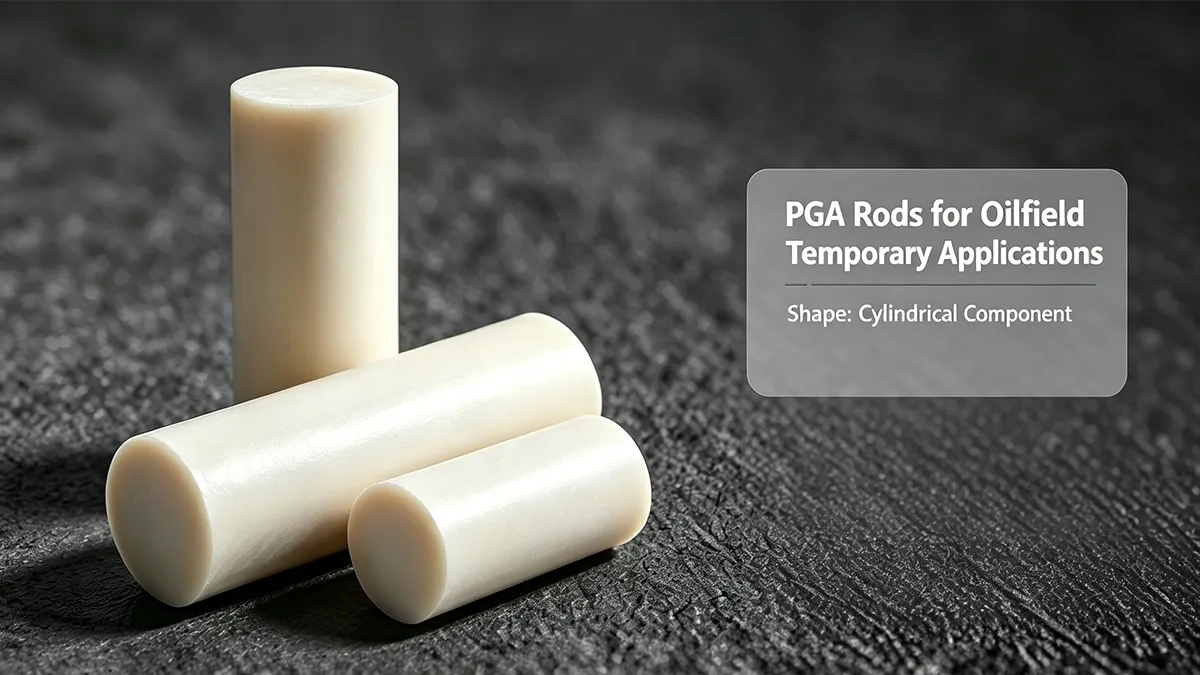
Polyglycolic Acid (PGA) rods are biodegradable cylindrical components designed for temporary structural support in wellbore isolation, temporary plugging systems, and completion tools. They provide the required mechanical performance during operation before gradually degrading under suitable downhole conditions.
PGA rods are manufactured through extrusion or molding processes and can be customized in diameter, length, mechanical strength, and degradation time to meet different oilfield application requirements.
Applications of PGA Rods in Oil and Gas
Temporary Plug Systems
PGA rods are used as structural components in temporary plug assemblies for wellbore isolation during fracturing, stimulation, and well testing operations.
The high initial strength of PGA rods helps maintain reliable isolation under differential pressure conditions.PGA rods can be designed as temporary structural elements in downhole tools where dimensional stability is required during deployment and operation. After the operation is completed, the rods gradually degrade, reducing the need for milling or mechanical recovery.
Fracture Sleeve Applications
PGA rods can also function as temporary actuating or locking components in fracture sleeve systems. The rods maintain the required tool configuration during deployment and initial operation stages before degrading according to the designed completion sequence.
By adjusting PGA formulation and molecular weight, degradation timing can be customized to match different operational requirements.
Key Characteristics of PGA Rods
PGA Rod Specifications
PGA rods can be customized according to different completion requirements.
| Parameter | Typical Specification |
|---|---|
| Diameter | 60 mm / 80 mm / 100 mm / 120 mm |
| Length | 600 mm |
| Other Dimensions | Customizable based on application requirements |
Customizable PGA Rod Solutions
The performance of PGA rods can be optimized by adjusting polymer formulation, molecular weight, and processing conditions. This allows manufacturers to balance mechanical strength, degradation time, and operational requirements for different temporary downhole applications.
PGA Fiber Rope and Knotted Packers for Oilfield Applications
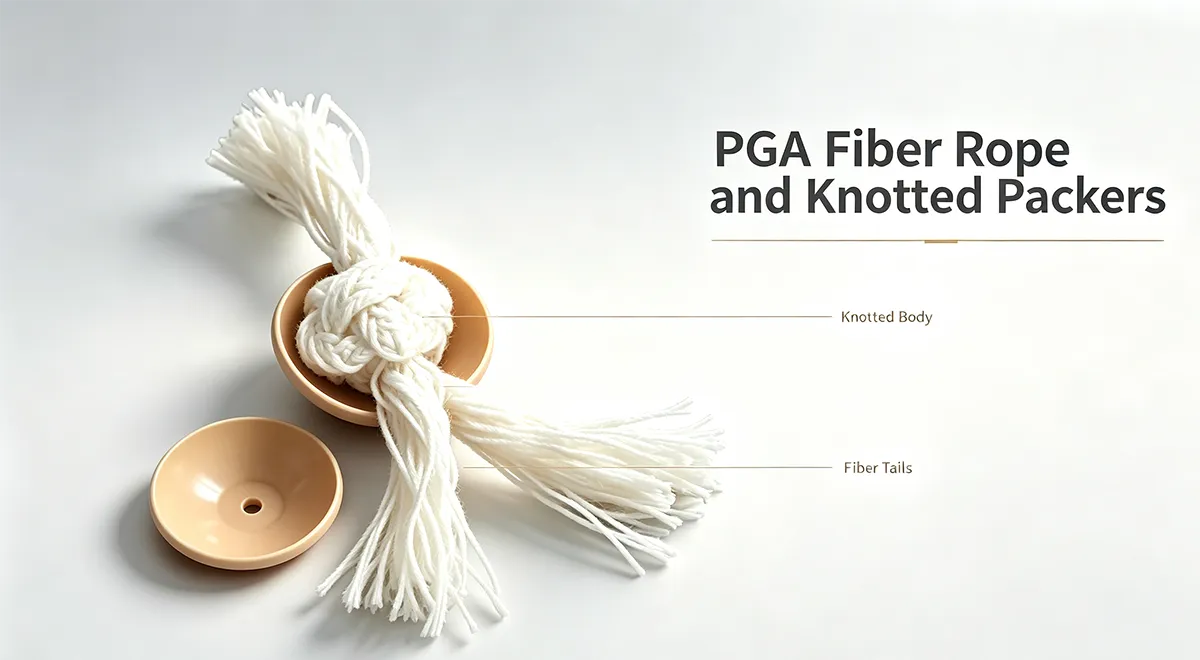
PGA fiber rope and knotted packers are biodegradable isolation components manufactured from high-performance PGA fibers. Their flexible fiber structure allows them to conform to different wellbore geometries while providing temporary mechanical support during downhole operations.
By utilizing the expansion characteristics of specially designed PGA fiber knot structures, these products can be used for temporary diversion, layer isolation, and other well intervention applications. After completing their designed function, the PGA material gradually degrades under suitable downhole conditions, reducing the need for retrieval operations.
Applications of PGA Knotted Packers in Oil and Gas
Temporary Diversion and Layer Isolation
PGA knotted packers provide a versatile solution for temporary diversion and isolation during hydraulic fracturing and refracturing operations.
Type 1 PGA knotted packers can effectively seal both regular and irregular wellbore profiles, making them suitable for:
- Mid-stage diversion during fracturing operations;
- Temporary layer isolation;
- Improving cluster efficiency and overall production performance.
The degradable PGA material helps reduce the risk of reservoir damage associated with conventional temporary plugging materials.
Bridge Plug Replacement Applications
Type 2 PGA knotted packers can be used together with bridge plugs or serve as a complete alternative in specific completion applications.
By replacing conventional fracturing bridge plugs, PGA knotted packers help operators avoid additional completion costs and reduce risks associated with plug setting, drilling, and milling operations.
This degradable isolation technology provides a simpler and more economical solution for temporary wellbore management.
Key Characteristics of PGA Knotted Packers
Looking for PGA Solutions for Oilfield Applications?
We provide PGA-based solutions for temporary plugging, frac balls, rods, and fiber-based isolation applications. Contact our technical team to discuss suitable products and performance requirements for your project.
PGA vs Traditional Temporary Plugging Materials
Temporary plugging materials play an important role in modern oil and gas completion operations, especially in hydraulic fracturing, refracturing, and zonal isolation applications.
Traditional temporary plugging solutions, including PLA-based materials, salt-based systems, composite materials, and metallic components, have been widely used due to their specific performance advantages. However, these materials may also present challenges such as unpredictable removal processes, additional intervention requirements, and increased operational costs.
Core Comparison: Polyglycolic Acid (PGA) provides a biodegradable alternative for applications where temporary mechanical support and controlled degradation are required. Compared with conventional temporary plugging materials, PGA offers different performance characteristics that may provide advantages in specific operating conditions, depending on temperature, pressure, degradation requirements, and completion design.
Polylactic Acid (PLA) Comparison
Polylactic Acid (PLA) is one of the commonly used biodegradable polymers in oilfield temporary plugging applications. The selection between PGA and PLA depends on operating temperature, required degradation time, and completion design requirements.Both PGA and PLA degrade through hydrolysis mechanisms, but their performance characteristics differ under downhole conditions.
PGA generally provides higher mechanical strength, better temperature resistance, and faster degradation behavior compared with PLA. These advantages make PGA suitable for applications requiring reliable pressure holding and predictable removal after completion operations.
| Property | PGA | PLA | Application Consideration |
|---|---|---|---|
| Mechanical Strength | Higher strength performance | Moderate strength | PGA may be preferred for applications requiring higher temporary load resistance |
| Degradation Behavior | Faster degradation under suitable conditions | Longer degradation period | Material selection depends on required degradation window |
| Temperature Resistance | Higher temperature capability | Lower temperature capability | PGA is suitable for applications with more demanding thermal conditions |
| Chemical Compatibility | Good compatibility with completion fluids | Good compatibility with many systems | Compatibility testing is recommended for specific well conditions |
💡 Tip: The higher mechanical performance of PGA helps improve temporary sealing reliability, while its controlled degradation profile reduces waiting time before production recovery.
If you are evaluating PLA for temporary plugging applications, our PLA Temporary Plugging Agent Guide explains its material properties, application scenarios, and how it compares with other biodegradable oilfield materials.
Salt-Based Degradable Systems
Salt-based temporary plugging systems rely on dissolution in water-based fluids for removal. Compared with salt-based systems, PGA offers a polymer hydrolysis mechanism rather than direct dissolution.
| Salt-Based Materials | PGA Materials |
|---|---|
| Removal depends on fluid contact and circulation | Degradation occurs through polymer breakdown |
| Dissolution behavior may vary under different conditions | Adjustable degradation performance through material design |
| Residual particles may affect subsequent operations | Complete degradation reduces residue concerns |
| Limited mechanical strength in some applications | Higher mechanical strength for temporary support |
Composite and Hybrid Materials
Composite materials combine polymer matrices with reinforcing components to achieve specific mechanical properties. However, many systems still require mechanical intervention after use.
PGA Advantages
- Complete degradability eliminates milling costs
- Predictable degradation timelines
- Superior mechanical strength at temperature
- Excellent chemical compatibility
- Environmental friendliness
- Reduced non-productive time
Composite Material Limitations
- May require milling operations after use;
- Additional equipment and rig time may be required;
- Removal operations increase completion complexity.
Metallic Temporary Barriers
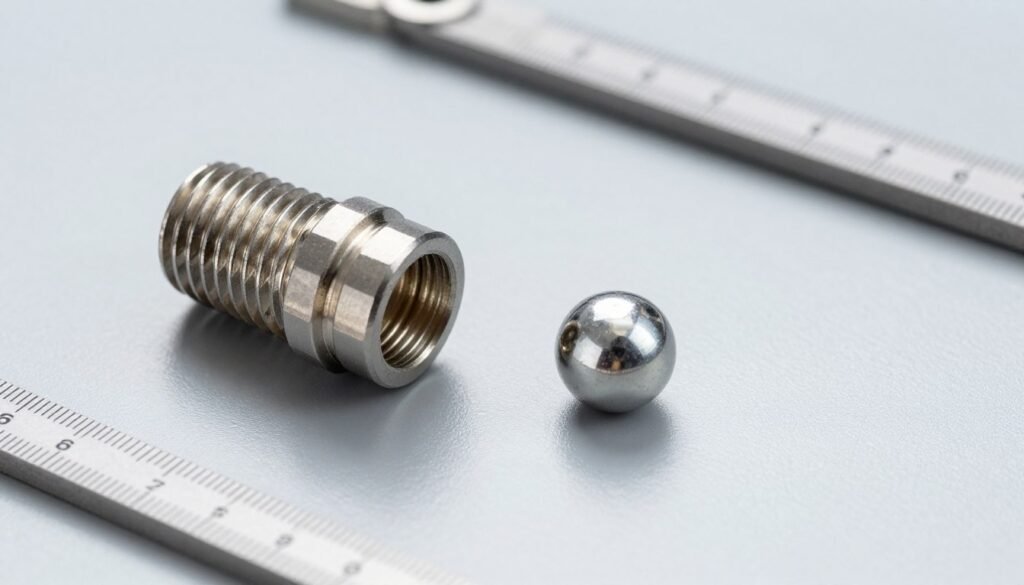
Metallic barriers offer robust pressure resistance but often entail costly retrieval or unpredictable corrosion behavior. PGA provides a degradable alternative specifically aimed at eliminating:
Operational Cost Advantages of PGA Materials
Material cost is only one factor in temporary plugging selection. Total operational cost evaluates a comprehensive matrix of parameters:
Although PGA materials may have a higher initial material cost compared with some traditional alternatives, the overall operational savings can offset the material investment.
By eliminating milling operations and reducing intervention requirements, PGA solutions can help operators lower completion costs and improve production efficiency.
How to Select the Right PGA Oilfield Solution
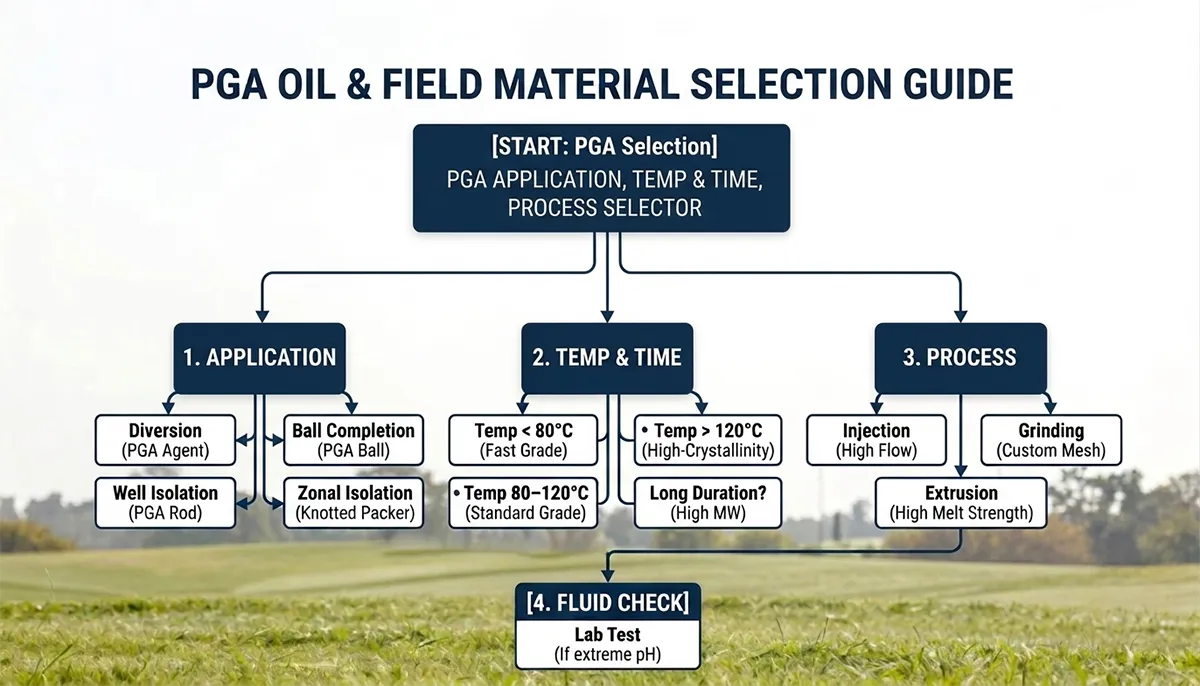
Selecting the right PGA material is essential for achieving reliable temporary plugging performance in oil and gas operations. Different applications require different combinations of mechanical strength, degradation behavior, and processing characteristics. Choosing an appropriate PGA grade helps improve operational efficiency while reducing post-treatment intervention requirements.
When selecting PGA materials, engineers and manufacturers should consider the intended application, downhole operating conditions, desired degradation time, and processing requirements.
Choose the Right PGA Product by Application
Different oilfield applications require different PGA product forms. Selecting the appropriate product helps optimize both operational performance and material efficiency.
| Oilfield Application | Recommended PGA Product |
|---|---|
| Hydraulic fracturing diversion | PGA Temporary Plugging Agent |
| Ball-drop completion systems | PGA Temporary Plugging Ball |
| Temporary wellbore isolation | PGA Rod |
| Layer diversion and zonal isolation | PGA Knotted Packer |
Each product is designed to provide temporary support during operations and gradually degrade after completing its intended function, reducing or eliminating the need for additional retrieval or milling operations in suitable applications.
| Parameter | Impact on Application |
|---|---|
| Molecular weight | Affects strength retention and degradation rate |
| Crystallinity | Influences thermal stability and degradation behavior |
| Viscosity / processing characteristics | Affects molding and extrusion performance |
| Particle or pellet form | Determines suitability for manufacturing process |
Key Factors When Selecting PGA Materials
Downhole temperature is one of the most important factors affecting PGA degradation behavior. Higher temperatures generally accelerate degradation, while lower temperatures extend the service life of the material.
Selecting the appropriate PGA grade according to the expected operating temperature helps ensure that the product maintains sufficient mechanical strength throughout the required operational period before degrading as planned.
Different completion operations require different degradation schedules:
- Short-term operations: Generally require faster degradation for rapid production recovery.
- Long-duration operations: Require materials capable of maintaining mechanical integrity for extended periods before degradation begins.
PGA degradation performance can be adjusted through material formulation and molecular weight selection.
PGA materials are compatible with most commonly used completion fluids, fracturing fluids, and formation fluids. Material selection should also consider wellbore pressure, fluid chemistry, and other operating conditions to ensure reliable temporary plugging performance.
💡 Laboratory compatibility testing is recommended for applications involving extreme temperatures or highly reactive chemical systems.
Different PGA products require different manufacturing processes, such as injection molding, extrusion, or compression molding. Selecting a PGA resin grade compatible with the intended processing method helps improve production efficiency and product consistency.
Total Cost Considerations
Material price is only one part of the overall completion cost. A comprehensive evaluation should also consider:
Although PGA materials may have a higher initial material cost than some traditional alternatives, they can reduce overall operational costs by simplifying temporary plugging and post-treatment procedures.
Recommendations
Selecting the right PGA solution is essential for achieving reliable performance in degradable oilfield applications. Factors such as operating temperature, degradation requirements, mechanical strength, and application design should be considered when choosing suitable PGA products.
We provide PGA-based oilfield solutions, including:
- PGA Temporary Plugging Agents
- PGA Temporary Plugging Balls
- PGA Rods
- PGA Knotted Packers
Our technical team can help evaluate your application requirements and recommend suitable PGA solutions based on operating conditions and performance targets.
Future Trends of PGA in Oil and Gas Industry
The development of PGA technology in oil and gas applications is increasingly focused on improving material performance, degradation control, and product adaptability. As completion operations become more complex, PGA materials are expected to support a wider range of temporary plugging, isolation, and downhole component designs.
Future PGA development will focus on improving temperature resistance, degradation control, mechanical performance, and processing consistency for different oilfield product designs. Advances in resin formulation and processing technology will enable manufacturers to develop PGA-based components with more predictable performance under various downhole conditions.
These improvements will allow degradable oilfield products to perform more reliably under a wider range of well conditions.
Broader Application Opportunities
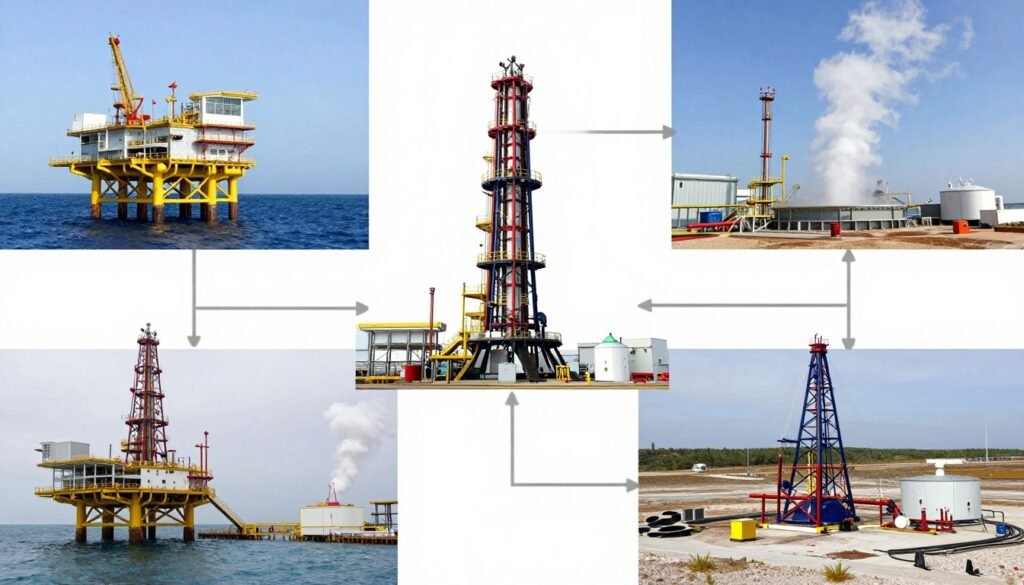
PGA is already used in temporary plugging agents, temporary plugging balls (frac balls), rods, and fiber-based isolation systems. With the continued development of horizontal drilling, multi-stage fracturing, and refracturing technologies, these degradable products are expected to support more flexible temporary isolation and diversion solutions.
New product designs and customized material formulations are also expected to support more specialized completion tools for different reservoir conditions.
Cost Efficiency and Operational Benefits
Improvements in PGA production technology and manufacturing efficiency are expected to enhance the commercial competitiveness of PGA-based oilfield products. At the same time, operators continue to seek solutions that reduce intervention requirements, simplify completion operations, and improve overall operational efficiency.
Because PGA products are designed to gradually degrade under suitable downhole conditions after completing their function, they help simplify post-treatment operations while supporting more sustainable well completion practices.
Future growth in PGA applications will be driven by continued material innovation, expanding oilfield applications, and increasing demand for reliable degradable completion technologies. For manufacturers of temporary plugging products and downhole tools, optimized PGA resin solutions will provide greater flexibility in product design and performance customization.
Frequently Asked Questions About PGA in Oil and Gas
What is PGA used for in oil and gas applications?
Polyglycolic Acid (PGA) is used for temporary plugging, zonal isolation, and well completion applications where temporary mechanical performance and controlled degradation are required. PGA-based products include temporary plugging agents, temporary plugging balls (frac balls), rods, and fiber-based isolation components.
How does PGA degrade in oilfield applications?
PGA degrades through hydrolysis when exposed to suitable temperature and fluid conditions. The degradation rate depends on factors such as wellbore temperature, molecular weight, crystallinity, component size, and fluid environment. These factors can be adjusted through resin selection and product design to achieve different degradation profiles.
How to select the right PGA resin for oilfield applications?
Selecting the appropriate PGA resin requires evaluating operating temperature, required degradation time, mechanical strength, and processing method. Resin properties such as molecular weight, crystallinity, and formulation design influence the final performance of PGA oilfield products, including temporary plugging agents, frac balls, rods, and fiber-based components.
What is the difference between PGA and PLA for temporary plugging applications?
PGA and PLA are both biodegradable polymers used in temporary plugging applications. PGA generally provides higher mechanical strength and faster degradation under suitable conditions, while PLA may be selected for applications requiring different degradation windows. The appropriate material depends on temperature, operation time, and completion design requirements.
Conclusion
Polyglycolic Acid (PGA) provides a degradable solution for temporary plugging and downhole applications where reliable mechanical performance and controlled degradation are required. Its combination of strength, predictable degradation behavior, and design flexibility enables the development of various oilfield products for temporary isolation, diversion, and completion operations.
Selecting the right PGA resin is essential for achieving consistent product performance. Factors such as operating temperature, required degradation time, molecular weight, material formulation, and processing method should be evaluated based on the final application requirements.
Working with an experienced PGA material supplier can help manufacturers optimize resin selection, improve processing stability, and develop reliable degradable oilfield products for specific operating conditions.