
The persistent demand for enhanced product durability, higher operational efficiency, and improved sustainability creates complex challenges for engineers and product designers. The critical difficulty often lies in identifying materials that satisfy rigorous technical specifications without compromising the overall cost-efficiency of the final product.
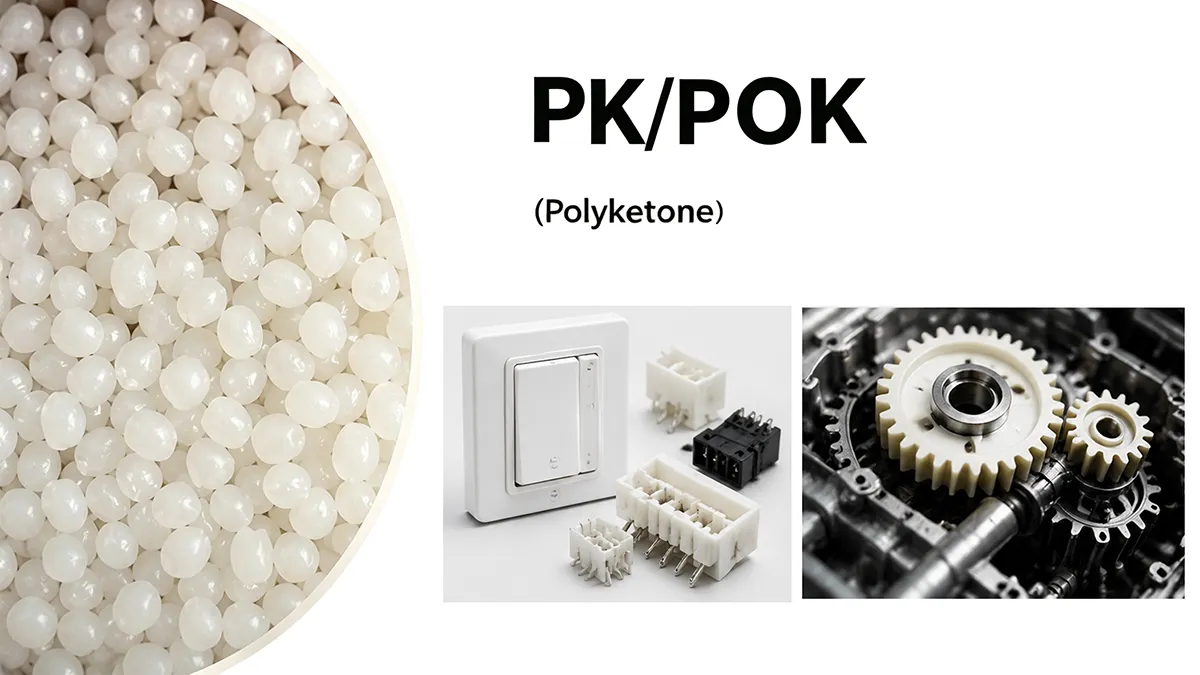
Polyketone (PK/POK) thermoplastics have emerged as a significant advancement in engineering polymer technology, strategically addressing this divide. Polyketone (often searched or spelled as polyketon in certain European markets) offers a distinctive and balanced performance profile characterized by high mechanical strength, excellent chemical resistance, and notable processing versatility. As application requirements intensify, POK presents a robust alternative, effectively bridging the performance gap between standard engineering plastics and the high-cost specialty polymers.
What is Polyketone (POK)?
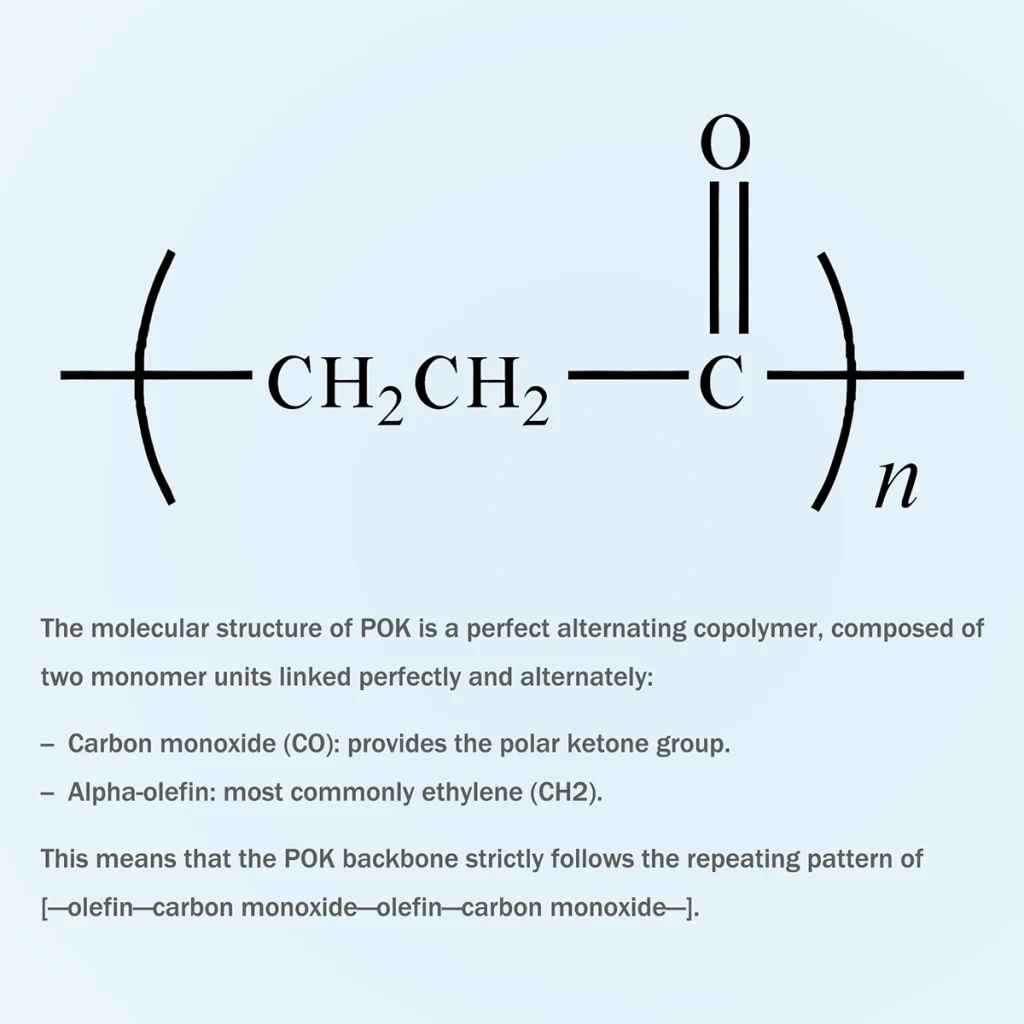
The key to POK’s performance lies in its chemical structure. The high density of polar ketone groups creates strong intermolecular forces (dipole-dipole interactions) between the polymer chains. This powerful attraction facilitates a highly ordered and compact crystalline arrangement, resulting in a material with:
- A high melting point (Tm) of approximately 220℃ – 255℃.
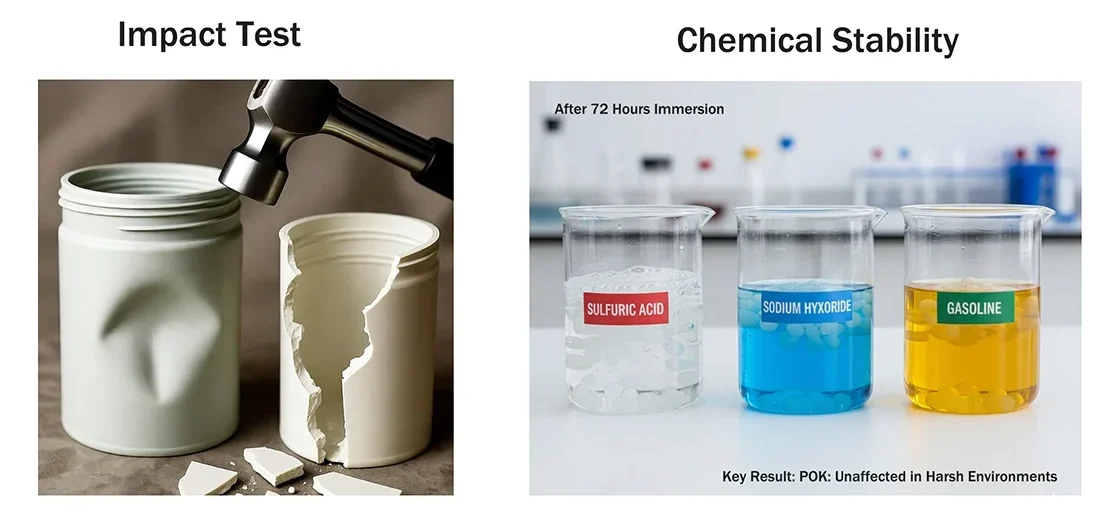
- High mechanical robustness, including superior impact strength (toughness) and excellent wear and abrasion resistance.
- Robust chemical stability, showing notable resistance to hydrolysis, solvents, automotive fluids, and salts.
It is this specific, regular molecular configuration—not found in traditional polyamides or polyacetals—that provides POK with its compelling balance of properties while maintaining the consistent processing characteristics expected of a modern engineering thermoplastic.
Technical Resource Access
Request a copy of our comprehensive technical data sheet to validate POK’s property set and explore the molecular foundation of its balanced performance profile.
Performance-Driven Advantages of Polyketone
Polyketone (POK) is engineered to solve complex material challenges by delivering a distinct and balanced set of properties. Understanding these key advantages allows product designers to strategically leverage POK’s capabilities across demanding industrial sectors.
Wear and Friction Resistance
Features an exceptionally low coefficient of friction and outstanding abrasion resistance, making it an ideal replacement for POM and nylon in dynamic, high-wear moving components.
🏭 Severe Service Application: In industrial slurry transport, POK delivers 3–4× higher abrasion resistance than standard HDPE. See the full techno-economic and lifecycle comparison:
POK in Industrial Piping & Fluid Handling: Severe Service Selection vs HDPE and PA11 →
Hydrocarbon Barrier
Provides superior barrier performance against hydrocarbons, fuels, oils, and gases (such as O₂ and CO₂), ensuring long-term reliability in complex fluid handling and fuel systems.
🚗 Automotive Insight: POK demonstrates a 10× lower fuel permeation rate compared to PA12. Explore how this redefines emission compliance in our technical guide:
POK in Automotive Fuel & Transmission Systems: A High-Performance Alternative to PA and POM →
Low Moisture Absorption
Exhibits minimal moisture absorption (typically <0.5%), far lower than polyamides (PA6/PA66), ensuring excellent dimensional stability and mechanical property retention in humid environments.
Eco-Friendly Carbon Footprint
Represents a highly sustainable green polymer, as its manufacturing synthesis directly consumes carbon monoxide (CO), significantly reducing the overall industrial carbon footprint.
Polyketone (PK/POK) Core Performance Summary Table
| Key Property | Typical Value | Engineering Benefit |
| Yield Strain | > 20% | Superior energy absorption and high shock resistance |
| Moisture Absorption | < 0.5% | Excellent dimensional stability in high humidity |
| Gas Barrier (Oxygen O₂) | Outstanding | Exceptional barrier layer for packaging and fuel pipes |
| Carbon Footprint | -0.5 ton CO / ton PK | Eco-friendly manufacturing with carbon capture benefit |
| Compliance | FDA, USP Class VI, ISO 10993 | Safe for food contact and advanced medical tools |
Polyketone vs Traditional Engineering Polymers
When evaluating material alternatives for critical components, a detailed comparison with established engineering polymers is essential. The following analysis and comprehensive technical table highlight where Polyketone (PK/POK) thermoplastics provide distinct performance advantages over POM, PA, and PBT.
| Material Properties | Polyketone (PK/POK) | POM (Copolymer) | PA66 (Nylon 66) | PBT |
| Wear & Friction | Outstanding (Up to 14x POM) | Excellent (Standard) | Fair (Humidity Dependent) | Moderate |
| Moisture Absorption | Very Low (<0.5%) | Low (~0.2%) | High (~2.5% – Impacts Size) | Low (~0.1%) |
| Chemical Resistance | Superior (Acids, Bases, Fuels) | Poor against Strong Acids | Poor against Strong Acids | Good |
| Low-Temp Impact | Superior Toughness | Moderate | Poor (Brittle when Dry) | Low |
| Formaldehyde Emission | Zero (Eco-friendly) | Risk of Emission | Zero | Zero |
POK vs Polyoxymethylene (POM/Acetal)
POK presents a stronger profile for demanding environments:
- Superior chemical resistance, especially to strong acids and bases.
- Enhanced impact performance across both room and low temperatures.
- Cleaner processing, being free from formaldehyde emissions.
- Comparable dimensional stability, facilitating direct substitution for parts like wear-resistant gears.
POK vs Polyamide (PA / Nylon)
POK fundamentally addresses the dimensional stability challenges associated with PA:
- Significantly lower moisture absorption, ensuring exceptional dimensional consistency (avoiding the “plasticizing” effect of water).
- Wider chemical compatibility, offering superior resistance to various acids and specific automotive solvents.
POK vs Polybutylene Terephthalate (PBT)
POK is advantageous in applications demanding high durability and dynamic performance:
- Higher impact strength, particularly at low temperatures.
- Improved abrasion resistance for moving parts and structural components.
Need Help Selecting the Right Material?
Our team can help you evaluate whether Polyketone is the optimal choice for your specific application requirements.
Processing Guide for Polyketone Injection Molding
For converters and manufacturing injection molders, POK parameters align closely with standard engineering resins. Below is the recommended quick-start processing template for neat POK grades:
- Drying Recommendations: To ensure optimal surface gloss and eliminate any potential for silver streaks, pre-drying at 70°C -80°C for 2 – 4 hours is highly recommended before production.
- Melt Temperature: The typical melt temperature window ranges between 230°C and 250°C. Avoid exceeding 260°C to prevent thermal degradation.
- Mold Temperature: To achieve ideal crystallinity and mechanical properties, maintain mold temperatures between 60°C and 80°C.
- Shrinkage Rate: POK features a low and consistent shrinkage rate, allowing for precise part design and robust snap-fit assemblies.
Quick Troubleshooting Checklist:
| Sink Marks? Check packing pressure |
| Splay/Streaks? Verify dryer dew point |
| Warpage? Review gate design & cooling |
» Get the full guide on POK mold design & troubleshooting strategies
Excellence in Healthcare: Core Applications
Polyketone (POK) truly excels in the medical field and high-wear industrial sectors, where its unique combination of biocompatibility, chemical resistance, and mechanical durability addresses demanding requirements.
Key Features Driving Medical and Industrial Adoption
- Biocompatibility: Compliant with stringent standards, including USP Class VI and ISO 10993, confirming its safety for internal and external human contact.
- Cost-Effectiveness: Provides high toughness and heat resistance at a significantly lower cost compared to ultra-high performance polymers like PEEK.
- Precision Processing: A low shrinkage rate allows for robust snap-fit assembly in external instruments and complex gears.
| Industry Sector | Key Applications | Primary Advantage |
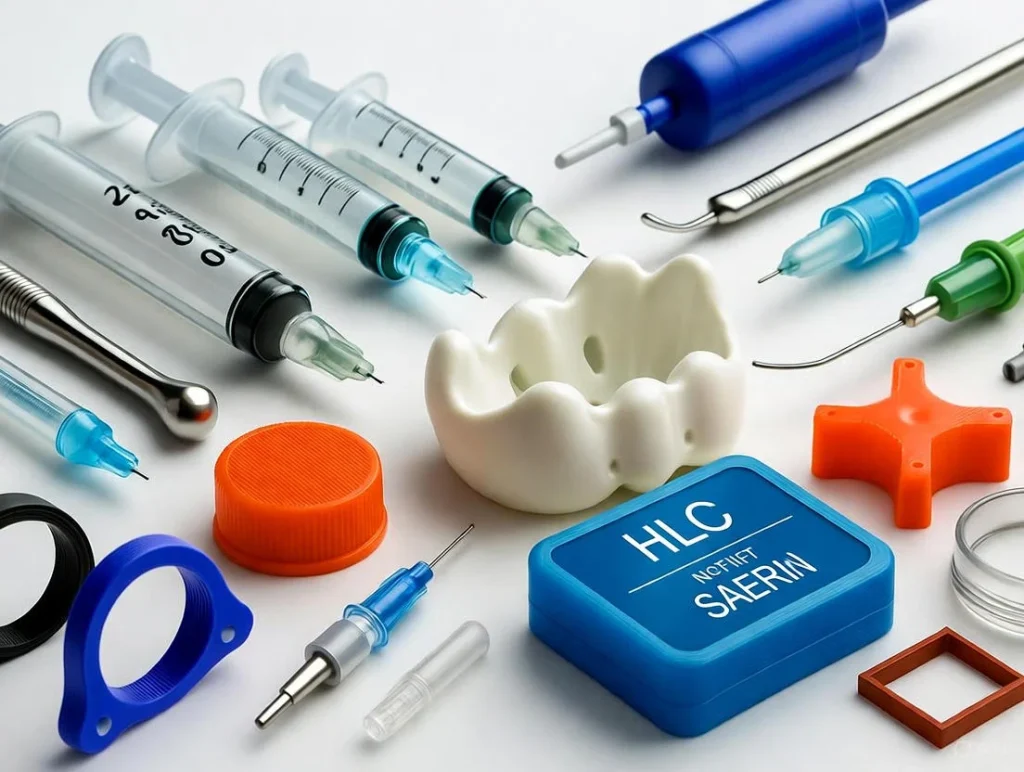
| Healthcare | Bone fixation frames, surgical tools, syringes, catheters | USP Class VI compliant & steam sterilization resistant |
| Automotive | Fuel lines, fluid connectors, wear-resistant gears, brackets | Superior hydrocarbon barrier & high thermal stability |
| Industrial | Pump valves, water meter housings, conveyor chains, bearings | Minimal moisture absorption ($<0.5\%$) & extreme wear resistance |
| Consumer | High-durability smart lock gears, precision switch components | Low friction coefficient & precise dimensional stability |
Explore POK for Your Industry
Discover how Polyketone can solve specific challenges in your industry with our application-specific technical resources.
Why Choose Sales Plastics for Polyketone Solutions?
Selecting the right engineering resin is only half the battle. To fully capitalize on the technical superiority of Polyketone, global manufacturers require a strategic partnership that offers reliable logistics, verified quality assurance, and ongoing processing support.
At Sales Plastics, we provide the precise material solutions and supply chain frameworks necessary to seamlessly integrate POK into your most demanding applications.
- Unreinforced Grades: Maximizes inherent toughness, low friction, and chemical barrier resistance.
- Glass Fiber Reinforced: Boosts tensile strength and stiffness for heavy-duty structural parts.
- Specialty Grades: Includes high-flow types (such as POK M330F) for complex, thin-walled molds and compliant food/medical packaging.
💡Material Selection Tip: Performance varies significantly across different polyketone grades and formulations. To find the exact match for your injection molding or extrusion project, read our deep-dive breakdown:
POK Grade System & Performance Comparison: M330A, M630A, and Modified Grades →
Product-Specific Matching
We focus entirely on your specific product requirements, providing the exact neat, glass-filled, or impact-modified POK grade to guarantee optimal performance.
Strategic Shanghai Port Logistics
Leveraging our close proximity to the Shanghai Port, we optimize international freight routes to ensure minimized lead times and highly reliable shipping schedules.
Batch COA Traceability
We eliminate production volatility. Every shipment of Polyketone granules is backed by official Certificates of Analysis (COA), ensuring consistent thermal and mechanical performance.
Inventory & Compliance Continuity
We maintain stable, proactive stock levels to safeguard your supply chain against shortages, ensuring full compliance with ISO 9001, FDA, and RoHS/REACH standards.
Partner with Sales Plastics for Your POK Needs
Experience the difference that expert support and quality materials can make in your next project.
Frequently Asked Questions (FAQs)
Get answers to common questions about Polyketone (POK) properties, applications, and processing considerations.

What kind of material is POK?
POK is an aliphatic engineering thermoplastic characterized by its highly ordered molecular structure: a perfectly alternating copolymer of carbon monoxide and an alpha-olefin (typically ethylene). This unique backbone, featuring regular ketone groups (C=O), provides its balanced profile of high mechanical strength, excellent chemical stability, and toughness.
What is the specific gravity of polyketone?
The typical specific gravity (density) of neat (unfilled) Polyketone is approximately 1.25 g/cm³ (ranging from 1.24 to 1.30 g/cm³ for various grades). This density is comparable to many high-performance engineering plastics.
What are the uses of polyketone?
POK is utilized in demanding applications across multiple sectors. Key areas include:
- Automotive: Fuel system components, fluid connectors, and EV battery parts due to chemical resistance.
- Industrial Equipment: Bearings, gears, and bushings, leveraging its outstanding abrasion resistance.
- Healthcare: Surgical tools, diagnostic devices, and fluid systems, capitalizing on its biocompatibility and chemical stability.
What is the glass transition temperature of polyketone?
The glass transition temperature (Tg) of neat Polyketone is typically in the range of 15 ℃ to 35℃. This low Tg contributes significantly to the material’s high impact strength and toughness at room temperature, while the material remains dimensionally stable up to its higher melting point (Tm ≈ 220℃).
How does POK compare to nylon in humid environments?
POK offers a distinct advantage over nylon in humid environments due to its significantly lower moisture absorption. Unlike PA, which exhibits high hygroscopy leading to dimensional change and reduced mechanical strength, POK absorbs less than 0.5% moisture. This ensures POK components maintain consistent mechanical properties and dimensional stability regardless of environmental humidity.
Can POK be injection molded like POM?
Yes. POK is fully compatible with standard thermoplastic processing methods, including injection molding and extrusion. POK exhibits processing characteristics similar to POM/Acetal, allowing for seamless integration into existing manufacturing lines. A major processing benefit is that POK does not require the extensive pre-drying typical of PA, nor does it release formaldehyde emissions like POM.