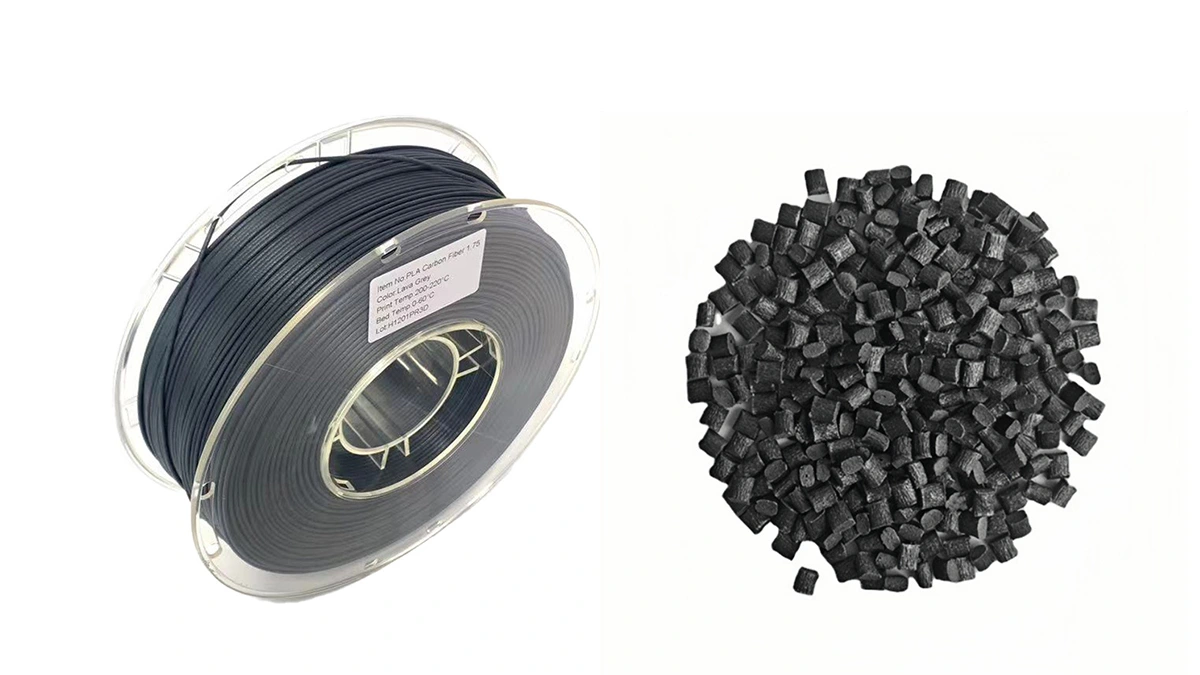
Acrylonitrile Butadiene Styrene (ABS) has become a cornerstone material in modern manufacturing due to its exceptional balance of mechanical properties, processability, and cost-effectiveness. Among its critical physical characteristics, density plays a pivotal role in determining material performance across various applications. This comprehensive guide explores the significance of acrylonitrile butadiene styrene density, standard measurement techniques, and how this property influences real-world applications from automotive components to 3D printing.
What is ABS Density and Why It Matters
Density, defined as mass per unit volume (typically measured in g/cm³), is a fundamental physical property that significantly impacts how ABS performs in various applications. The density of ABS typically ranges from 1.02 to 1.21 g/cm³, with standard grades averaging around 1.05-1.07 g/cm³. This property is crucial because it directly affects:
- Weight of final products (critical for automotive and aerospace applications)
- Material cost calculations and efficiency
- Structural integrity and mechanical performance
- Thermal properties and heat resistance
- Processing parameters during manufacturing
ABS is a terpolymer made by polymerizing styrene and acrylonitrile in the presence of polybutadiene. The proportions of these components can vary significantly: 15-35% acrylonitrile, 5-30% butadiene, and 40-60% styrene. These varying compositions directly influence the material’s density and other physical properties.

ABS plastic density Compared to Other Plastics
Understanding how ABS material density compares to other common plastics helps engineers and designers make informed material selection decisions. The following table provides a comprehensive comparison:
| Plastic Material | Density Range (g/cm³) | Average Density (g/cm³) | Relative to ABS |
| ABS (Standard) | 1.02 – 1.21 | 1.07 | Baseline |
| Polypropylene (PP) | 0.89 – 0.91 | 0.90 | 16% lighter |
| High-Density Polyethylene (HDPE) | 0.94 – 0.97 | 0.95 | 11% lighter |
| Polystyrene (PS) | 1.04 – 1.09 | 1.05 | 2% lighter |
| Polycarbonate (PC) | 1.20 – 1.22 | 1.21 | 13% heavier |
| Polyamide/Nylon (PA) | 1.13 – 1.15 | 1.14 | 7% heavier |
| PLA (3D Printing) | 1.21 – 1.25 | 1.24 | 16% heavier |
This density comparison reveals why ABS is often chosen as a middle-ground option that balances weight considerations with mechanical properties. It’s lighter than engineering plastics like PC and nylon while offering superior mechanical properties compared to commodity plastics like PP and HDPE.
Standard Methods for Measuring ABS Density
Accurate density measurement is crucial for quality control, material specification, and ensuring consistent performance in final products. The industry relies on several standardized methods:
ISO 1183 Method
ISO 1183 is an international standard that specifies methods for determining the density of solid plastics, including ABS. It includes several techniques:
- Immersion method (ISO 1183-1 Method A): Based on Archimedes’ principle, this method involves weighing the sample in air and then in a liquid of known density (typically distilled water).
- Pycnometer method (ISO 1183-1 Method B): Uses a specialized flask called a pycnometer to determine the volume of the sample by liquid displacement.
- Gradient column method (ISO 1183-2): Utilizes a column with a density gradient where the sample settles at a position corresponding to its density.
ASTM D792 Method
ASTM D792 is the American standard for measuring the density of plastics. The procedure is similar to ISO 1183’s immersion method and calculates density using the following formula:
Density = a/(a-b) × ρw
Where:
a = weight of specimen in air
b = weight of specimen in liquid
ρw = density of liquid at test temperature
For most accurate results, the test should be conducted at 23°C ± 2°C, and specimens should be conditioned according to the standard. The precision of these methods typically allows measurements accurate to ±0.001 g/cm³.
Gas Pycnometry
For highly precise measurements, especially with complex-shaped parts or porous materials, gas pycnometry is often employed. This technique uses gas displacement (typically helium) to measure the volume of a sample with extreme accuracy, allowing for density calculation when combined with precise mass measurement.
How Additives and Reinforcements Affect ABS material density
The base density of ABS can be significantly modified through the addition of various fillers, reinforcements, and additives. Understanding these effects is crucial for material selection and property prediction:
Density-Increasing Additives
- Glass Fibers: Typically increase density to 1.15-1.35 g/cm³ (10-25% content)
- Mineral Fillers: Calcium carbonate, talc, or clay can increase density to 1.20-1.50 g/cm³
- Metal Powders: For EMI shielding, can increase density to 1.40-2.00 g/cm³
- Flame Retardants: Brominated compounds typically increase density by 5-15%
Density-Decreasing Additives
- Chemical Blowing Agents: Can reduce density to 0.85-0.95 g/cm³
- Microspheres: Hollow glass or polymer spheres can reduce density to 0.90-1.00 g/cm³
- Polymer Blends: Blending with lower-density polymers like PP can reduce overall density
Density Adjustment Calculations
When formulating ABS compounds with additives, the following formulas can help predict the resulting density:
1. Rule of Mixtures (Simple Approximation):
ρcomposite = ρABS × VABS + ρadditive × Vadditive
Where V represents volume fraction of each component
2. Weight Fraction to Volume Fraction Conversion:
Vi = (Wi/ρi) ÷ Σ(Wj/ρj)
Where Wi is the weight fraction of component i
3. Density Reduction with Blowing Agents:
ρfoamed = ρsolid × (1 – VER)
Where VER is the Volume Expansion Ratio

Real-World Applications: Density Considerations
The density of ABS plays a critical role in determining its suitability for various applications. Here’s how density considerations impact three major application areas:
Automotive Parts Manufacturing

Vehicle Weight: Lower-density ABS formulations help reduce overall vehicle weight, contributing to fuel efficiency and reduced emissions
Cost Efficiency: Material is typically sold by weight, so optimizing density can reduce costs while maintaining performance
Structural Performance: For interior components like dashboards and door panels, density must be balanced with rigidity and impact resistance
Acoustic Properties: Density affects sound absorption and transmission, important for NVH (Noise, Vibration, Harshness) control
Automotive manufacturers often specify density ranges of 1.04-1.07 g/cm³ for standard ABS components, with higher-density glass-filled grades (1.15-1.25 g/cm³) reserved for structural components requiring enhanced rigidity.
3D Printing Applications
In additive manufacturing, ABS material density affects:
- Filament Quality: Consistent density ensures uniform extrusion and dimensional accuracy
- Print Settings: Density variations require adjustments to temperature, flow rate, and other printing parameters
- Infill Percentage: The apparent density of printed parts can be controlled through infill settings (typically 15-100%)
- Warping Behavior: Higher-density ABS formulations often exhibit different thermal expansion characteristics
The density calculation for 3D printed parts with partial infill can be approximated using:
Apparent Density = ρABS × [Shell Volume + (Infill % × Internal Volume)] ÷ Total Volume
Consumer Electronics Housing

- Perceived Quality: Higher-density formulations (1.08-1.15 g/cm³) often provide a more premium feel and sound when tapped
- Heat Management: Density affects thermal conductivity and heat capacity, important for devices generating heat
- Drop Resistance: Optimized density helps balance rigidity with impact absorption for improved drop protection
- EMI Shielding: Higher-density ABS with conductive fillers (1.15-1.40 g/cm³) provides electromagnetic interference protection
Electronics manufacturers often specify tight density tolerances (±0.02 g/cm³) to ensure consistent part quality, especially for components with snap-fits or other precision features.
Frequently Asked Questions About ABS Density
How does temperature affect ABS Plastic density?
Like most materials, ABS expands when heated, resulting in decreased density. The coefficient of thermal expansion for ABS is approximately 7-8 × 10⁻⁵ per °C. This means that for every 10°C increase in temperature, ABS plastic density decreases by approximately 0.7-0.8%. This property must be considered when designing parts that will operate across wide temperature ranges or when conducting precise density measurements.
Can ABS density be used to identify counterfeit or substandard materials?
Yes, density measurement is a quick and effective quality control method to identify potential counterfeit or substandard ABS materials. Recycled or improperly formulated ABS often shows density variations from virgin material specifications. However, density testing should be combined with other analytical methods like DSC (Differential Scanning Calorimetry) or FTIR (Fourier Transform Infrared Spectroscopy) for definitive material identification.
How does moisture absorption affect ABS density?
ABS has relatively low moisture absorption (0.2-0.8% by weight at saturation), but this can still affect density measurements. Moisture-saturated ABS may show a slight increase in density compared to dry material. For precise density measurements, samples should be dried according to standard conditions (typically 80°C for 4 hours) before testing to ensure consistent results.
What is the relationship between ABS density and mechanical properties?
There’s a complex relationship between ABS density and mechanical properties. Generally, higher-density ABS formulations (achieved through additives or processing) tend to exhibit increased stiffness and tensile strength but potentially reduced impact resistance. However, this relationship isn’t always linear, as the molecular structure and additive types play significant roles. For example, glass-filled ABS has higher density and stiffness but lower elongation at break compared to standard ABS.
How does processing affect the final density of ABS parts?
Processing conditions significantly impact the final density of ABS parts. Injection molding parameters like packing pressure, cooling rate, and mold temperature affect the molecular orientation and crystallinity, which in turn influence density. Higher packing pressures typically result in higher density parts with fewer voids. Extrusion and 3D printing processes can also create density variations based on processing parameters. For critical applications, it’s important to validate density across different production batches.
Conclusion
Understanding ABS density is essential for engineers, designers, and manufacturers working with this versatile thermoplastic. From automotive components to consumer electronics and 3D printing applications, density plays a critical role in determining material performance, cost-effectiveness, and suitability for specific applications.
By carefully considering density requirements, measuring accurately using standardized methods, and understanding how additives and processing affect this property, professionals can optimize ABS formulations for their specific needs. Whether you’re seeking lightweight solutions for automotive applications or premium-feel housings for consumer electronics, mastering the nuances of ABS density will help you achieve superior results in your projects.
Need Reliable ABS Resin with Verified Density?
Ensure consistent performance in your manufacturing process with high-quality ABS plastic. Our materials come with full technical data sheets, expert support, and global delivery options.