Manufacturing sectors face unprecedented pressure to decarbonize while maintaining rigorous production standards. Conventional petroleum-based polymers, while historically dominant, present escalating risks to long-term operational viability due to their carbon footprint.
High-performance bioplastic pellets have emerged as the definitive solution. These advanced resins provide a strategic pathway to achieve corporate sustainability goals without compromising mechanical properties or processing efficiency. Integrating biodegradable and bio-based materials allows enterprises to proactively align with tightening global regulations and shifting eco-conscious consumer preferences.
This guide provides a deep dive into the technical specifications and industrial applications of these resins. Whether you are optimizing for specific tensile strength, heat resistance, or composting standards, the following data is designed to support your procurement decisions and accelerate your transition to high-performance sustainable plastics.
What are Bioplastic Pellets? (The Fundamentals)
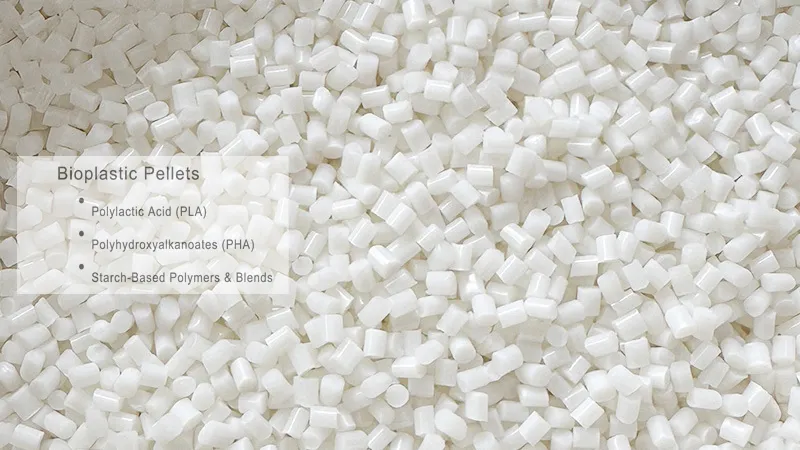
Bioplastic pellets serve as the foundational resin for the next generation of sustainable manufacturing. These uniform granules act as a direct replacement for traditional fossil-based polymers, designed for processing via existing injection molding and extrusion infrastructure. Understanding the distinction between categories ensures strategic material procurement:
Bio-based Pellets
Derived from renewable biomass—such as corn starch, sugarcane, or used cooking oils—reducing the product’s overall carbon footprint through natural carbon sequestration.
Biodegradable Pellets
Possess the chemical capability to be broken down by microorganisms into water, carbon dioxide, and mineral salts, defined strictly by end-of-life performance.
Compostable Pellets
A specialized subset meeting strict international standards (EN 13432 or ASTM D6400), decomposing within specific timeframes in industrial or home composting environments.
Raw material sourcing represents a fundamental shift from finite extraction to regenerative biological cycles. Today’s bioplastic formulations are engineered for functional substitution, ensuring that renewable materials and feedstocks deliver the tensile strength, thermal stability, and aesthetic quality required for industrial components.To gain a broader perspective on the strategic trade-offs of these materials, explore our comprehensive analysis of the advantages and disadvantages of bioplastics.
Key Types of Bioplastic Pellets & Their Technical Profiles
Aligning material properties with application demands dictates manufacturing success. Each polymer family offers distinct mechanical benchmarks and processing windows.
Polylactic Acid (PLA)
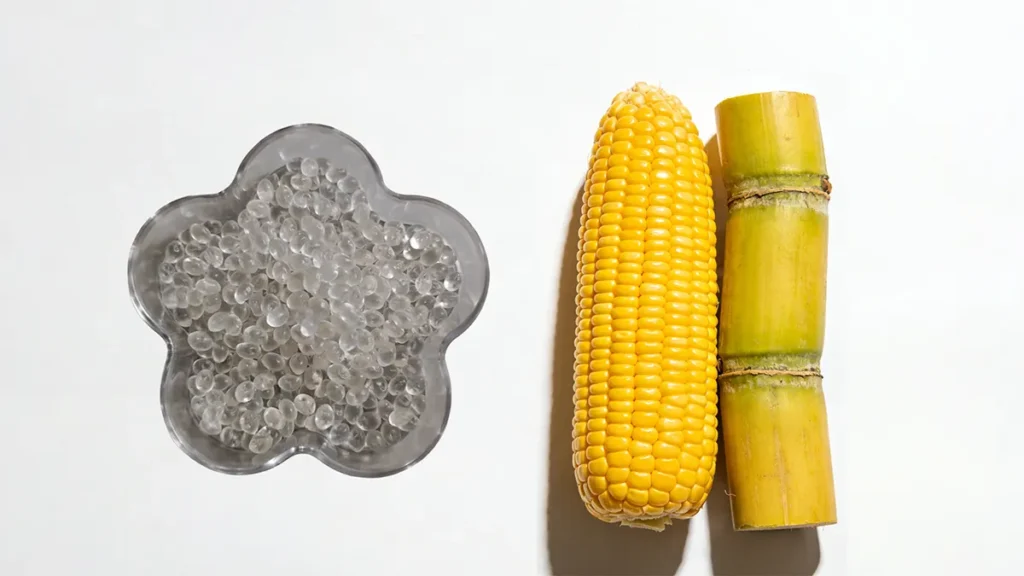
Polylactic Acid stands as the most commercially mature biopolymer, derived from the fermentation of renewable carbohydrates like corn starch or sugarcane. It is prized for its high clarity, exceptional rigidity, and ease of processing on conventional equipment.
- Processing Profile: PLA typically processes between 180°C and 220°C. While it exhibits excellent flow characteristics, specialized cooling management is essential to ensure dimensional stability and prevent warping.
- Performance Benchmarks: With a tensile strength of 50–70 MPa, PLA competes directly with polystyrene (PS) in rigid packaging and food service applications. However, its lower glass transition temperature (Tg ≈ 60°C) means heat-resistant modifications are necessary for hot-fill applications.
| Property | Test Method | Value / Impact |
| Tensile Strength | ASTM D638 | 50–70 MPa (High Rigidity) |
| Flexural Modulus | ASTM D790 | 3–4 GPa (Excellent Stiffness) |
| Melt Flow Rate | ASTM D1238 | 5–20 g/10min (Processable) |
| End-of-Life | EN 13432 | Industrial Composting Required |
Technical Note: Performance varies significantly between amorphous and crystalline grades. For a detailed breakdown on optimizing resin selection, see our guide on Selecting the Right Polylactic Acid Plastic for Your Application.
Polyhydroxyalkanoates (PHA): The Marine-Grade Solution
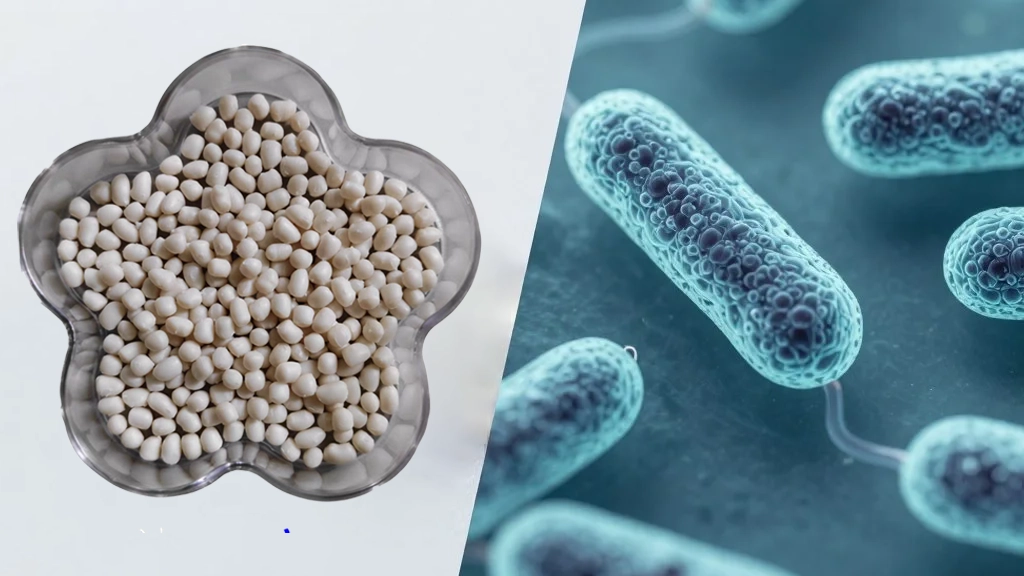
PHA resins represent a breakthrough in biotechnology, synthesized by microorganisms as natural energy reserves. These polymers are uniquely capable of degrading in ambient environments, including soil and marine settings, making them the gold standard for high-compliance environmental projects.
- Material Versatility: PHA formulations range from stiff, polypropylene-like grades to highly flexible elastomeric resins. This adaptability allows for a wide spectrum of applications, from medical devices to marine-safe straws.
- Strategic Advantage: Unlike other bioplastics, PHA offers superior moisture resistance and gas barrier properties. While production costs are currently higher, its ability to bypass industrial composting infrastructure provides a significant market edge for premium eco-conscious brands.
Market Insights: Understanding how to leverage these unique barrier properties for specific product lines is essential. For detailed case studies and technical roadmaps, refer to our PHA Bioplastic in Action: A Strategic Guide to Materials and Industrial Applications.
PHA Advantages
- Biodegrades in diverse environments including marine settings
- Processes like conventional plastics with minimal equipment modification
- Offers property range from rigid to flexible formulations
- Demonstrates excellent biocompatibility for medical applications
- Produced from waste feedstocks reducing resource consumption
PHA Limitations
- Higher production costs compared to other bioplastics
- Limited commercial availability restricts market access
- Processing window requires precise temperature control
- Material properties vary significantly between suppliers
- Production scale remains smaller than PLA or starch-based alternatives
Starch-Based Polymers & Blends: Cost-Effective Functionality
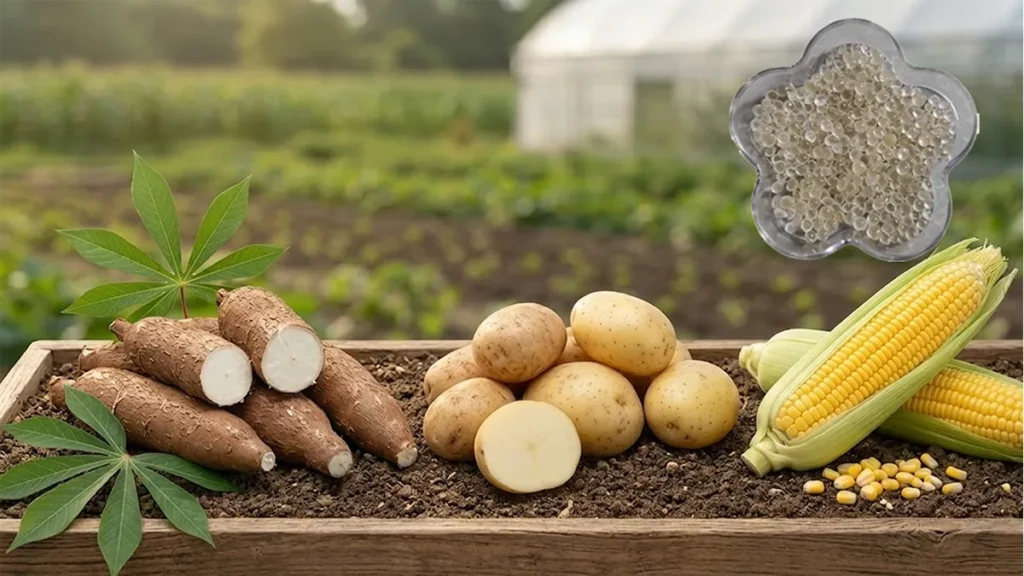
Thermoplastic Starch (TPS) blends utilize abundant agricultural feedstocks to provide a highly competitive price point for high-volume disposables. Because pure starch is naturally brittle, our modified pellets are alloyed with other biodegradable polymers to enhance toughness and water resistance.
- Application Focus: These resins are the primary choice for agricultural mulch films, shopping bags, and single-use cutlery. Their rapid biodegradation rate in home composting environments makes them a preferred option for consumer-facing products.
- Technical Considerations: Precision moisture management is vital when processing starch-based pellets. As a specialized distributor, we provide specific drying protocols and compatibilizer recommendations to ensure these resins perform reliably on your production line.
Deep Dive on TPS Processing: Successful integration of starch blends requires a granular understanding of their unique thermal behavior. For a complete breakdown of material characteristics and processing windows, read our technical guide: What is Thermoplastic Starch (TPS)? Properties, Processing, and Uses.
High-Performance Features for Premium Markets
Premium bioplastic formulations deliver specialized functional characteristics that align with the rigorous demands of high-end manufacturing. These advanced resins are engineered to bridge the gap between environmental responsibility and industrial performance, offering measurable advantages for global brands.
Compliance with International Standards
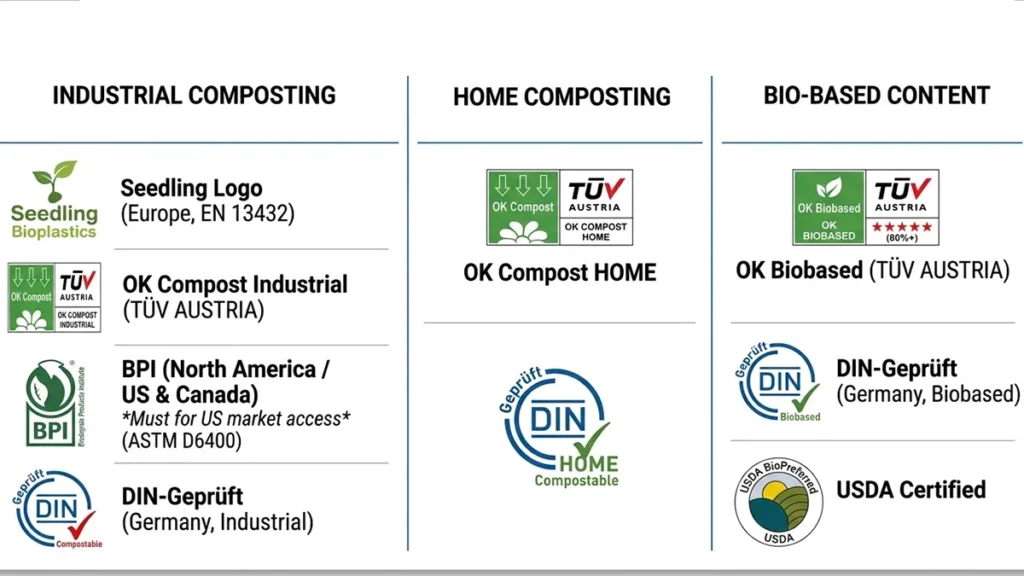
Market access for sustainable products depends on strict adherence to global certification frameworks. Our high-performance pellets meet leading international standards, including EN 13432 (Industrial Composting), ASTM D6400, and OK Compost Home certifications. These credentials provide manufacturers and procurement experts with the regulatory certainty required for export to the European Union, North America, and Nordic markets, ensuring that finished products withstand environmental scrutiny.
Quantifiable Carbon Footprint Reduction
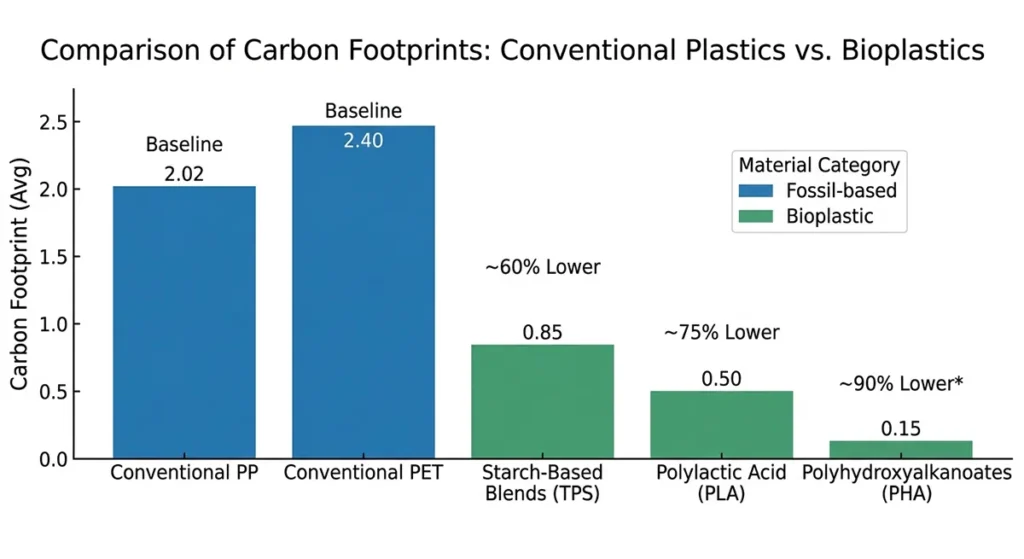
Integrating bio-based resins provides a transparent pathway to fulfilling Corporate Social Responsibility (CSR) objectives. By transitioning from fossil-fuel feedstocks to renewable biomass, enterprises can achieve a significant reduction in Life Cycle Assessment (LCA) carbon metrics. These quantifiable carbon savings are essential for corporate sustainability reporting and resonate with increasingly eco-conscious consumer bases, transforming a material choice into a powerful brand asset.
Mechanical Integrity & Processing Compatibility
Superior tensile strength and structural durability define our premium material portfolio. Engineered for “drop-in” compatibility, these pellets perform reliably across existing injection molding and extrusion infrastructure with minimal parameter adjustments.
- Tensile Performance: High-grade formulations achieve mechanical properties comparable to traditional engineering plastics, ensuring the final product maintains its intended form and function.
- Operational Efficiency: Excellent melt strength and consistent flow rates minimize production downtime and reject rates, allowing for a seamless transition to sustainable manufacturing without the capital expenditure of new machinery.
Performance Summary: Standard vs. Premium Resins
- Basic mechanical properties suitable for simple applications
- Standard processing temperatures and conditions
- Limited heat resistance below 60°C
- Moderate barrier properties
- Cost-optimized formulations
- Wide commercial availability
Standard Grade Features
Premium Grade Features
- Enhanced mechanical strength approaching engineering plastics
- Heat resistance exceeding 90°C for demanding applications
- Superior barrier properties for extended shelf life
- Customized degradation timing for specific use cases
- Fiber reinforcement options for structural components
- Specialized additives for optical clarity or UV resistance
Industrial Applications: Where Bioplastic Pellets Excel
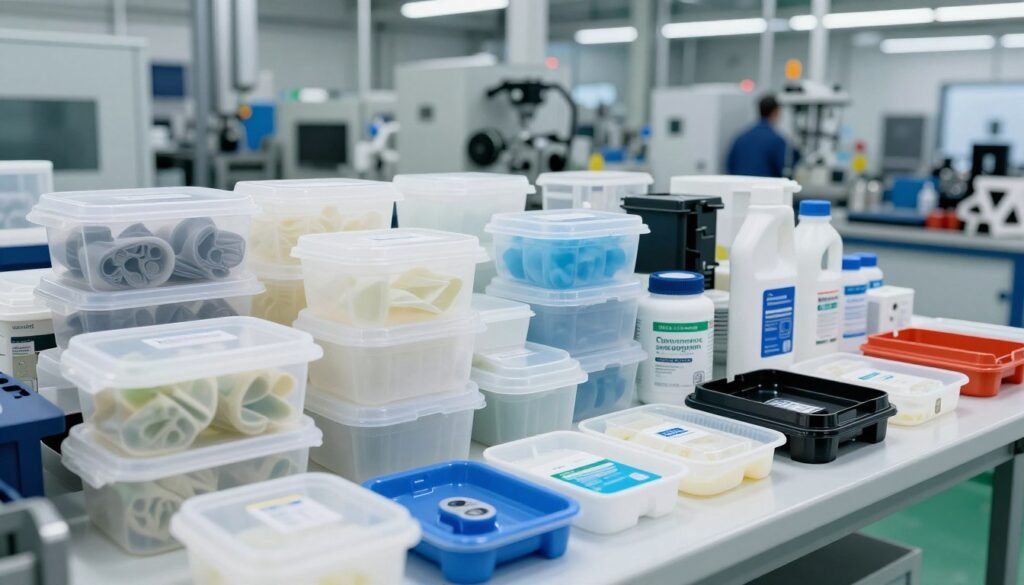
Global manufacturing sectors are rapidly transitioning to bioplastic pellets to meet both functional requirements and environmental mandates. Modern resin technology enables seamless integration into high-performance applications, providing a competitive edge for brands navigating the green economy.
Sustainable Packaging Solutions
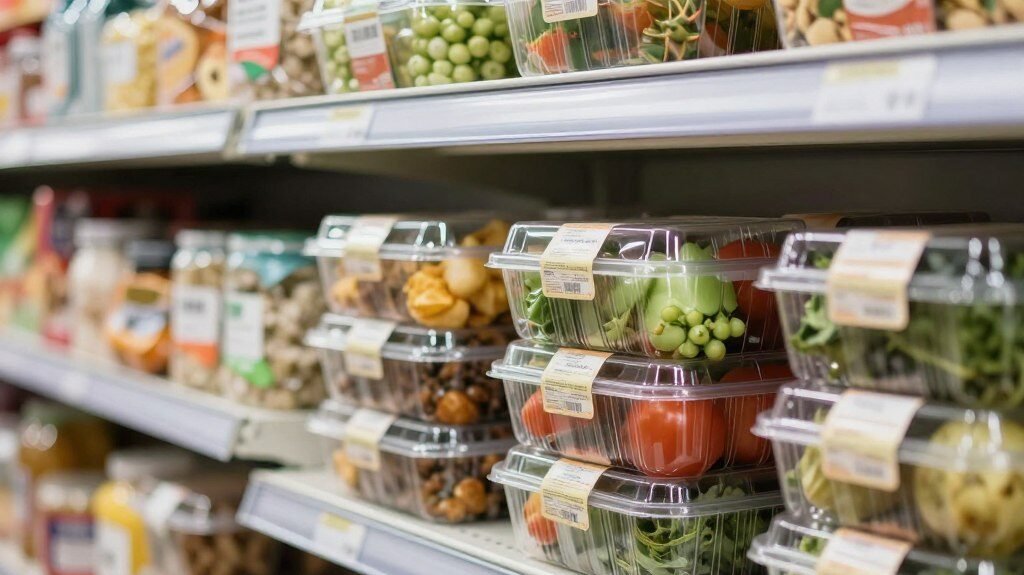
Food-contact safety and end-of-life convenience drive the massive adoption of biopolymers in the packaging sector. Our specialized pellets are engineered for precision manufacturing:
- Food Containers & Trays: High-clarity PLA resins provide the rigidity and thermal stability required for fresh produce and deli packaging.
- Compostable Bags: Flexible starch-based blends and PBAT formulations offer the puncture resistance and seal strength necessary for heavy-duty carrier bags and organic waste liners.
- Eco-friendly Films: Advanced barrier resins protect dry goods and perishables, ensuring product shelf-life while meeting international composting standards.
Premium Electronics & Automotive Components

High-tech sectors in Japan and Europe lead the integration of bio-based materials into durable hardware. Impact-modified PLA and reinforced biocomposites serve as critical components for consumer electronics housings and automotive interior trim. These resins offer the surface finish, flame retardancy, and dimensional stability demanded by premium tech brands seeking to reduce their petroleum dependency without sacrificing product aesthetics or passenger safety.
Regenerative Agriculture
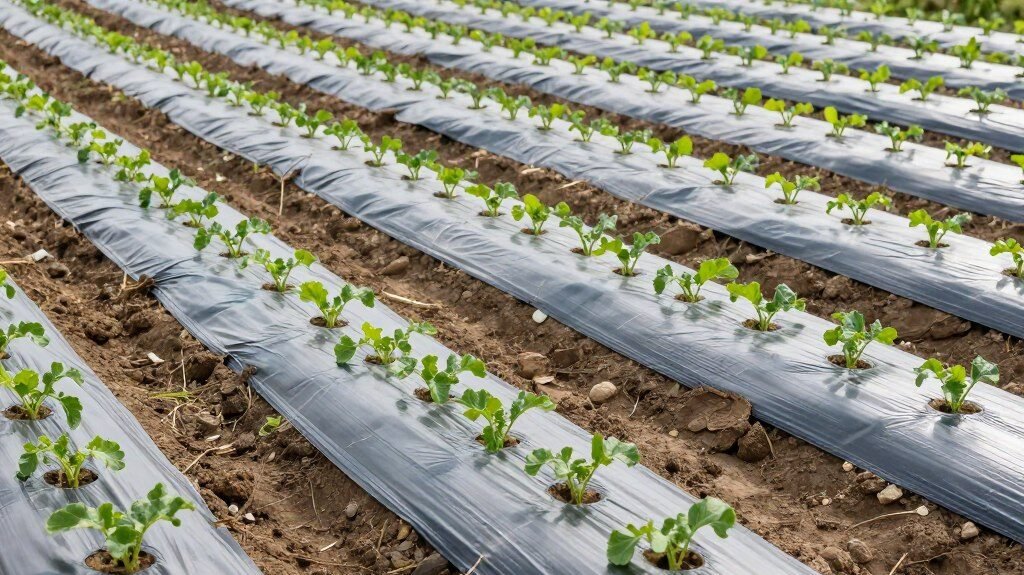
Biodegradable resins solve the most persistent waste challenges in modern farming.
- Smart Mulch Films: Unlike traditional PE films that require costly removal, our starch-blend mulch films protect crops and then safely biodegrade into the soil post-harvest.
- Bio-nutrient Seedling Pots: PLA and PHA-based containers allow for direct transplanting. As the pots break down, they release stored carbon and organic matter, effectively nourishing the soil and promoting healthier root systems.
Medical Precision & 3D Printing

Specialized high-purity bioplastic pellets cater to the most demanding technical fields.
- Biocompatible Medical Devices: PHA and high-grade PLA serve as the foundation for surgical sutures, scaffolds, and drug-delivery systems that safely resorbed by the human body.
- Advanced 3D Printing Filaments: Our consistent, low-warpage pellets are the preferred feedstock for professional 3D printing filaments, enabling the rapid prototyping of complex industrial parts with a significantly lower carbon footprint.
| Application Category | Preferred Material | Key Requirements | Market Growth Rate |
| Food Packaging | PLA, PHA | Food safety, barrier properties, clarity | 12-15% annually |
| Disposable Tableware | Starch blends, PLA | Rigidity, heat tolerance, cost | 18-22% annually |
| Agricultural Films | Starch blends | Controlled degradation, strength, UV stability | 8-11% annually |
| Medical Devices | PHA, PLA | Biocompatibility, sterility, predictable degradation | 15-19% annually |
| Automotive Interior | Fiber-reinforced PLA | Dimensional stability, surface finish, durability | 10-13% annually |
| Consumer Electronics | Impact-modified PLA | Toughness, surface quality, precision molding | 14-17% annually |
Bioplastic Pellets vs. Conventional Plastics
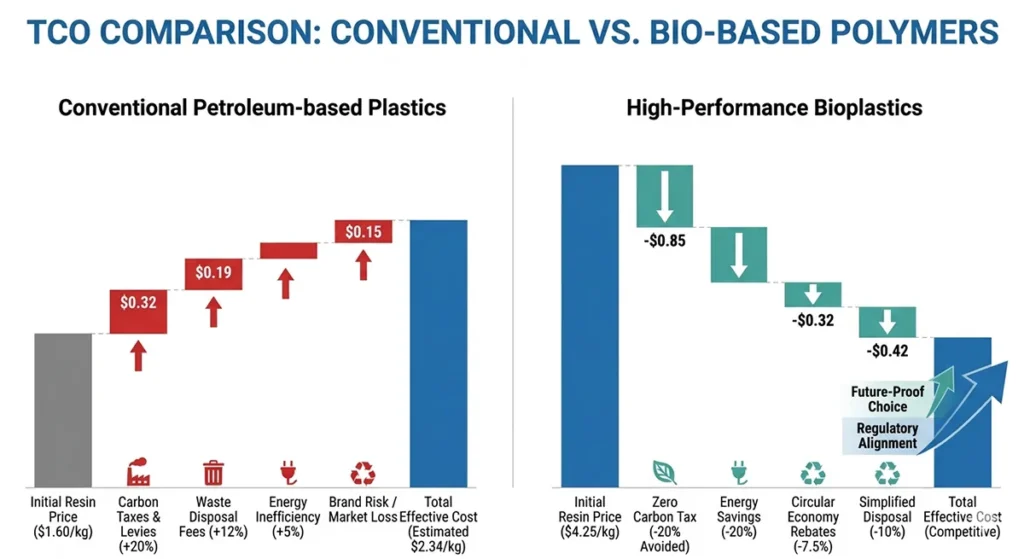
Transitioning from petroleum-based resins to bioplastic pellets offers a strategic advantage in a regulatory-driven global market. Success in this transition depends on a balanced evaluation of technical performance, operational efficiency, and long-term sustainability goals.
Direct Processing Advantages
Bioplastic resins are engineered for maximum compatibility with existing industrial infrastructure. Unlike other alternative materials that require heavy capital investment, these pellets function as “drop-in” solutions for most standard machinery.
- Energy Efficiency: Lower processing temperatures reduce energy consumption by 10–30% compared to traditional polyolefins.
- Equipment Longevity: Reduced tool wear and non-corrosive processing fumes extend the service life of expensive molds and improve the factory floor environment.
- Operational Flexibility: Most scrap material remains recyclable within the production cycle, minimizing waste and optimizing raw material utilization.
Environmental Performance & Lifecycle Value
Carbon footprint analysis reveals that bio-based feedstocks generate 25–75% lower greenhouse gas emissions than fossil-fuel counterparts. While traditional plastics persist in ecosystems for centuries, specialized biopolymers like PHA and PLA provide diverse end-of-life pathways:
- Industrial Composting: Materials transform into nutrient-rich soil amendments within months under controlled conditions (EN 13432).
- Marine Degradability: High-performance PHA resins address the critical challenge of ocean pollution by breaking down in seawater, a feat conventional plastics cannot achieve.
Total Cost of Ownership (TCO)
Initial raw material costs for bioplastics often carry a premium, yet the Total Cost of Ownership tells a different story. When factoring in carbon taxes, plastic levies, and the rising demand from eco-conscious consumers, bioplastics become a cost-competitive necessity. Scaling production and advancing fermentation technologies are rapidly narrowing the price gap, making sustainable resins a viable choice for high-volume manufacturing.
Strategic Comparison Matrix
| Dimension | Conventional Plastics | High-Performance Bioplastics |
| Feedstock Origin | Finite Fossil Fuels | Renewable Biomass / Waste Streams |
| Carbon Intensity | High (High CO₂e) | Low (Up to 75% Reduction) |
| Regulatory Risk | High (Bans & Levies) | Low (Future-proof / Compliant) |
| Processing Temp | Standard (Higher) | Optimized (10–30% Energy Savings) |
| End-of-Life | Landfill / Incineration | Compostable / Soil-Degradable |
Need Expert Guidance on Material Selection?
Choosing the right bioplastic pellets requires balancing performance specifications, processing requirements, and application demands. Our technical team provides customized consultation to match materials with your manufacturing needs.
Buyer's Guide: Choosing the Right Pellets for Your Production Line

Systematic evaluation of technical specifications and processing compatibility ensures a seamless transition to sustainable materials. This structured approach mitigates operational risks and identifies the precise resin-to-application match required for high-volume manufacturing success.
Precision Matching: Melt Flow Index (MFI) & Machine Compatibility
Achieving consistent cycle times depends on aligning the resin’s Melt Flow Index (MFI) with your specific machinery. Our bioplastic pellets are categorized by viscosity and flow behavior to ensure they perform reliably across different production setups:
- Injection Molding: We provide high-flow grades optimized for complex geometries and thin-walled parts, ensuring complete mold filling without excessive pressure.
- Extrusion & Blown Film: Lower MFI resins offer the essential melt strength required for stable bubble formation and consistent film thickness.
- Equipment Calibration: Minor adjustments to barrel temperatures and back pressure often allow our pellets to function as “drop-in” solutions for existing industrial lines.
Material Integrity: Shelf Life & Climate-Controlled Storage
Maintaining resin quality in humid or volatile climates is critical for preventing processing defects. Because biopolymers are naturally hygroscopic (moisture-absorbing), professional storage protocols are mandatory to preserve mechanical integrity:
- Moisture Management: Pellets are shipped in high-barrier, vacuum-sealed packaging to prevent hydrolytic degradation before they reach your hopper.
- Warehouse Optimization: We provide detailed guidance on climate-controlled storage and pre-processing drying parameters (time/temperature) to ensure your final products maintain a superior surface finish and structural strength.
Performance Customization: Tailored Masterbatches & Additives
Standard resins often require functional or aesthetic enhancements to meet premium brand standards. We offer specialized customization services to help you differentiate your products in competitive markets:
- Custom Color Matching: Our technical team develops bio-based color masterbatches that achieve vibrant, consistent hues while maintaining the material’s compostability certifications.
- Functional Additives: We provide tailored solutions for UV stabilization, anti-static properties, and impact modification, allowing you to engineer a high-performance bioplastic specifically for your end-use environment.
Frequently Asked Questions (FAQ)

Q: Are thermoplastic pellets toxic?
A: No. Our bioplastic pellets are engineered for high safety and low toxicity. Derived from renewable biomass (corn starch, sugarcane), these resins are free from harmful VOCs and phthalates commonly found in fossil plastics.
- Food Safety: Our PLA and PHA grades are fully compliant with FDA and EU 10/2011 standards for direct food contact.
- Workplace Safety: These materials produce minimal odor and no toxic fumes during processing, ensuring a superior environment for your production team.
Q: Are plastic pellets microplastics?
A: Technically no, but management is critical. Standard pellets (2–5mm) are larger than microplastics (<5mm). However, the real advantage of our bioplastics lies in their fail-safe degradation.
- Environmental Security: If accidentally released, our PHA-based pellets will safely biodegrade in soil or marine environments, unlike conventional “nurdles” that persist as microplastics for centuries.
- Compliance: We provide full support for Operation Clean Sweep (OCS) protocols to help your facility maintain zero-pellet-loss standards.
Q: What are plastic pellets used for?
A: They are the high-performance feedstock for virtually all plastic manufacturing. Our bioplastic resins are optimized for seamless integration into your existing production lines:
- Packaging: High-clarity containers, compostable bags, and barrier films.
- Industrial & Tech: Precision components for automotive interiors and consumer electronics (impact-modified).
- High-Tech: Medical-grade PHA for implants and consistent-diameter pellets for 3D printing filaments.
- Agriculture: Self-incorporating mulch films and nutrient-rich seedling pots.
Conclusion
Bioplastic pellets offer a mature, high-performance alternative to conventional resins, enabling a seamless transition to sustainable manufacturing. Modern formulations now deliver the mechanical integrity and thermal stability required for demanding industrial applications, ensuring that environmental responsibility supports—rather than compromises—production quality.
Success in adopting these materials depends on a strategic balance of technical specifications, total cost of ownership, and expert supplier partnership. By integrating bio-based resins into your production lines today, you decouple your supply chain from volatile fossil fuels and position your brand at the forefront of the global circular economy.
The shift toward sustainable materials represents a significant competitive opportunity. We invite you to leverage our technical expertise and comprehensive resin portfolio to future-proof your manufacturing processes and meet the evolving demands of eco-conscious markets worldwide.