Pure PBAT resin provides the essential foundation for biodegradability, yet its high flexibility and production cost often necessitate professional compounding to meet industrial performance benchmarks.
Technical Context
Before diving into advanced compounding, it is essential to understand the fundamental mechanical profile and inherent constraints of the neat polymer.
Read analysis: What is PBAT Plastic? Properties, Advantages and LimitationsSynergizing Strength: The PBAT/PLA Alloy
Balancing rigidity with ductility through strategic integration of Polylactic Acid (PLA) into the PBAT matrix.
We utilize multi-functional epoxy compatibilizers to chemically "stitch" the interface, preventing phase separation.
Economic Optimization via TPS
Achieving competitive pricing requires the sophisticated use of renewable fillers, primarily thermoplastic starch (TPS).
- 30% to 50% Starch Loadings
- Elongation at break exceeding 300%
- MAH-g-PBAT Molecular Bridging
High-shear de-structurization ensures hydrophilic starch compatibility with hydrophobic PBAT matrix.
Inorganic Reinforcement
Integrating minerals like calcium carbonate (CaCO₃) or talc to reduce cost and fine-tune physical density.
Processing Stability
Maintaining bubble stability via multi-functional epoxy oligomers (chain extenders) to rebuild molecular weight.
Additive Package
- • Slip agents (Erucamide)
- • Anti-blocking additives
- • Thinner gauge capability
Global Markets
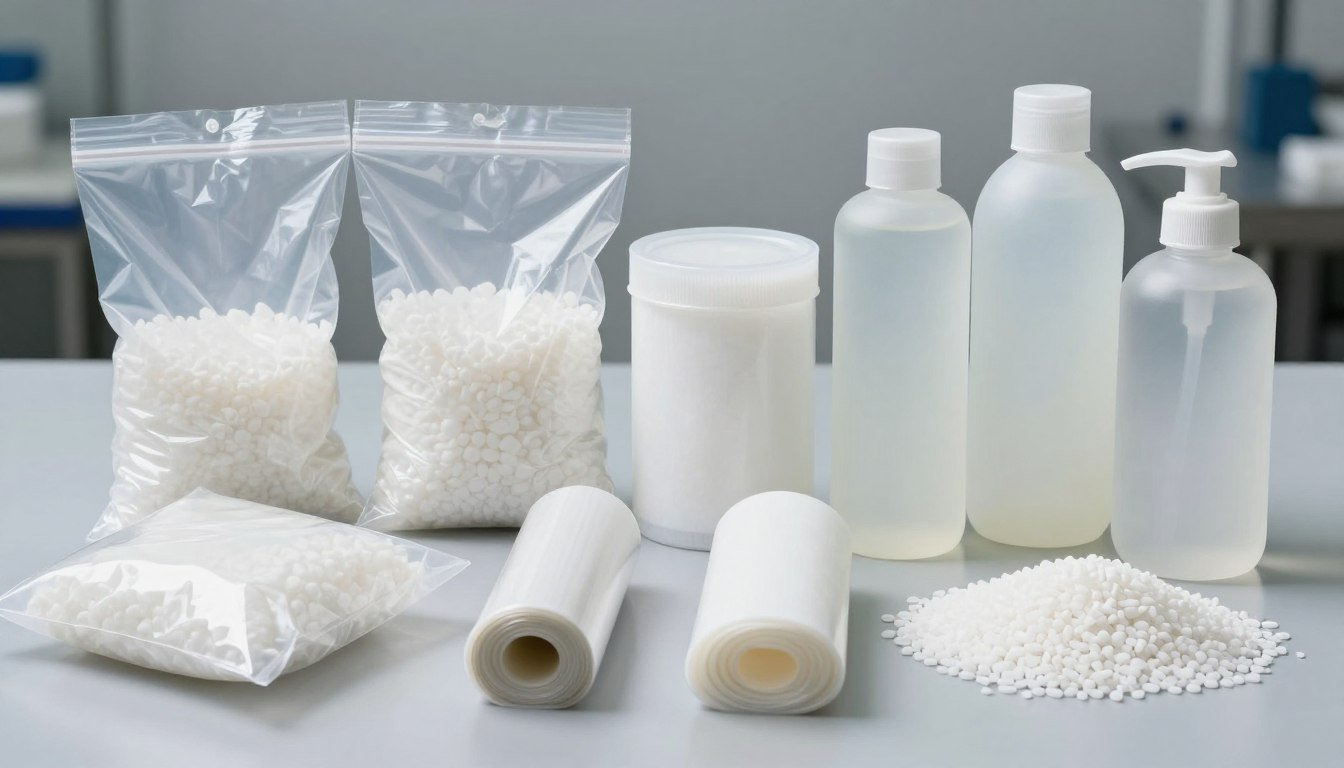
Tailored formulations allow PBAT to evolve from a simple polymer into an engineered solution for diverse applications.
Engineered Performance KPIs
Whether adding anti-fogging agents for fresh produce or carbon black for agricultural mulch, our compounding interventions ensure your products meet both environmental standards and rigorous production KPIs.