Selecting the right engineering plastic is rarely a simple comparison of datasheet values. ABS, PC/ABS alloy, and polycarbonate (PC) each solve different manufacturing and performance problems. Understanding where each material performs well — and where it fails — is more valuable than comparing numbers alone.
ABS
Acrylonitrile Butadiene Styrene. Prioritizes cost and processability with excellent surface aesthetics.
Low cost · Easy processingPC/ABS
Polycarbonate–ABS alloy. Bridges the gap by combining PC toughness with ABS flowability.
Balanced performancePC
Polycarbonate. Delivers superior impact resistance and heat stability at higher processing complexity.
High performanceWhy These Materials Are Frequently Compared
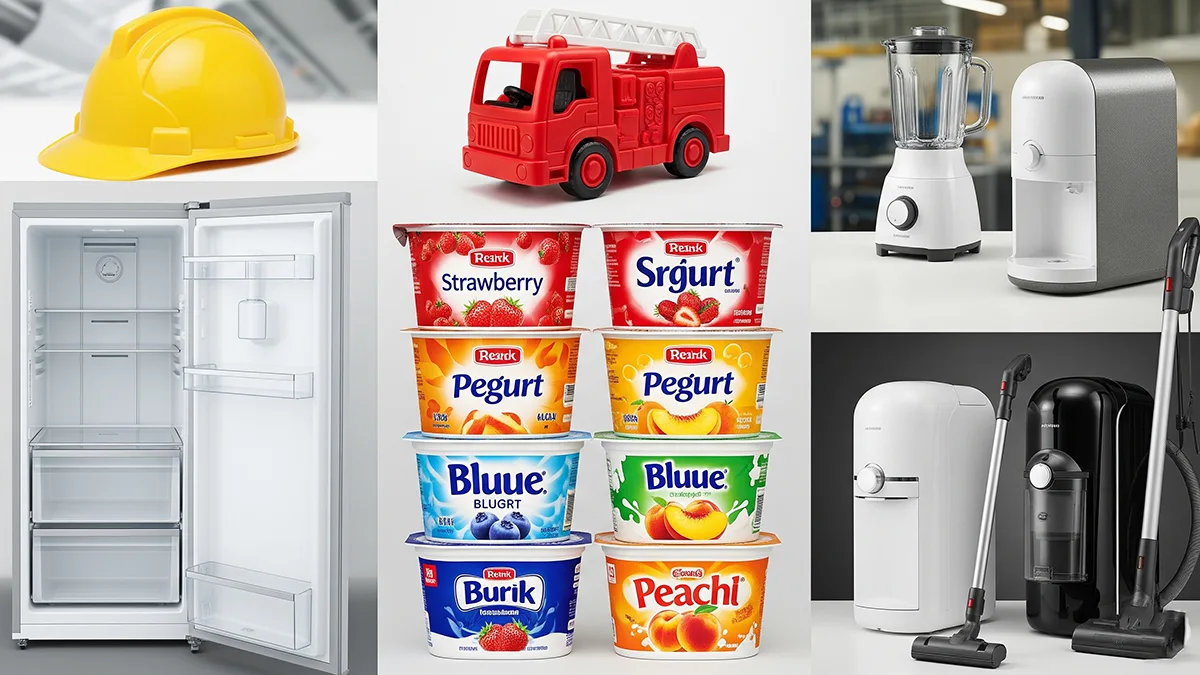
ABS, PC/ABS, and PC belong to the same family of injection-molded engineering plastics commonly used in automotive components, electronics housings, appliances, and industrial products. Their applications frequently overlap, yet their processing behavior and long-term performance differ significantly.
ABS offers excellent processability and surface aesthetics at a relatively low cost. Polycarbonate provides superior impact resistance and heat stability but introduces greater molding complexity. PC/ABS alloy was developed to bridge the gap between these two materials by combining the toughness of PC with the flowability and manufacturability of ABS.
PC/ABS Processing Specifications
Stable molding of PC/ABS alloy depends on proper moisture control, balanced temperatures, and controlled shear conditions to prevent phase separation or degradation.
While these general ranges provide a starting point, stable production requires precise zone-by-zone settings. For detailed setup profiles, drying times, and speed adjustments, read our comprehensive guide: PC/ABS Injection Molding Parameters: A Practical Settings Guide.
Core Property Comparison
Typical values may vary depending on grade formulation, additives, reinforcement content, and testing conditions.
| Property | ABS | PC/ABS | PC |
|---|---|---|---|
| Impact strength | Medium | High | Very high |
| Heat deflection temp | ~85°C | ~100°C | ~130°C |
| Processability | Good | Medium | Poor |
| Dimensional stability | Medium | Good | Good |
| Material cost | Low | Medium | High |
The alloy achieves higher impact resistance than standard ABS because the polycarbonate phase absorbs deformation energy more effectively during sudden loading. At the same time, ABS rubber domains help suppress crack propagation. Flow performance also improves compared with pure PC — the ABS component lowers melt viscosity, allowing the hybrid resin to fill thin walls and complex geometries consistently.
Where Each Material Fails
ABS Limitations
- ✕Continuous temps above ~85°C cause warpage
- ✕Poor UV resistance — outdoor aging leads to discoloration
- ✕Limited long-term outdoor exposure without additives
PC Limitations
- ✕High melt temps required (260–300°C)
- ✕Environmental stress cracking from cleaners or oils
- ✕Higher scrap rates if parameters are not managed
PC/ABS Limitations
- ✕Low-temp impact may not match high-performance PC
- ✕Not a substitute for PC above 120°C continuous
- ✕Optical clarity not achievable (opaque blend)
Engineering plastics like PC/ABS are highly sensitive to processing conditions. Improper molding parameters can easily lead to cosmetic or structural flaws like sink marks, warpage, or flow lines. If you are already running production and encountering quality issues, see our step-by-step diagnostic guide: PC/ABS Defect Troubleshooting: Sink Marks, Warpage, Flow Lines and More
Material Selection by Application
| Application Scenario | Recommended | Primary Reason |
|---|---|---|
| 🏠 Appliance housings | ABS | Low cost and excellent surface finish |
| 🚗 Automotive interior trim | PC/ABS | Balanced impact and heat resistance |
| 🛡️ Transparent safety shield | PC | Optical clarity and impact resistance |
Get a Material Recommendation for Your Specific Application
Our engineering team can evaluate your operating environment, structural requirements, and production volume to recommend the optimal plastic grade — with real processing data.
Request a Free ConsultationInjection Molding & Manufacturing
ABS: Widest Window
Lower melt temperatures, shorter drying, stable flow characteristics help yield stability.
PC: Tightest Control
Strict moisture control and temperature limits required to prevent internal stress defects.
PC/ABS: Best Balance
Helps reduce filling problems and residual stress compared to pure polycarbonate.
Common Material Selection Mistakes
Assuming PC/ABS is simply an average of PC and ABS
Performance depends heavily on alloy ratio, compatibilizer chemistry, and molding conditions.
Expecting Standard Flow from High-Impact Grades
Modifiers that increase toughness often increase melt viscosity, requiring adjustments to injection pressure and gate sizing.
Assuming Flame-Retardant Grades Behave The Same As Standard Grades
Flame-retardant additives often reduce impact strength and may affect surface appearance, weld-line performance, or flow behavior. FR materials should always be evaluated separately from standard grades.
Conclusion
Each material performs best when matched to the correct engineering priorities.
ABS
One of the most economical solutions for indoor products requiring attractive surface quality and efficient mass production.
PC/ABS
Strong balance of toughness, heat resistance, dimensional stability, and manufacturability. Widely used in automotive interiors and electronic housings.
PC
The preferred option when very high impact strength, elevated temperature resistance, or optical clarity are critical to long-term performance.
The best material is not necessarily the strongest or most expensive resin. The optimal choice is the one that satisfies performance requirements while maintaining stable, cost-effective manufacturing at scale.
For a complete breakdown of injection molding parameters and process settings for PC/ABS, see our PC/ABS complete guide.