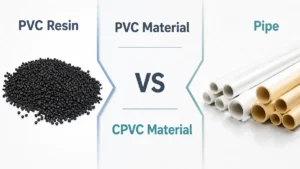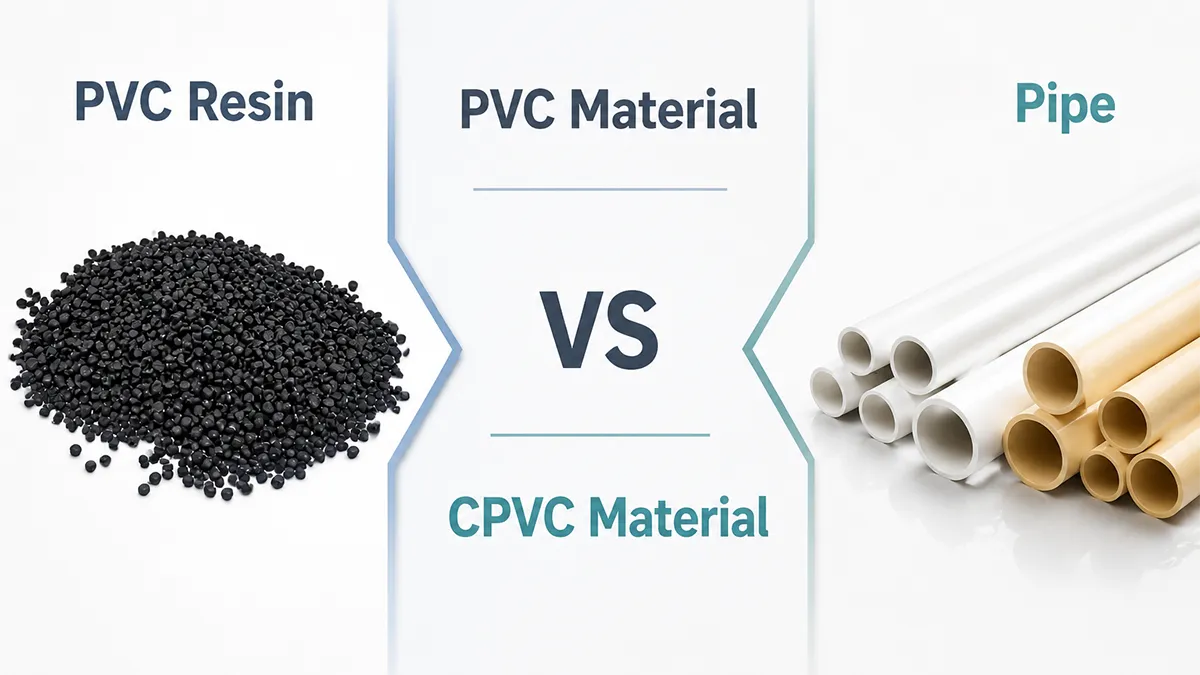
PVC plastic and CPVC are two commonly used thermoplastic materials for pipes, fittings, and industrial applications. Although they share the same basic polymer structure, differences in chlorine content, temperature resistance, and performance characteristics make them suitable for different operating conditions.
Choosing between PVC and CPVC depends on factors such as application requirements, processing methods, temperature range, and cost considerations. This article compares CPVC vs PVC in terms of performance, applications, material selection, and sourcing considerations to help manufacturers identify the right solution for their projects.
CPVC vs PVC: Detailed Performance Comparison
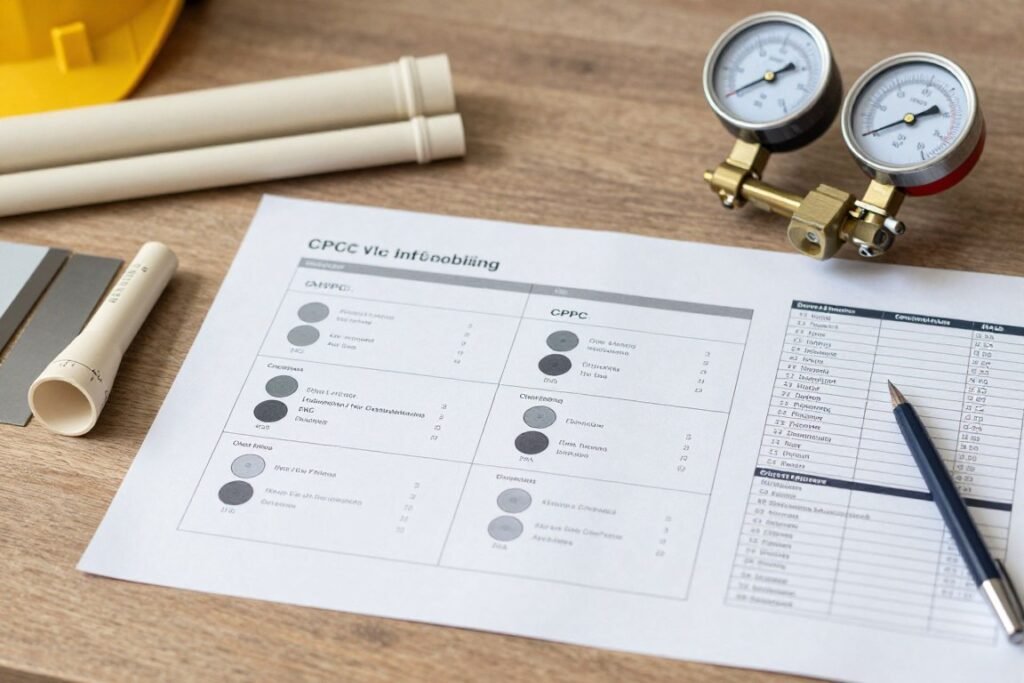
Although PVC and CPVC share a similar polymer base, differences in chlorine content and material structure affect their temperature resistance, processing behavior, chemical performance, and application suitability. Understanding these differences helps manufacturers select the right option based on product requirements and operating conditions.
| Factor | CPVC | PVC |
|---|---|---|
| Chemical structure | Chlorinated PVC with higher chlorine content, providing improved heat resistance | Standard polyvinyl chloride widely used in general applications |
| Temperature resistance | Suitable for higher-temperature applications such as hot water and industrial systems | Commonly used for lower-temperature applications including cold water and drainage |
| Pressure performance | Maintains better performance at elevated temperatures depending on specifications | Provides reliable performance under standard temperature conditions |
| Chemical resistance | Good resistance to many chemicals, but compatibility should be confirmed before use | Good resistance to many acids, salts, and water-based chemicals |
| Processing characteristics | Requires suitable processing conditions and compatible equipment | Easier processing with wide use in extrusion, molding, and other applications |
| Cost | Generally higher due to enhanced performance | More economical and widely available |
Temperature and Chemical Resistance
Temperature capability is one of the main differences between CPVC and PVC. CPVC is often selected for applications requiring higher service temperatures, while PVC remains a practical choice for standard temperature environments.
Both materials provide good corrosion resistance compared with traditional metal materials. However, chemical compatibility depends on factors such as chemical type, concentration, temperature, and exposure time. Manufacturers should evaluate actual operating conditions and technical data before selecting a suitable material.
CPVC Advantages and Limitations
CPVC advantages
- Higher temperature resistance compared with standard PVC
- Suitable for hot water and industrial applications
- Good corrosion resistance
- Improved performance in demanding environments
CPVC limitations
- Higher material cost
- Requires CPVC-compatible processing and installation methods
- Application performance depends on pressure, temperature, and chemical compatibility
PVC Advantages and Limitations
PVC advantages
- Cost-effective and widely available
- Good processability for extrusion and injection molding applications
- Suitable for a broad range of industrial and commercial products
- Mature manufacturing technology and supply chain
PVC limitations
- Lower temperature capability compared with CPVC
- Not suitable for some high-temperature applications
- Requires compatibility evaluation in aggressive chemical environments
Common Applications & Industry Uses
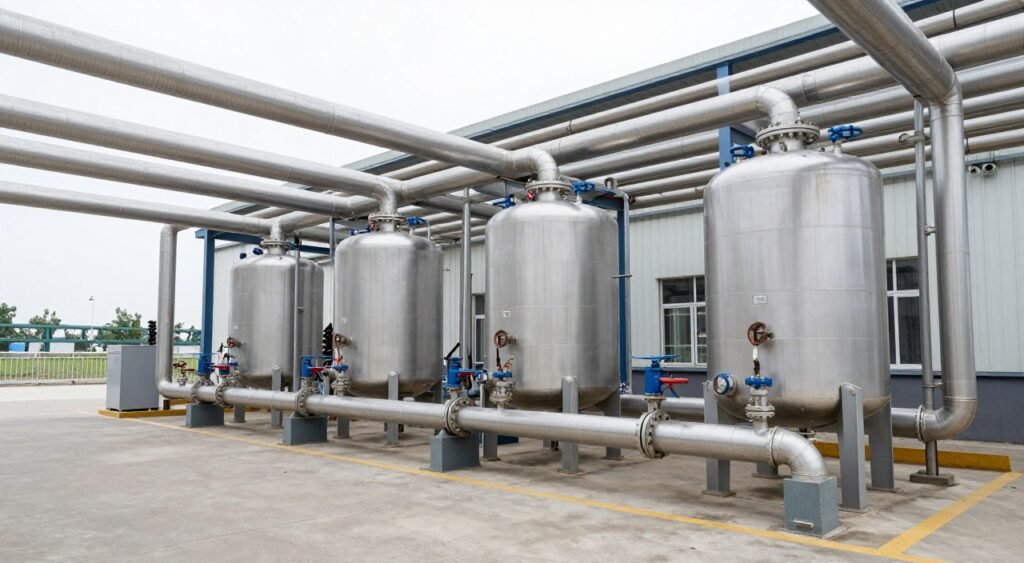
PVC and CPVC are widely used in piping, industrial, and chemical-resistant applications. Although both materials are based on polyvinyl chloride, their different temperature resistance, processing characteristics, and cost considerations make them suitable for different products and operating conditions.
Where PVC is often selected
PVC material is commonly selected for applications that require good processability, corrosion resistance, and cost efficiency. Its mature processing technology and wide availability make it suitable for many high-volume manufacturing applications.
Typical PVC applications include:
- Cold water supply, irrigation, drainage, and wastewater systems
- Rigid PVC pipes and profiles produced by extrusion
- PVC sheets, panels, and industrial components
- Cable insulation and protective applications
- Injection molded parts requiring stable processing performance
PVC is often preferred for general-purpose applications where moderate temperature performance and economical production are key considerations.
Where CPVC Is Often Selected
CPVC is mainly used in applications where higher temperature resistance and improved chemical stability are required. Compared with standard PVC, CPVC can maintain better performance in more demanding operating environments.
Typical CPVC applications include:
- Hot water distribution systems
- Industrial process piping
- Chemical handling systems with suitable compatibility
- Approved fire sprinkler applications
The selection of CPVC should still consider operating temperature, pressure requirements, chemical exposure, and relevant industry standards.
PVC vs CPVC Application Comparison
| Application | Recommended Material | Main Reason |
|---|---|---|
| Cold water systems | PVC | Cost-effective and widely available |
| Drainage and wastewater | PVC | Durable and economical |
| Extruded profiles and industrial products | PVC | Good processability and flexibility |
| Hot water systems | CPVC | Higher temperature resistance |
| Chemical applications | PVC or CPVC | Depends on chemical compatibility |
When Additional Material Evaluation Is Required
For applications involving extreme temperatures, aggressive chemicals, high pressure, or special performance requirements, manufacturers should evaluate technical data, processing conditions, and application standards before selecting PVC or CPVC.
Need Help Selecting PVC or CPVC Materials?
Choosing the right material grade can affect product performance, processing stability, and production cost.
We provide PVC resin, CPVC materials, technical documents, and application support for pipe, profile, and industrial manufacturers. Contact us to discuss your material requirements.
Material Selection & Sourcing Guide for Manufacturers

For manufacturers working with PVC resin, selecting the correct grade requires additional evaluation of factors such as K-Value, molecular weight, processing method, and resin quality parameters. For a detailed guide on PVC resin grade selection, see our article: How to Select the Right PVC Material for Industrial Production?
1️⃣
Define Application Requirements
Before selecting PVC or CPVC, manufacturers should evaluate key application factors, including:
- Temperature requirements: Determine the operating and maximum service temperature to select a suitable material.
- Pressure conditions: Consider the pressure requirements and mechanical performance needed for the final product.
- Chemical exposure: Evaluate chemical compatibility based on the type of chemical, concentration, and operating environment.
- Processing method: Consider whether the material will be used for extrusion, injection molding, or other manufacturing processes.
2️⃣
Match Material Grade with Processing Needs
Different grades are designed for different processing conditions and product requirements.
For PVC
Important factors include K-value, molecular weight, processing characteristics, and thermal stability. Extrusion applications typically require good melt strength and processing stability, while injection molding applications may focus more on flow performance and processing efficiency.
For CPVC
Manufacturers should consider heat resistance, chemical stability, processing requirements, and long-term service performance. The selected grade should match both the application requirements and the production process.
3️⃣Verify Quality and Technical Documentation
Consistent material quality is essential for stable manufacturing. Before purchasing, manufacturers should review technical documents such as:
4️⃣Evaluate Supplier Capability
A reliable supplier should provide more than material availability. Manufacturers should consider technical support, grade recommendations, alternative solutions, quality consistency, and supply reliability when selecting a long-term partner.
Frequently Asked Questions (FAQ)
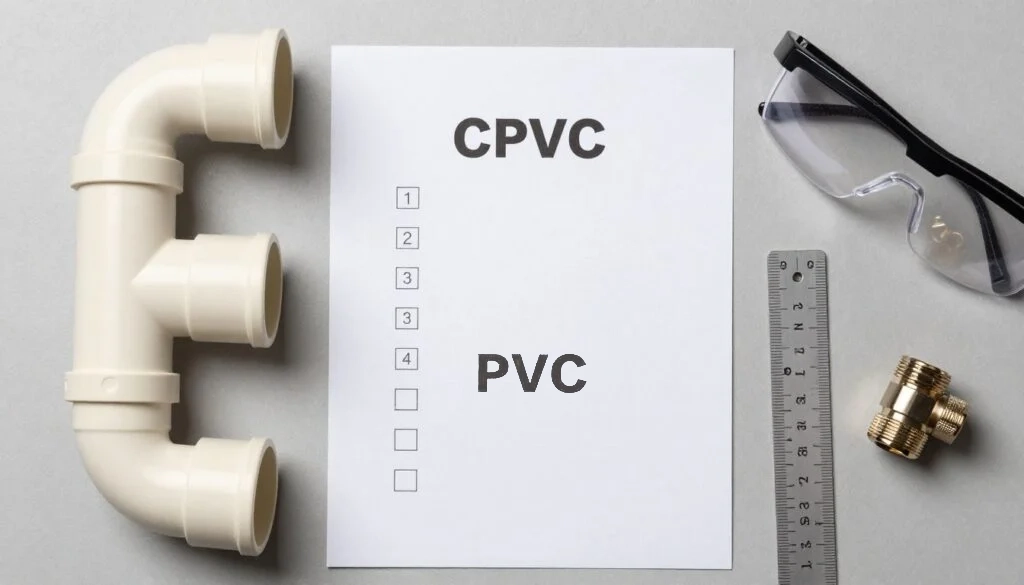
Is 3/4 CPVC the same as 3/4 PVC?
Both products may have the same nominal size, but CPVC and PVC are different materials with different temperature resistance, pressure ratings, and application requirements. They should not be considered directly interchangeable without checking system specifications and operating conditions.
How many years will CPVC last?
The service life of CPVC depends on factors such as operating temperature, pressure, chemical exposure, and installation conditions. When properly selected and used within recommended conditions, CPVC can provide reliable long-term performance.
What happens if you use PVC instead of CPVC?
PVC may work in some applications, but replacing CPVC without proper evaluation can affect temperature performance, chemical compatibility, and long-term reliability. Material selection should be based on actual service conditions and product requirements.
Conclusion
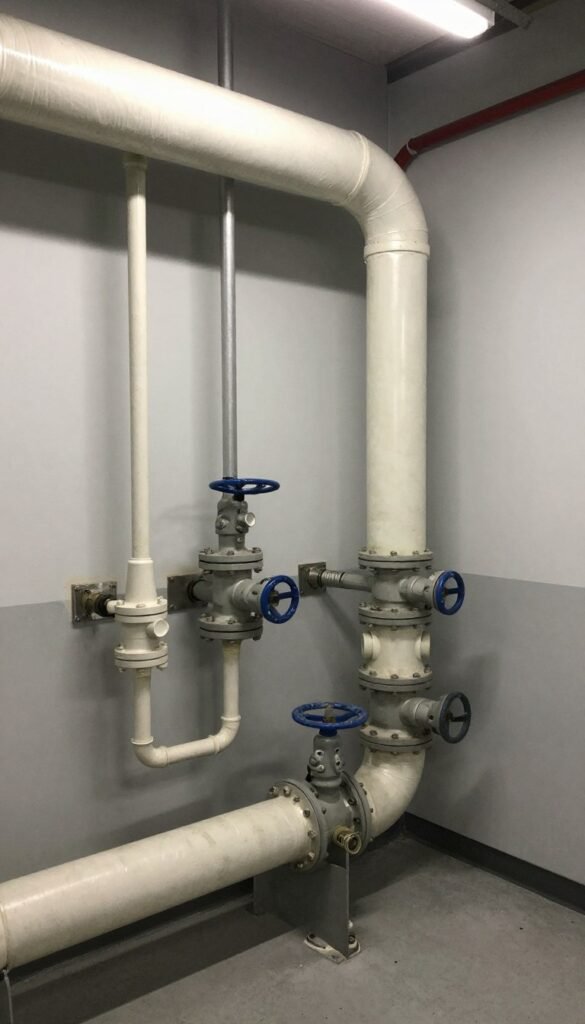
CPVC and PVC are both important thermoplastic materials, but they are designed for different operating conditions and application requirements. CPVC provides higher temperature resistance and improved performance in demanding environments, making it suitable for hot water systems, industrial piping, and chemical-resistant applications. PVC remains a practical and economical choice for many general-purpose products, including cold water systems, drainage, profiles, and industrial applications.
For manufacturers selecting between PVC and CPVC, the right choice depends on factors such as temperature requirements, pressure conditions, chemical compatibility, processing methods, and overall project cost. Evaluating technical specifications and application requirements before purchasing helps ensure stable production and long-term performance.
An experienced material supplier can support manufacturers by recommending suitable grades, providing technical documentation, offering alternative solutions, and ensuring consistent supply for long-term production needs.