Thermoplastic resins form the backbone of modern industrial manufacturing, with Acrylonitrile Butadiene Styrene (ABS) and Polystyrene (PS) standing as two of the most indispensable materials in the market. While they share common ground as versatile polymers, their molecular architectures dictate vastly different performance profiles. ABS integrates the strength of acrylonitrile, the resilience of butadiene, and the rigid processability of styrene, resulting in a high-impact engineering plastic that excels under mechanical stress. Conversely, PS provides a cost-effective, high-clarity solution, prized for its exceptional dimensional stability and ease of injection molding in high-volume production.
Determining the optimal material requires a nuanced understanding of their distinct behaviors, from thermal stability and chemical resistance to surface finish and tensile strength. This article provides an in-depth technical breakdown of ABS versus PS, designed to assist engineers and procurement specialists in identifying the right resin for their specific structural or aesthetic requirements. Achieving these theoretical performance benchmarks in mass production requires high-purity raw materials. Our technical distribution team focuses on matching your specific molding parameters with the exact ABS or PS grade needed to minimize defect rates and maximize efficiency.
🔍 Technical Insight:
Before diving into specific resin comparisons, it is crucial to move beyond the generic label of “plastic.” To better understand why engineering resins like ABS outperform commodity polymers, read our technical guide on Acrylonitrile Butadiene Styrene vs Plastic: Understanding the Technical Distinction.
What is ABS Plastic?
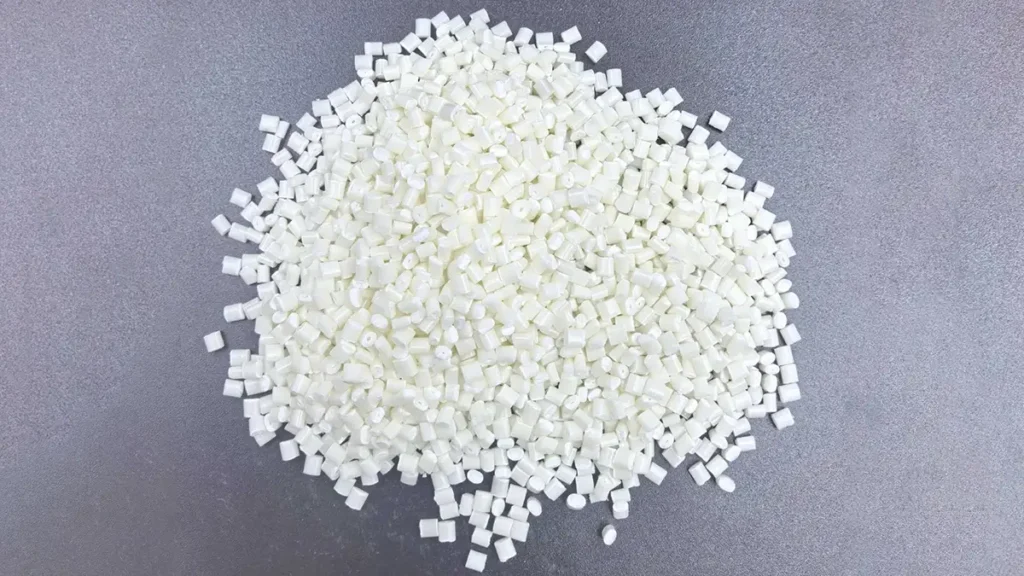
ABS is a thermoplastic polymer made from acrylonitrile, butadiene, and styrene. This blend results in a material known for its strength, toughness, and ease of processing. It is typically supplied in pellet form for injection molding and extrusion.
Key performance traits include:
- Impact Resistance: Handles mechanical shock without fracturing, making it suitable for load-bearing or drop-sensitive parts.
- Thermal Performance: Retains rigidity and form at temperatures up to ~100°C, sufficient for many indoor and light-duty automotive environments.
- Surface Finish: Accepts pigmentation and surface treatments easily, enabling consistent visual quality in final products.
- Chemical Tolerance: Withstands exposure to diluted acids, alkalis, and various oils commonly encountered in consumer and industrial settings.
This balance of mechanical properties and surface aesthetics makes ABS a preferred choice for both structural components and consumer-facing goods.
What is PS Plastic?
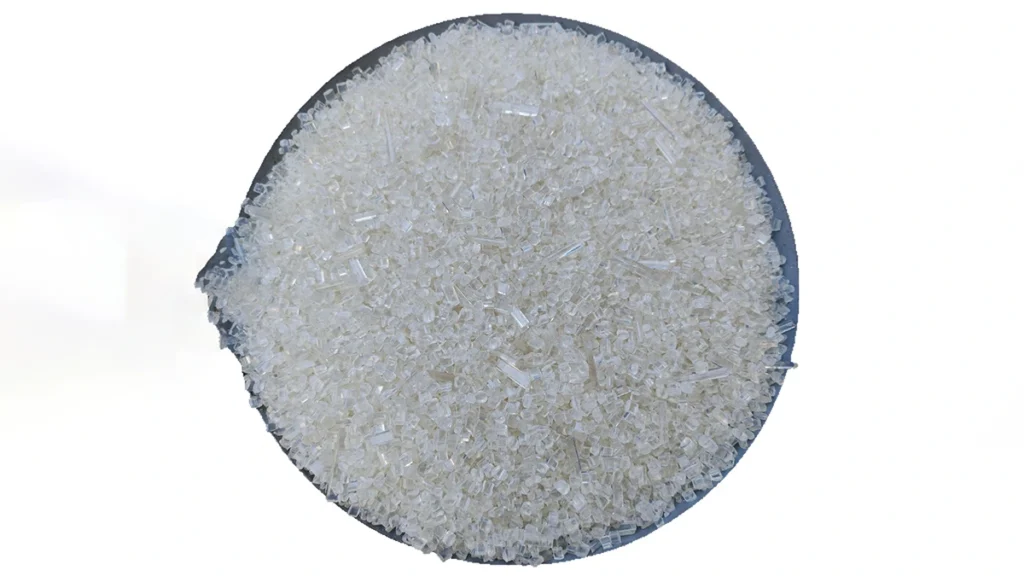
Polystyrene (PS) is a high-volume thermoplastic resin derived from the polymerization of styrene monomers, prized for its exceptional dimensional stability and cost-efficiency. To meet diverse industrial requirements, PS is primarily distributed in two distinct grades: General Purpose Polystyrene (GPPS) and High Impact Polystyrene (HIPS). While they share the same base polymer, their mechanical properties differ significantly due to rubber modification in the latter.
General Purpose Polystyrene (GPPS)
GPPS, often referred to as “crystal polystyrene,” is a glass-like polymer used where aesthetic clarity is the priority.
- Low Moisture Absorption: Exhibits near-zero water uptake, maintaining its electrical insulation properties even in humid conditions.
- Optical Transparency: Offers a light transmission rate of approximately 88%–90%, making it the industry standard for laboratory labware and premium clear packaging.
- High Rigidity: Provides excellent stiffness and a high tensile modulus, though it remains sensitive to impact stress (brittle).
High Impact Polystyrene (HIPS)
HIPS is produced by grafting polybutadiene rubber onto the polystyrene backbone, transforming a brittle resin into a rugged, versatile material.
- Superb Processability: Retains the low melting point and excellent flowability of PS, facilitating high-speed thermoforming and injection molding cycles.
- Enhanced Toughness: The integrated rubber phase absorbs mechanical energy, providing the impact resistance necessary for durable housings and toys.
- Opaque Matte Finish: Unlike the clear GPPS, HIPS is naturally translucent or opaque, providing an excellent surface for high-quality printing and coloration.
Due to its low cost and ease of shaping, PS is often selected for applications where moderate strength and thermal resistance are acceptable trade-offs.
ABS vs PS: Key Differences
Technical selection between ABS and PS depends on balancing mechanical resilience against processing efficiency. While both are styrenic polymers, their distinct molecular backbones dictate their industrial roles.
Physical & Thermal Benchmarks
ABS dominates in structural integrity, whereas PS excels in clarity and dimensional stability.
| Metric | ABS (Engineering Grade) | PS (GPPS/HIPS) |
| Impact Strength | Superior (High energy absorption) | Low to Moderate (Brittle) |
| Heat Resistance | Up to 105°C (HDT) | Up to 75°C |
| Tensile Strength | 40 – 50 MPa | 25 – 45 MPa |
| Surface Finish | Class-A Gloss / Platable | High Clarity (GPPS) |
Manufacturing & Processing Dynamics
- Flow & Precision: Polystyrene features a higher Melt Flow Rate (MFR) and lower mold shrinkage. This allows for faster cycle times and tighter tolerances in mass production compared to the more viscous ABS.
- Secondary Operations: ABS is the preferred substrate for electroplating, painting, and ultrasonic welding. Conversely, GPPS is selected when 90% light transmission is a critical requirement.
Environmental Resilience
- Durability: ABS maintains its toughness in humid or high-stress environments. PS, particularly GPPS, is prone to stress-cracking when exposed to constant mechanical loading.
- UV Stability: Both resins require stabilization for outdoor use. Without modification, they may experience yellowing and surface degradation under prolonged sunlight.
Bridging the gap between material science and manufacturing floor reality is our core expertise. By sourcing the right performance formulations, you can optimize your production line for both mechanical output and commercial efficiency.
Application Field Comparison
Industrial selection between ABS and PS is driven by the specific functional demands of the end product. While ABS targets structural integrity and longevity, PS serves markets prioritizing visual transparency and high-volume economic efficiency.
Applications of ABS Plastic
ABS resin is chosen in sectors where a combination of toughness, dimensional stability, and ease of processing is required. Its suitability for injection molding and extrusion enables efficient production of precision components in the following areas:
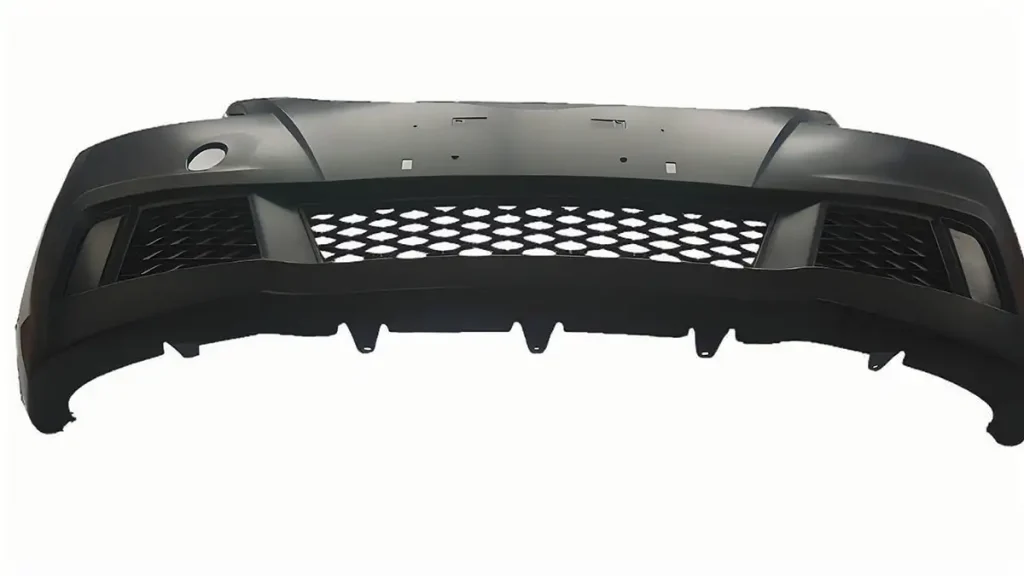
- Automotive Components
Used for interior panels, trim pieces, and bumper covers. ABS resists impact and mechanical stress, making it suitable for parts that must retain form under repeated use. - Consumer Products
Found in items such as LEGO bricks, power tool housings, and appliance shells. ABS offers good surface finish and colorability, supporting both functionality and appearance. - Electronics Casings
Common in housings for laptops, routers, and monitors. Its thermal stability and electrical insulation help protect sensitive components. - Medical Device Enclosures
Applied in diagnostic device housings and handheld equipment. ABS resists cleaning agents and allows precise molding of complex forms.
ABS pellets allow for tight tolerances and short cycle times, supporting the mass production of detailed molded parts.
Applications of PS Plastic
Polystyrene (PS) plastic, available as general-purpose (GPPS) and high-impact (HIPS), offers affordability and versatility, making it a preferred choice for high-volume manufacturing.we highlight the key applications of GPPS and HIPS, emphasizing their cost-effectiveness and processing ease in industries such as packaging, consumer goods, and medical equipment.
General-Purpose Polystyrene (GPPS)

GPPS is valued for its clarity and rigidity, ideal for applications requiring transparency and low cost:
- Food Packaging: Clear containers, lids, and clamshells for products like salads or bakery items, where visibility enhances product appeal.
- CD/DVD Cases: Rigid, lightweight casings that protect media while maintaining a sleek, transparent appearance.
- Medical Packaging: Disposable trays, Petri dishes, and diagnostic containers, leveraging GPPS’s clarity and ease of sterilization.
High-Impact Polystyrene (HIPS)

HIPS provides improved toughness over GPPS, suitable for durable, cost-sensitive applications:
- Toys: Structural components for toys, offering durability at a low production cost, such as in model kits or action figures.
- Appliance Components: Interior parts like refrigerator liners and TV casings, where HIPS balances strength and affordability.
- Signage and Displays: Lightweight, rigid panels for retail displays and point-of-sale signage, easy to print on and fabricate.
Transitioning from conceptual design to high-efficiency production requires stable supply chains and precise grade matching. We support these diverse industrial requirements by providing expert technical guidance alongside high-purity ABS and PS resins, helping manufacturers achieve reduced material costs for high-turnover goods or market-leading durability for premium structural applications.
Comparative Pros, Cons, and Material Selection
Evaluating the trade-offs between ABS and PS is essential for optimizing both product performance and manufacturing budgets. Each resin offers a specific set of advantages that cater to different lifecycle requirements.
ABS: Engineering Resilience and Durability
Strengths:
- Mechanical Synergy: ABS provides an exceptional balance of tensile strength and Izod impact toughness. This prevents catastrophic failure in load-bearing components, making it the industry standard for safety-critical housings.
- Thermal Endurance: Form stability remains intact at higher operating temperatures (up to 100°C), allowing for use in proximity to heat-generating electronic components.
- Surface Engineering: The material is highly receptive to painting, chrome plating, and laser marking, offering vast possibilities for high-end aesthetic branding.
Limitations:
- Cost Positioning: Higher production complexity leads to a premium price point compared to commodity styrenics.
- Weathering Sensitivity: Unmodified ABS is prone to photo-oxidation. Prolonged UV exposure can trigger yellowing and a reduction in mechanical properties unless specific UV stabilizers are integrated.
PS: Visual Clarity and Economic Efficiency
Strengths:
- Optical Excellence: GPPS delivers high light transmission and a glass-like refractive index, ideal for clear-view retail applications.
- Production Speed: Low melt viscosity and rapid cooling cycles significantly boost throughput, reducing the total cost per part in high-volume injection molding.
- Dimensional Precision: Minimal and uniform mold shrinkage ensures that large batches of parts remain consistent, reducing the scrap rate during assembly.
Limitations:
- Structural Fragility: High brittleness makes GPPS unsuitable for applications involving repetitive stress or impact.
- Thermal Constraints: Structural integrity diminishes rapidly above 75°C, restricting its use to ambient temperature environments.
Strategic Material Selection Guide
Determining the ideal resin requires balancing mechanical necessity against commercial constraints.
- Select ABS for: Structural enclosures, automotive interior/exterior components, power tool housings, and products requiring a premium, plated, or painted finish. Its long-term creep resistance ensures performance over a multi-year product lifecycle.
- Select PS for: High-turnover packaging, laboratory disposables, clear consumer displays, and lightweight structural items where cost-per-gram is the primary driver of profitability.
Our technical team specializes in translating these material profiles into actionable procurement strategies. Whether your project demands the uncompromising toughness of ABS or the streamlined processing of PS, we provide the raw material expertise necessary to drive your engineering goals forward.
Cost Comparison: ABS vs PS Plastic
Determining the most cost-effective resin requires a strategic look at both upfront acquisition and long-term operational efficiency. Use the following logic to align your material choice with your project’s financial goals.
Invest in ABS if:
- Total Cost of Ownership (TCO) is your primary metric. The higher initial investment in ABS is offset by its extreme durability, which significantly reduces warranty claims and product failure rates in the field.
- Secondary Finishing is a requirement. ABS is the superior substrate for electroplating, vacuum metallizing, and painting. Its high surface energy ensures a lower scrap rate during these expensive post-processing steps, protecting your bottom line.
- Structural Longevity is non-negotiable. For automotive interiors or professional-grade electronics, the long-term creep resistance and impact strength of ABS ensure the product remains functional for years, enhancing brand reputation.
Optimize with PS if:
- Acquisition Cost drives market competitiveness. Polystyrene remains one of the most affordable polymers, making it the ideal choice for high-volume, price-sensitive consumer goods and disposable packaging.
- Manufacturing Throughput is a priority. The exceptional melt flow and lower processing temperatures of PS enable shorter cooling cycles. This allows for more parts per hour, maximizing machine utilization and reducing energy overhead.
- Optical Clarity is a key selling point. GPPS offers glass-like transparency at a fraction of the cost of other clear plastics, providing superior lifecycle cost efficiency for retail displays and laboratory disposables.
Our Value-Added Supply Chain
Procurement decisions extend beyond the price per kilogram—production stability and final product quality are paramount. Through our technical grade-matching services, we provide a specialized inventory of global ABS and PS grades. This approach ensures your manufacturing lines never overpay for unnecessary performance specifications, nor compromise on critical mechanical properties.
Environmental Impact and Recyclability
Sustainability is a critical factor when choosing materials like ABS and PS plastics for manufacturing. This section examines the recyclability, production impact, and sustainability considerations for ABS plastic and PS plastic to guide informed material selection.
ABS Plastic
- Recyclability: ABS can be recycled through mechanical processes (e.g., grinding into pellets) or chemical methods (e.g., pyrolysis). However, limited recycling infrastructure and additives reduce its global recycling rate compared to other plastics.
- Environmental Impact: Producing ABS is energy-intensive due to its complex blend of acrylonitrile, butadiene, and styrene. Its durability in applications like automotive components and electronics extends product lifespans, reducing waste over time.
- Sustainability Options: Bio-based ABS, made from renewable feedstocks, is in development but not widely available. Our dealership offers ABS pellets with enhanced recyclability for eco-conscious projects.
PS Plastic
- Recyclability: General-purpose polystyrene (GPPS) is recyclable through established programs, especially for clean, transparent products. High-impact polystyrene (HIPS) is recyclable but less common due to additives. Expanded polystyrene (EPS, often called Styrofoam) is difficult to recycle due to its low density and frequent contamination, often ending in landfills.
- Environmental Impact: PS production consumes less energy than ABS due to its simpler styrene-based structure. However, its use in single-use items like food packaging and disposable cutlery generates significant waste, particularly for non-recycled EPS.
- Sustainability Options: GPPS benefits from robust recycling programs in regions like North America and Europe. Advances in chemical recycling are improving PS sustainability. We supply PS pellets optimized for recycling compatibility.
Comparative Insights
- Recycling Efficiency: GPPS has a higher recycling rate than ABS due to simpler processing and broader infrastructure. EPS, however, poses significant recycling challenges. ABS recycling is viable but limited to specialized facilities.
- Waste Impact: ABS’s durability supports long-term applications, minimizing waste. PS, especially EPS, contributes to landfill waste due to single-use products and low recycling rates.
- Sustainable Choices: For recyclable, transparent applications, GPPS is preferable. For durable, long-life products, ABS is ideal. Our dealership provides recycled ABS and PS pellets to support sustainable manufacturing.

Choosing Between ABS and PS: A Factor-Based Guide
Determining the best material in the ABS Plastic or PS Plastic depends on aligning performance, cost, and application needs. Below are key factors to guide manufacturers and engineers in evaluating ABS and PS plastic pellets:
1. Performance Requirements
- ABS Plastic: Choose ABS when high impact resistance, toughness, and durability are critical. Its butadiene component ensures it can withstand physical stress.
- Ideal For: Automotive bumpers, electronic housings, 3D-printed prototypes.
- PS Plastic: Choose Polystyrene for applications prioritizing crystal clarity (GPPS) or cost-effective, moderate strength (HIPS).
- Ideal For: Transparent food containers (GPPS), disposable cutlery, and low-impact consumer goods (HIPS).
2. Environmental Conditions
- ABS Plastic: Select ABS for parts exposed to higher heat (up to ~105°C) or chemicals like oils and dilute acids.
- Ideal For: Engine bay components, industrial fittings, outdoor equipment housings.
- PS Plastic: Use PS in controlled, less demanding environments due to its lower heat tolerance (~80–100°C) and limited chemical resistance.
- Ideal For: Indoor applications, disposable items, office products.
3. Budget Constraints
- ABS Plastic: Justified for performance-driven applications where durability and longevity outweigh its higher material and processing costs.
- PS Plastic: The optimal choice for budget-sensitive projects, offering low material costs and energy-efficient processing for high-volume, disposable items.
4. Production and Processing
- ABS Plastic: Best suited for precision components requiring injection molding or 3D printing. Note that its higher melt viscosity demands robust equipment and precise temperature control.
- PS Plastic: Ideal for high-volume, high-speed production due to its low viscosity and ease of molding/thermoforming, which reduces energy costs and cycle times.
5. Aesthetic and Functional Needs
- ABS Plastic: The superior choice for parts that require a high-gloss finish or secondary processing like painting, gluing, or plating.
- Ideal For: Appliance casings, decorative auto trim, toys (e.g., LEGO bricks).
- PS Plastic: Select General-Purpose PS (GPPS) for applications demanding excellent transparency, or Expanded PS (EPS) for lightweight thermal insulation.
- Ideal For: Display cases, light diffusers (GPPS), protective foam packaging (EPS).
How to Distinguish ABS and PS Plastic

Accurately identifying ABS and PS plastic pellets is essential for quality control in manufacturing, ensuring the right material is used in the ABS Plastic and PS Plastic. Below are reliable methods to differentiate ABS from polystyrene (GPPS and HIPS) in pellet-based production:
- Burn Test (Professional Use Only):
- ABS: Produces a sooty, black flame with an acrid, chemical-like odor due to its acrylonitrile and butadiene components. Caution: Perform in a controlled, ventilated environment with safety protocols.
- PS: Burns with a cleaner, yellowish flame and a sweet, styrene-like odor, characteristic of its single-monomer composition.
- Density Test:
- ABS: Density ranges from 1.04–1.06 g/cm³, causing it to sink in water (density ~1.0 g/cm³). Test by placing pellets in a water-filled container.
- PS: Density varies: GPPS (~0.96–1.05 g/cm³) may float or sink depending on additives, while HIPS (~1.03–1.05 g/cm³) typically sinks.
- Tactile and Visual Inspection:
- ABS: Opaque, tough, and often glossy, with a smooth surface. Pellets resist deformation when pressed, suitable for durable applications like automotive parts.
- PS: GPPS is transparent and brittle, snapping easily under pressure; HIPS is opaque, slightly flexible, but less durable than ABS.
- Chemical Resistance Test:
- ABS: Resists oils, dilute acids, and alkalis, showing minimal degradation when exposed to these substances.
- PS: Less resistant, especially GPPS, which may dissolve or crack when exposed to solvents like acetone or oils.
Frequently Asked Questions about ABS plastic vs PS plastic
A: The core difference is Toughness vs. Efficiency. ABS is an engineering plastic with superior impact resistance and heat stability, making it ideal for structural parts. PS (GPPS/HIPS) is a commodity resin prized for its optical clarity, lower cost, and faster processing. Choose ABS for durability and PS for high-volume, cost-sensitive items.
A:Polystyrene (PS) is more cost-effective. Its lower raw material price and lower processing temperatures (requiring less energy) result in faster cycle times and reduced overall production costs, especially for high-volume manufacturing.
A:Yes, ABS is one of the most popular materials for FDM (Fused Deposition Modeling) 3D printing. It is valued for producing strong, durable, and temperature-resistant functional parts and prototypes.
A:ABS is best for applications requiring durability and toughness. Common uses include automotive interior parts and bumpers, electronic housings, power tool casings, protective headgear, and toys like LEGO bricks.
A:Neither is considered environmentally friendly like bioplastics, as both are petroleum-based and not biodegradable. However, PS requires less energy to produce due to its lower processing temperature. Both are recyclable, but their actual environmental impact depends heavily on local recycling infrastructure and the product’s lifecycle.
A:ABS is significantly stronger and tougher than PS. Due to its butadiene rubber component, ABS has far superior impact strength and good tensile strength, whereas standard polystyrene is brittle and prone to cracking under stress.
A:ABS has moderate chemical resistance. It holds up well against common oils, fats, and dilute acids and alkalis. However, it can be damaged by strong acids and solvents like acetone, esters, and chlorinated hydrocarbons.
A: It depends on the environment. PLA has higher tensile strength (stiffer under static load), but ABS has much higher impact strength (tougher under shock). Furthermore, ABS is thermally superior, retaining its strength up to 100°C, whereas PLA begins to soften at just 55°C. For functional parts in heat or stress, ABS is the stronger choice.
Conclusion
ABS and PS plastics offer distinct advantages for manufacturers, with ABS excelling in durability and versatility and PS providing cost-effectiveness and clarity. By understanding their properties, applications, and manufacturing considerations, engineers and technical professionals can make informed decisions to optimize project outcomes.
Our team is dedicated to providing high-quality ABS and PS pellets to meet your manufacturing needs. Contact us at jerry@salesplastics.com or call +8618657312116!