Selecting the right grade and formulation of Acrylonitrile Butadiene Styrene (ABS) directly impacts a manufacturing plant’s defect rates, cycle times, and overall profitability. While standard ABS polymer resins offer a foundational balance of rigidity and toughness, inconsistent processing properties can easily lead to costly production downtime and high reject rates on the factory floor.
Achieving predictable molding results requires high-purity ABS pellets tailored to specific engineering parameters. We supply a comprehensive portfolio of branded ABS pellets and granules engineered for exceptional batch-to-batch stability—ensuring your injection molding or extrusion lines run smoothly without the need for constant machinery recalibration.
Understanding ABS polymer: Composition

To fully grasp what is ABS plastic and how it behaves during injection molding, one must examine its core chemical composition.Premium Acrylonitrile Butadiene Styrene (ABS) derives its industrial versatility from the precise balancing of its three core monomers. For procurement teams, understanding these functional roles clarifies why securing well-compounded branded pellets prevents hidden manufacturing overhead and high reject rates:
- Acrylonitrile (Chemical & Thermal Shield): Dictates the resin’s resistance to corrosive industrial oils and high thermal loads, preventing molded enclosures from warping or degrading under continuous machine operation.
- Butadiene (Impact & Shock Absorber): Governs low-temperature toughness. Correct, uniform dispersion of this rubber phase prevents micro-cracking and brittle failure during high-stress ejection or drop tests on the factory floor.
- Styrene (Gloss & Flow Optimizer): Controls melt fluidity and aesthetic reproduction, ensuring a flawless surface finish straight from the mold and shortening secondary painting or electroplating preparation cycle times.
Industry Position and Processing
ABS is widely favored due to:
- Compatibility with standard thermoplastic processes such as injection molding and extrusion
- Reliable performance in structural and aesthetic parts
- Adaptability through modification, including flame retardancy, plating-grade, or reinforced formulations
Engineered ABS Resin Grades for High-Output Manufacturing
Not all ABS pellets are created equal. The specific polymerization method used during chemical synthesis directly dictates how the resin performs on your molding floor, impacting your cycle times and scrap rates. To ensure flawless production, we supply a comprehensive portfolio of branded ABS pellets and granules tailored to overcome specific processing and application challenges.
High-Impact ABS Grades (Emulsion Polymerization)
💡 The Technical Advantage: Produced via optimized emulsion polymerization, these ABS pellets feature excellent rubber dispersion within the matrix. This micro-structure delivers superior energy absorption, maximum tensile strength, and exceptional low-temperature toughness to prevent brittle failure under stress.
Best For (Automotive Components & Industrial Tools):
- Dashboard panels and instrument clusters: Demanding high dimensional accuracy, uniform surface aesthetics, and crash-safety impact resistance.
- Exterior parts such as mirror housings: Requiring weather-resistant formulations that retain their toughness and gloss under extreme temperature fluctuations.
- Vacuum cleaner housings and power tool bodies: Molded with impact-modified resins to withstand severe handling stress and drops on the factory floor or construction sites.

High-Flow & High-Gloss ABS Grades (Mass/Bulk Polymerization)
💡 The Technical Advantage: Synthesized through a solvent-free continuous mass polymerization process, these high-purity ABS pellets offer a narrow molecular weight distribution and consistent viscosity. For injection molders, this translates to Ioptimal melt flow characteristics, shorter cooling cycles, and the elimination of surface defects like knit lines, warpage, or short shots.
Best For (Consumer Electronics Housings & Precision Toys):
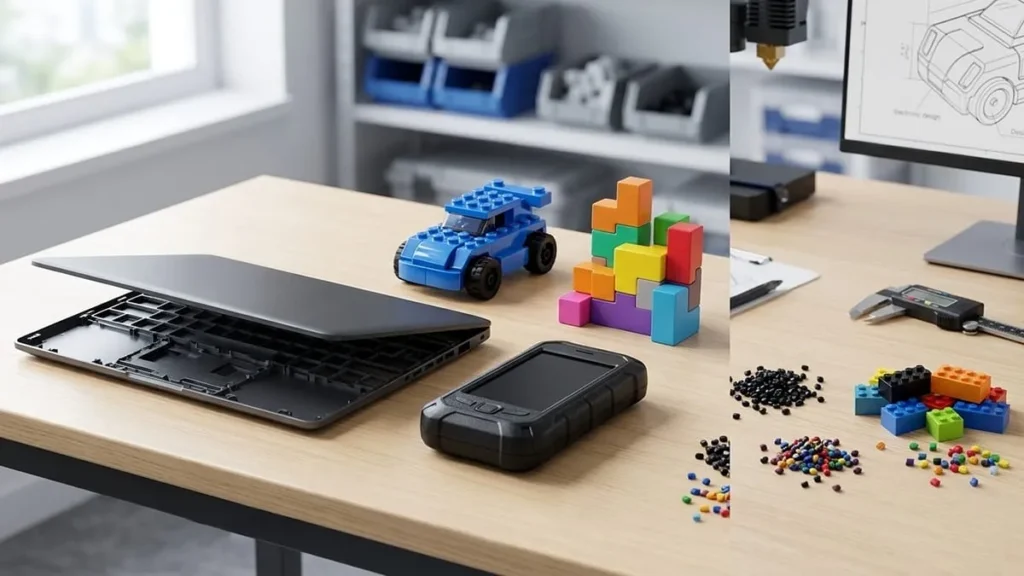
- TV rear housings and monitor frames: Specially engineered for high-flow, thin-wall injection molding to achieve large-scale surface smoothness and reduce part weight.
- Laptop casings and handheld device enclosures: Utilizing anti-static, abrasion-resistant, or halogen-free flame-retardant (FR) formulations.
- Interlocking plastic blocks and educational toys: Requiring high stiffness, stable color retention, and extreme molding accuracy to guarantee a tight, repeatable fit without dimensional deformation over long-term use.
Specialty & Electroplatable ABS Grades
💡 The Technical Advantage: Formulated with a highly controlled butadiene rubber phase, these specialty ABS pellets undergo uniform chemical etching. This creates the perfect micro-porous surface structure required for superior adhesion during secondary metal plating and chemical bonding processes.
Best For (Premium Aesthetics & Secondary Processing):
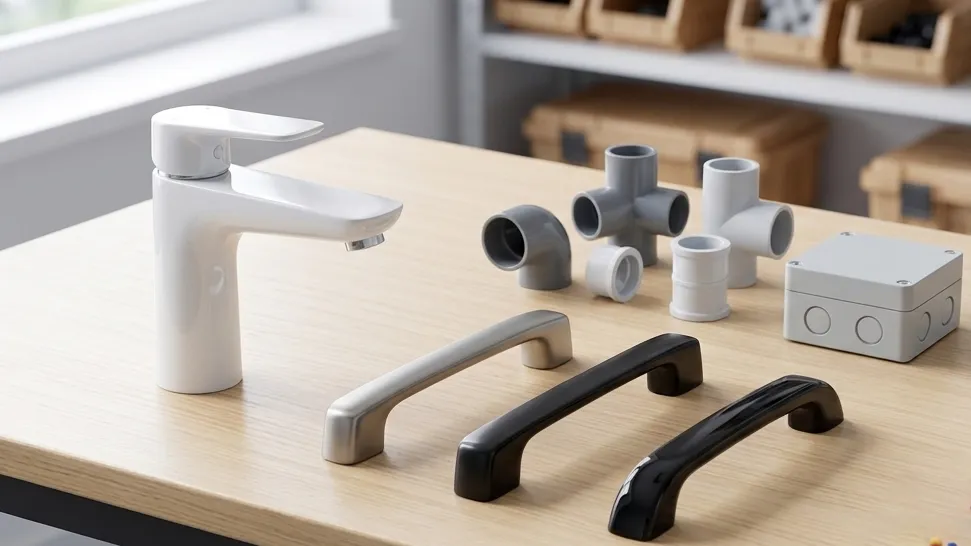
- Sanitary ware and premium appliance knobs: Where a flawless, high-gloss chrome or metallic finish is required for branding and luxury consumer appeal.
- Automotive emblems and grilles: Supporting post-processing techniques such as painting, electroplating, and ultrasonic welding while maintaining severe outdoor durability.
- Non-pressurized pipe fittings and junction boxes: Optimized for high chemical resistance and total compatibility with solvent gluing or mechanical joining methods.

Key Properties of ABS Polymer
Acrylonitrile Butadiene Styrene (ABS) exhibits a unique combination of mechanical strength, thermal stability, chemical resistance, and excellent surface quality. These properties are a result of its three-phase polymer structure, making the resin the ideal candidate for almost any heavy-duty abs plastic application across the automotive, electronics, and medical device sectors.
1. Mechanical Properties
ABS delivers a balanced profile of stiffness, strength, and impact resistance, suitable for applications requiring structural performance and durability.
| Property | Typical Value | Significance for High-Output Manufacturing |
| Tensile Strength | 40–60 MPa | Prevents structural deformation under continuous mechanical load; allows for optimal wall-thickness design to reduce part weight and material costs. |
| Impact Resistance | High (even at low temp.) | Prevents cracking and breakage from severe impact or drops; reduces downstream factory reject rates. |
| Flexural Modulus | 1,500–2,400 MPa | Provides high snap-fit reliability and structural rigidity, minimizing post-molding warpage and alignment issues in large-scale structural housings. |
- The styrene-acrylonitrile matrix contributes to strength and stiffness.
- The butadiene rubber phase enhances energy absorption and low-temperature impact resistance.
- Consistency in molecular structure is critical for repeatable mechanical performance in injection-molded parts.
2. Thermal and Chemical Resistance
ABS maintains stability across a broad range of service temperatures and is compatible with many common chemicals.
| Performance Metric | Range / Notes |
|---|---|
| Operating Temperature | -20°C to 80°C (standard grades) |
| Heat Deflection Temperature | 70°C–90°C @ 1.8 MPa |
| Short-Term Tolerance | Up to 100°C (for high-heat grades) |
| Chemical Resistance | Good against dilute acids, alkalis, oils |
| Chemical Sensitivity | Not suitable for prolonged exposure to ketones, esters, or chlorinated solvents |
- Thermal stability supports applications in automotive, electronics, and appliances.
- Understanding the exact abs plastic melting point window (typically ranging between 200°C to 240°C depending on the specific grade modification) and controlled melt behavior is essential for precision, flash-free molding.
- Proper pellet formulation reduces warpage and thermal degradation during processing.
3. Aesthetic and Surface Qualities
ABS is widely used in products where both functionality and appearance are critical.
| Surface Property | Characteristics |
|---|---|
| Surface Finish | Naturally smooth, capable of high-gloss without polishing |
| Colorability | Accepts pigments evenly; suitable for custom color matching |
| Coating Compatibility | Bonds well with paints, adhesives, and metal plating (e.g. chrome) |
- ABS enables detailed mold textures and clean surface reproduction.
- Color stability and surface consistency are maintained with properly compounded pellets.
- Common in applications where appearance, branding, or consumer appeal is important.
Benefits and Limitations of ABS
ABS (Acrylonitrile Butadiene Styrene) is a widely used engineering thermoplastic valued for its balance of mechanical strength, processability, and cost efficiency. Understanding its strengths and limitations helps optimize its application.
Advantages
- High Impact Resistance and Toughness
The rubber-modified structure delivers excellent shock absorption and durability, suitable for applications such as automotive parts, consumer electronics housings, and protective gear. - Cost Efficiency
ABS offers a more economical solution compared to higher-end engineering plastics like polycarbonate or nylon, without significant compromise on mechanical performance. - Manufacturing Flexibility
Compatible with injection molding, extrusion, and additive manufacturing (3D printing), ABS enables the production of complex shapes and prototypes with reliable dimensional control. - Custom Formulations
ABS pellets can be compounded with additives such as colorants, UV stabilizers, and flame retardants to meet specific performance or aesthetic requirements.
Disadvantages
- Limited Thermal Resistance
ABS softens above approximately 100°C, restricting its use in applications involving sustained high temperatures unless specialized high-heat grades or alternative materials are used. - UV Sensitivity
Without UV stabilizers, ABS is prone to degradation and discoloration under prolonged sunlight exposure, which limits outdoor applications. - Recycling Challenges
Although recyclable, ABS recycling can be complicated by the need to separate it from other plastics and additives, which may increase processing costs and reduce recycling efficiency.
ABS offers a mechanically robust and cost-effective material choice for various applications. Addressing its thermal and UV limitations through tailored formulations is essential to ensure consistent processing and long-term product durability.
ABS Materials vs Other Materials
ABS occupies a middle ground between high-performance engineering plastics and more cost-driven commodity resins. Compared to polycarbonate (PC), polyvinyl chloride (PVC), and polypropylene (PP), ABS offers a practical balance of mechanical strength, processability, and surface quality.
Polycarbonate (PC):
PC has higher impact strength and heat resistance (glass transition temperature ~147°C) than ABS (~105°C). It is more expensive and less resistant to chemicals, making it suitable for applications requiring toughness and transparency, such as safety equipment and optical components.
🔍 Deep Dive Resource
Unsure which material fits your budget and specification? Read our comprehensive comparison guide:
👉 ABS vs PC: Which One Should You Choose for Your Product?
Polyvinyl Chloride (PVC):
PVC offers superior chemical resistance and flame retardancy. It is commonly used in piping and construction materials but has lower impact resistance and flexibility compared to ABS. PVC is less suitable where aesthetic finish and mechanical toughness are critical.
💡 ENGINEERING DEEP DIVE
For an in-depth evaluation of chemical stability boundaries, cold-climate pressure tolerances, and multi-cavity processing shrinkage metrics, read our comprehensive engineering breakdown:
👉 ABS vs PVC Plastic: A Comprehensive Guide for Choosing the Right Material.
Polypropylene (PP):
PP features excellent chemical resistance, fatigue endurance, and low density, resulting in lightweight components. However, its impact strength and surface finish quality are inferior to ABS, making it ideal for applications prioritizing cost and chemical resistance over toughness and appearance.
🛠️ MECHANICAL STRENGTH DEEP DIVE
For an exhaustive mechanical analysis, cooling cycle variations, and processing window metrics, read our comprehensive engineering breakdown:

Manufacturing with ABS
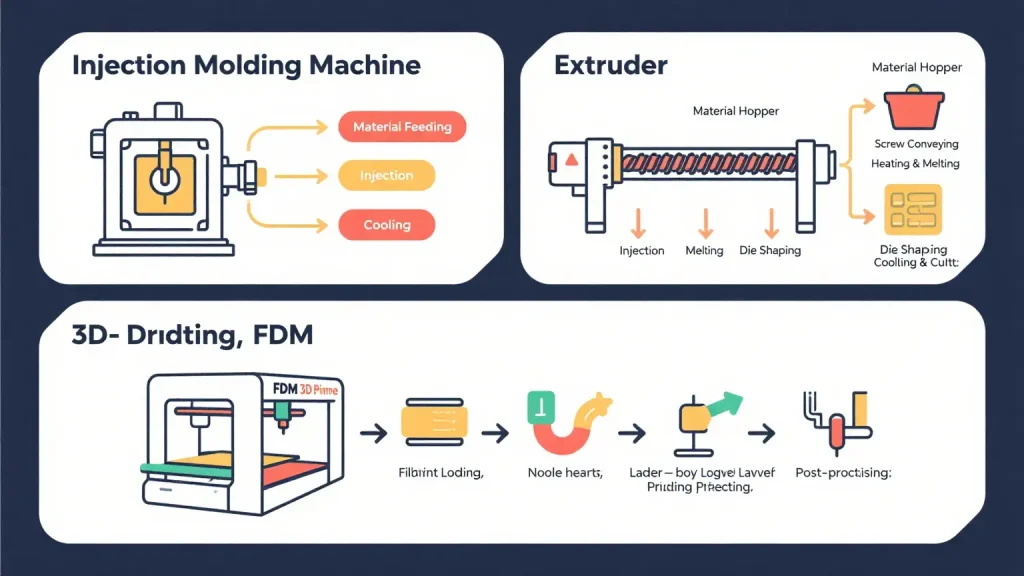
ABS parts are primarily produced using three common methods: injection molding, extrusion, and additive manufacturing. Each method requires high-quality ABS pellets to ensure precision, consistent performance, and efficient processing.
- Injection Molding
This is the dominant manufacturing technique for producing complex, high-precision components such as automotive interior parts and electronic housings. Quality ABS pellets with uniform melt flow characteristics are essential to achieve dimensional accuracy and smooth surface finishes. - Extrusion
Used to form continuous profiles like sheets, pipes, and tubing, extrusion demands pellets with stable thermal properties and consistent viscosity. These factors support uniform product thickness and reduce defects during high-speed production. - Additive Manufacturing (3D Printing)
ABS filament derived from premium pellets enables rapid prototyping and small-batch production. Pellet quality directly influences filament strength, layer adhesion, and surface quality, which are critical for functional prototypes and design iterations.
Optimizing Manufacturing with ABS Pellets
Selecting high-grade ABS pellets with controlled molecular weight and low impurity content is crucial for process stability. Consistent pellet quality reduces cycle times, minimizes defects such as warping or sink marks, and enhances mechanical properties of the final parts. Additionally, tailoring pellet formulations with additives like impact modifiers, UV stabilizers, or flame retardants can further improve processing efficiency and end-use performance.
Sustainability and Recycling
As environmental regulations tighten and demand for circular materials grows, ABS is gaining attention not only for its performance—but also for its recyclability and potential role in sustainable manufacturing.
✅ Is ABS Recyclable?
Yes, ABS is a fully recyclable thermoplastic, and it retains much of its mechanical performance through multiple processing cycles. Unlike thermosets, ABS can be:
- Mechanically recycled: Sorted, cleaned, and re-pelletized for manufacturing reuse.
- Blended with virgin resin: Often used in non-critical structural applications where slight property variation is acceptable.
- Downcycled: Transformed into utility parts, industrial panels, or dark-colored backing materials.
Modern sorting advances are actively overcoming historical challenges such as contamination from mixed plastics (e.g., PC/ABS blends) and color limitations in recycled streams.
🌱 Advances in Sustainable ABS Production
Developments are helping make ABS more environmentally responsible:
- Post-Consumer Recycled (PCR) ABS: Commonly recovered from electronics, appliances, and auto parts to support closed-loop manufacturing.
- Post-Industrial Recycled (PIR) ABS: Scrap and runners from molding lines reprocessed in-house to achieve near-zero material waste.
- Bio-based ABS alternatives: Emerging grades partially derived from renewable feedstocks to reduce carbon footprints.
- Mass balance certified grades: Offered by global resin suppliers to support carbon tracking and corporate ESG goals.

Why Partner with Us for Your ABS Plastic Supply?
Choosing a distributor is about finding a strategic partner who understands that material inconsistency ruins factory profitability. Instead of acting as a passive middleman, we act as an extension of your quality control team. Here is how we guarantee measurable value for your injection molding and extrusion lines:
1. Guaranteed Batch-to-Batch Consistency
We source only premium, branded ABS pellets and granules featuring tightly controlled molecular weight distribution and uniform sizing. By auditing our petrochemical sources continuously, we guarantee a highly stable Melt Flow Index (MFI) across every single shipment. For your factory floor, this eliminates the variance that causes flashing or short shots, removing the need to constantly recalibrate your injection molding machinery.
2. Full Regulatory Compliance & Traceability
Navigating international trade mandates requires ironclad paperwork. Every ton of the materials we distribute comes backed by verifiable, original manufacturer documentation. We provide full compliance certificates including RoHS, REACH, and FDA-compliant data sheets, ensuring your exported consumer electronics, toys, or medical components clear global customs without regulatory bottlenecks.
3. Supply Chain Reliability & Material Customization
Production delays due to logistics gridlocks can break a manufacturing schedule. Leveraging our extensive warehousing networks and strategic positioning near major shipping hubs, we maintain robust safety stocks of high-impact, high-flow, and specialty electroplatable ABS formulations. Furthermore, we assist procurement teams in sourcing customized compounds—such as UV-stabilized or reinforced grades—to lower your downstream processing overhead.
Conclusion
Securing stable, brand-name polymer raw materials remains the most direct way to drive down rejection rates and protect your processing margins. From automotive interior trims to thin-wall electronics housings, utilizing high-purity resins eliminates the processing variance that causes flashing, warp defects, and costly machinery downtime.
We look forward to discussing your specific processing parameters and matching your project with the ideal resin grade. For competitive volume pricing, material data sheets (TDS), or standard regulatory certifications, connect with our technical sales team directly.
How to Reach Us Immediately:
- Direct Inquiry: Drop us a private message via our website’s live chat or submission form below for a response within 24 hours.
- Email Support: Send your production requirements and specification inquiries directly to jerry@salesplastics.com.
- Phone / WhatsApp: Call our trade office at
+61 468862776for immediate assistance.
FAQs
A: Yes, for high-precision structural components and premium consumer aesthetics, ABS is significantly superior to PVC. While PVC is a cheaper option ideal for basic construction piping, it lacks the excellent low-temperature impact toughness and melt fluidity of ABS. ABS pellets deliver vastly better cycle-time efficiency, tighter tolerances, and superior post-processing compatibility (like painting and electroplating).
A: Thanks to its high dimensional accuracy and rugged durability, ABS is the global standard for automotive interior components (dashboards, mirror housings), consumer electronics casings (laptops, monitors), and high-precision consumer goods (interlocking plastic blocks, durable toys). Contact our sales team today to match your project with the correct high-flow or high-impact grade.
A: Yes, base ABS polymer resin is naturally 100% BPA-free, as it is synthesized strictly from acrylonitrile, butadiene, and styrene—none of which contain Bisphenol A or its derivatives. All our distributed branded resins come with certified material data sheets (TDS) and original compliance documentation to secure your global export supply chain safety.
A: No, during your actual production and material handling processes, utilizing our premium, low-dust virgin ABS pellets ensures zero polymer dust or microplastic contamination. For global brands working under strict carbon-reduction and environmental mandates, we also distribute premium, post-consumer recycled (PCR) ABS alternatives to minimize plastic footprints.
A: Raw industrial ABS is not inherently food-safe due to the injection-molding lubricants used. However, specialized food-grade ABS formulations that strictly comply with FDA or EU standards do exist. If your factory is molding food processors or kitchen appliances, we can supply fully certified, food-contact compliant resins backed by complete RoHS, REACH, and FDA traceability paperwork.