PLA (Polylactic Acid)
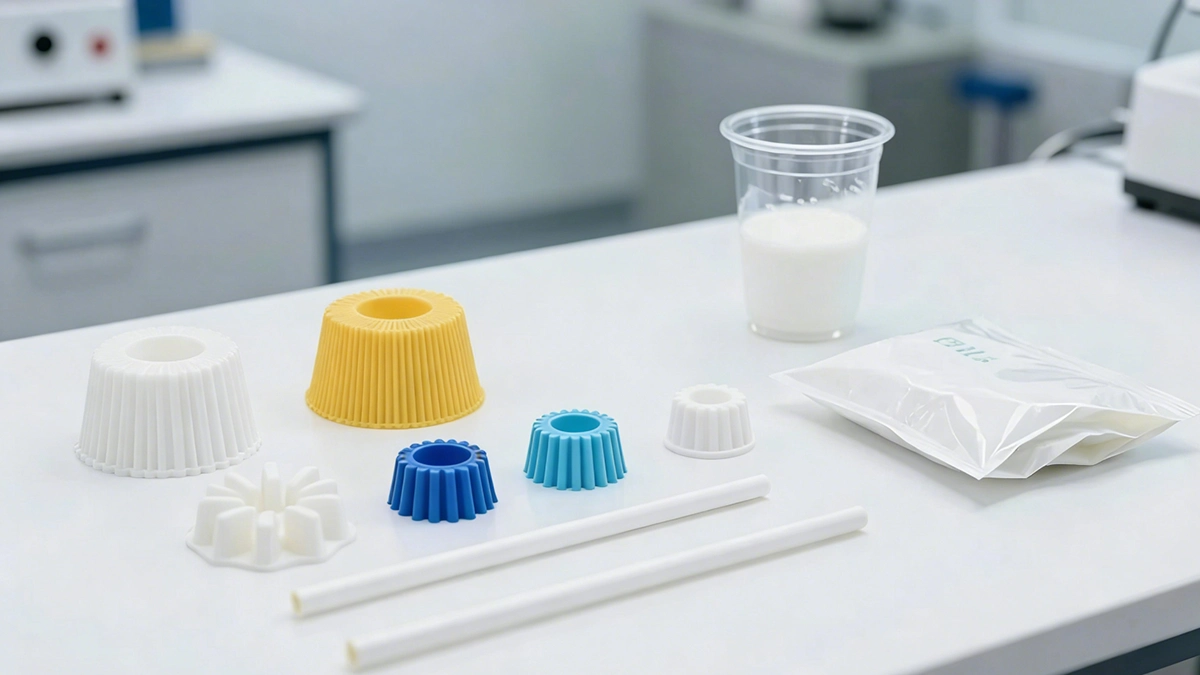
Derived from renewable biomass like corn starch or sugarcane. These plants sequester atmospheric CO₂ during growth, creating a theoretical carbon-neutral cycle.
Conventional Nylon
Relies on energy-intensive petrochemical extraction. Precursor synthesis (benzene/adipic acid) involves significant greenhouse gas emissions.
Deep Dive: Molecular Structures
Understanding chemical origins is just the start. Access our technical breakdown of polymer fundamentals to see how molecular chains affect long-term stability.
End-of-Life Realities
Composting vs. Recycling
While PLA is compostable, it is not inherently biodegradable in backyard environments. It requires industrial facilities (58℃+) to degrade effectively. Without these, it persists like synthetics.
Nylon Circularity: High depolymerization potential allows Nylon 6 to be chemically recycled back into monomers.
Ocean Recovery: Initiatives like Econyl demonstrate the reuse of abandoned fishing nets into high-value textile goods.
Industrial Condition Requirement
58°C +
For PLA Degradation
Life Cycle Assessment (LCA) Comparison
| Metric | Bio-Based PLA | Synthetic Nylon |
|---|---|---|
| Land & Water Use | High (Industrial Agriculture) | Negligible |
| Eutrophication Risk | Significant (Nitrogen Runoff) | Minimal |
| Durability Profile | Short-term / Disposable | High / Multi-decade |
| Primary Strength | Low Cradle-to-Gate Carbon | High Use-Phase Efficiency |
Note: Nylon’s high strength-to-weight ratio in aerospace applications often offsets its manufacturing intensity through fuel savings.
Global Compliance & Standards
Compostability Standards
PLA must adhere to EN 13432 or ASTM D6400 for industrial compost certification.
Supply Chain Integrity
ISCC PLUS certification for Nylon manufacturers utilizing Mass Balance for bio-attributed feedstocks.
The Verdict on Material Choice
Sustainability is not a single metric. While PLA offers an immediate strategic advantage for rapid carbon reduction, Nylon provides superior long-term energy efficiency and circularity potential in high-performance sectors.
Target: Packaging & Short-term
Choose PLA
Target: Durability & Circularity
Choose Nylon