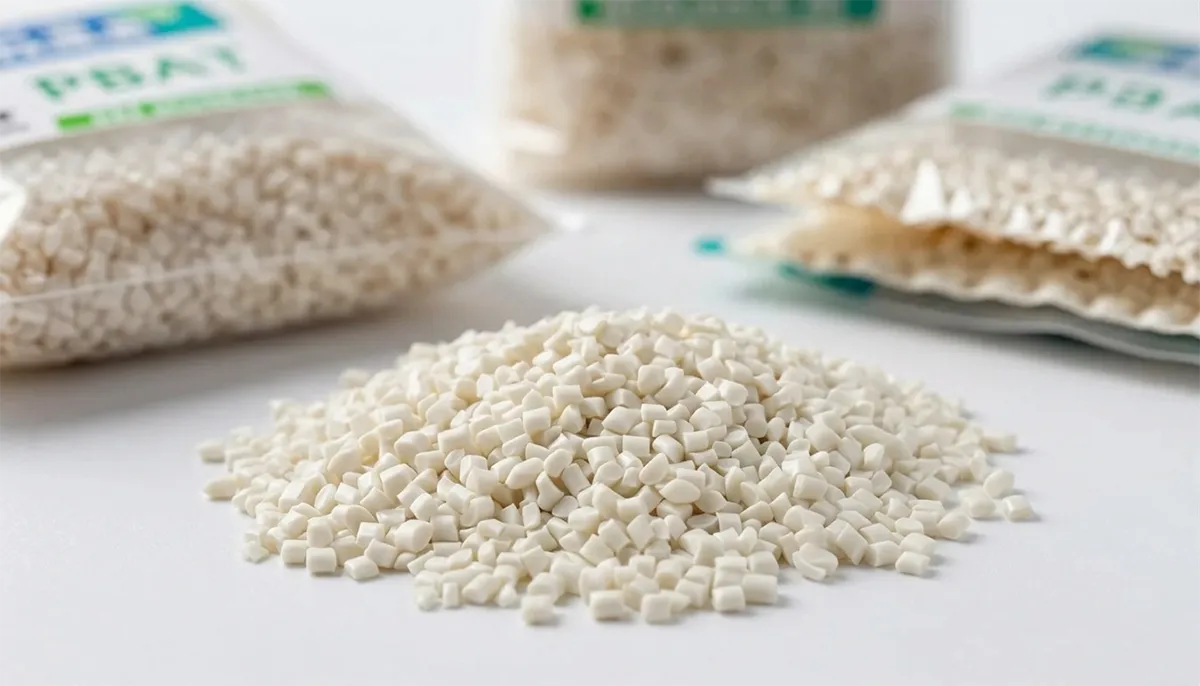
PBAT (Polybutylene adipate terephthalate) is a fully biodegradable and compostable semi-aromatic co-polyester. Often referred to as the “Bio-LDPE,” it provides the flexibility, tear resistance, and mechanical toughness required for high-performance flexible packaging. Unlike traditional plastics, PBAT is engineered to break down into CO₂, water, and biomass in industrial composting environments without leaving harmful microplastics.
📈 Performance
Drop-in replacement for LDPE with >500% elongation at break.
✅ Compliance
Fully mineralizes in 90-180 days; meets EN 13432 & ASTM D6400.
⚡ Efficiency
Processable on existing blown film lines—no hardware upgrades required.
🌿 Sustainability
Zero microplastics; enables the transition to a circular economy.
Material Origin & Environmental Circularity
While the term “bioplastic” often implies plant-based origins, it is important for industrial buyers to distinguish between source and end-of-life.
Is PBAT Bio-based or Petroleum-based?
A common misconception is that “biodegradability” requires 100% plant-based sourcing. While most commercial PBAT is currently fossil-derived, its random copolymer structure contains chemical “weak links” that allow microorganisms to fully metabolize the polymer chains.
Deep Dive: For a comprehensive technical analysis of how these chemical bonds break down, read our full report: Is PBAT Biodegradable? Understanding the Science of Mineralization.
Future-Proofing with Bio-PBAT
As the industry pivots toward carbon neutrality, we are actively expanding our supply of Bio-PBAT. By utilizing renewable precursors, we help you maintain identical mechanical performance while significantly lowering the total carbon footprint of your final products.
🔍 Related Technical Insight
Understanding how PBAT fits into the broader bioplastic landscape—balancing fossil-resource origins with biodegradable end-of-life—is key to a sustainable material strategy.
Explore our detailed breakdown: What are the advantages and disadvantages of bioplastics? →
Certified Degradation Timeline
PBAT isn’t just “degradable”—it is mineralizable. Under industrial composting conditions (55-60°C), it undergoes complete breakdown into CO₂, water, and biomass within 90-180 days. This ensures full compliance with global export standards like EN 13432, preventing the long-term accumulation of microplastics in the environment.
Key Properties & Technical Advantage
Understanding PBAT’s technical profile is essential for optimizing high-speed production lines:
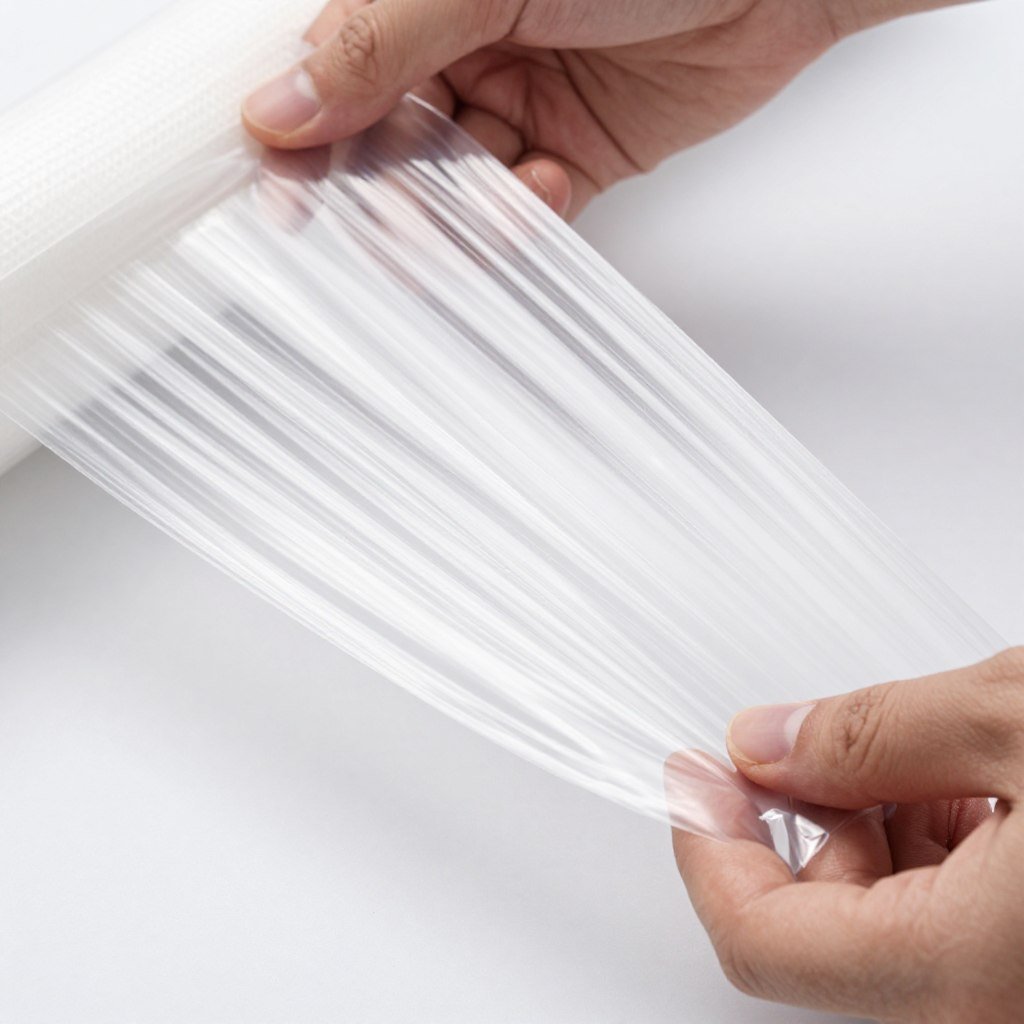
- Superior Mechanical Integrity: Featuring an elongation at break of >500%, PBAT acts as the definitive “toughness engine” for PLA or Thermoplastic Starch (TPS) blends.
- “Drop-in” Processing Capability: With a melting point of 110–120°C, PBAT seamlessly integrates into existing LDPE blown film lines, requiring zero hardware upgrades.
- Low-Temperature Flexibility: A glass transition temperature of -30°C ensures packaging remains durable and resists shattering in cold-chain environments.
- Enhanced Breathability: Its naturally high Water Vapor Transmission Rate (WVTR) prevents moisture buildup, making it ideal for fresh produce packaging.
Strategic Value for Manufacturers
For global brands and packaging facilities, the value of PBAT lies in its operational stability. It allows you to meet stringent “plastic ban” regulations without sacrificing the mechanical performance your customers expect. By leveraging PBAT, you aren’t just replacing a resin; you are future-proofing your product line with a material that balances fossil-resource efficiency with a zero-waste end-of-life.
Pro Tip for Manufacturers: Operational stability is achieved through precise rheology control. Before starting your next production run, review our PBAT Processing & Technical Guides to optimize your equipment settings for biodegradable resins.
Applications of PBAT Resin
PBAT’s versatility makes it the premier choice for manufacturing pbat products in industries transitioning away from conventional plastics without compromising on functional integrity. Below are the key sectors where PBAT resin provides a decisive competitive edge:
High-Integrity Flexible Packaging

PBAT is the industry standard for compostable films due to its exceptional tear resistance and heat-sealing strength. It is a “drop-in” replacement for LDPE in:
- E-commerce & Logistics: Heavy-duty mailers that require high puncture resistance.
- Retail & Grocery: Shopping and produce bags that meet global “plastic ban” certifications (EN 13432).
- Fresh Produce Packaging: Leveraging PBAT’s natural “breathability” (water vapor transmission) to prevent moisture buildup, extending the shelf life of fruits and vegetables.
Packaging films benefit from PBAT’s processing ease. Manufacturers can produce high-quality pbat products, such as mailers and shopping bags, using existing blown film equipment with minimal modifications.
Sustainable Agriculture (Zero-Waste Mulch Films)
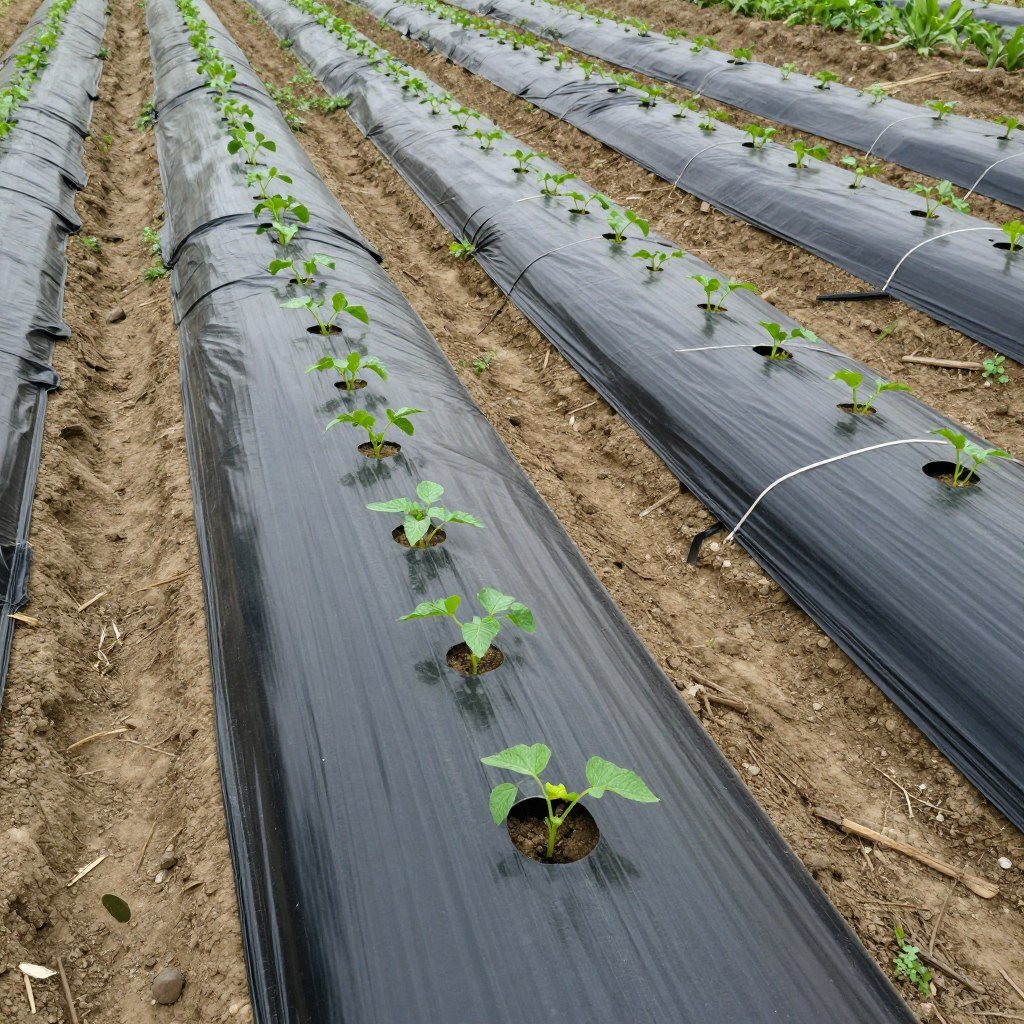
Unlike traditional PE mulch that requires costly manual collection and causes microplastic pollution, PBAT-based mulch films offer a “soil-to-soil” solution.
- Direct Incorporation: Post-harvest, PBAT films can be tilled directly into the ground, biodegrading entirely into biomass.
- Formulation Control: By selecting the right PBAT resin grades and optimizing the formulation, manufacturers can precisely control the induction period, ensuring the film protects crops during the growing season before degradation begins.
These applications leverage PBAT’s soil biodegradability. The material breaks down in agricultural environments, eliminating the need for film collection and disposal.
Specialized Blending & Food Service
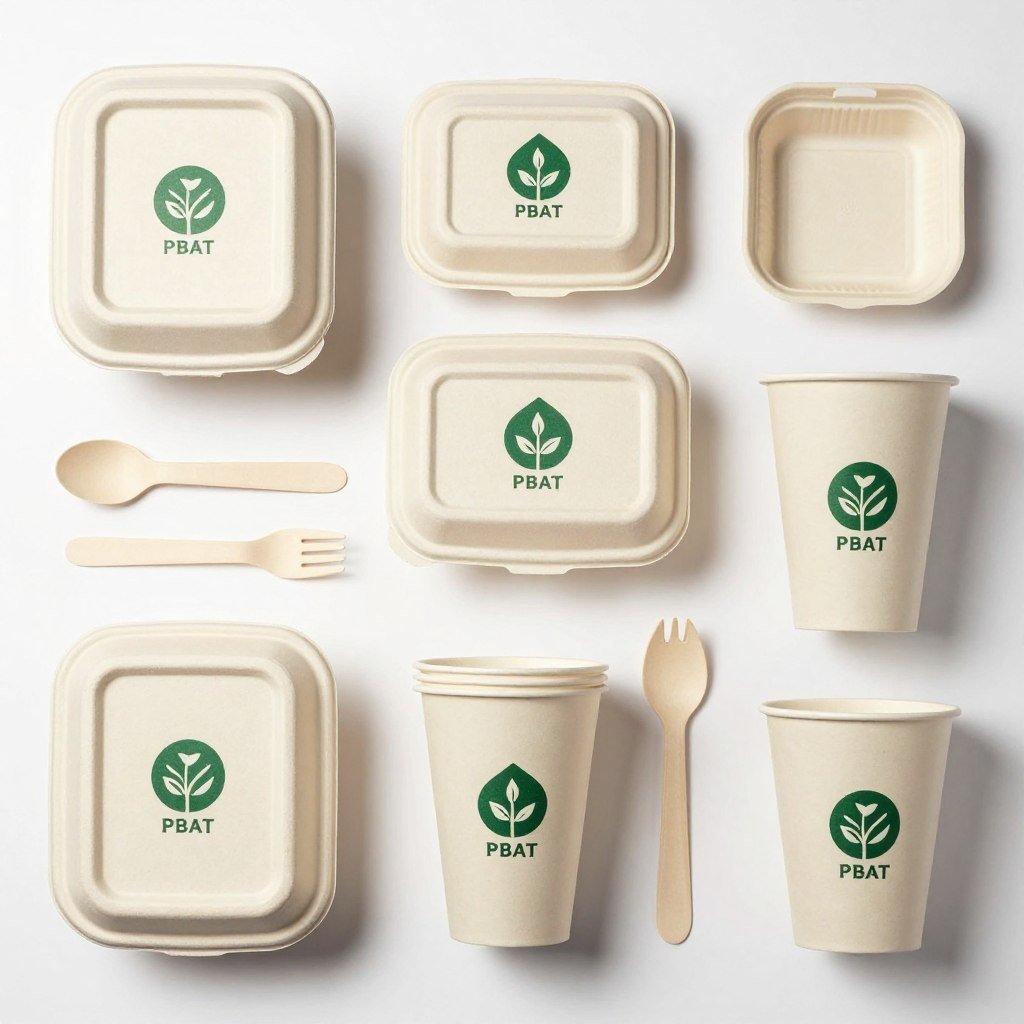
PBAT is rarely used alone; it is the vital “softening backbone” for more rigid biopolymers.
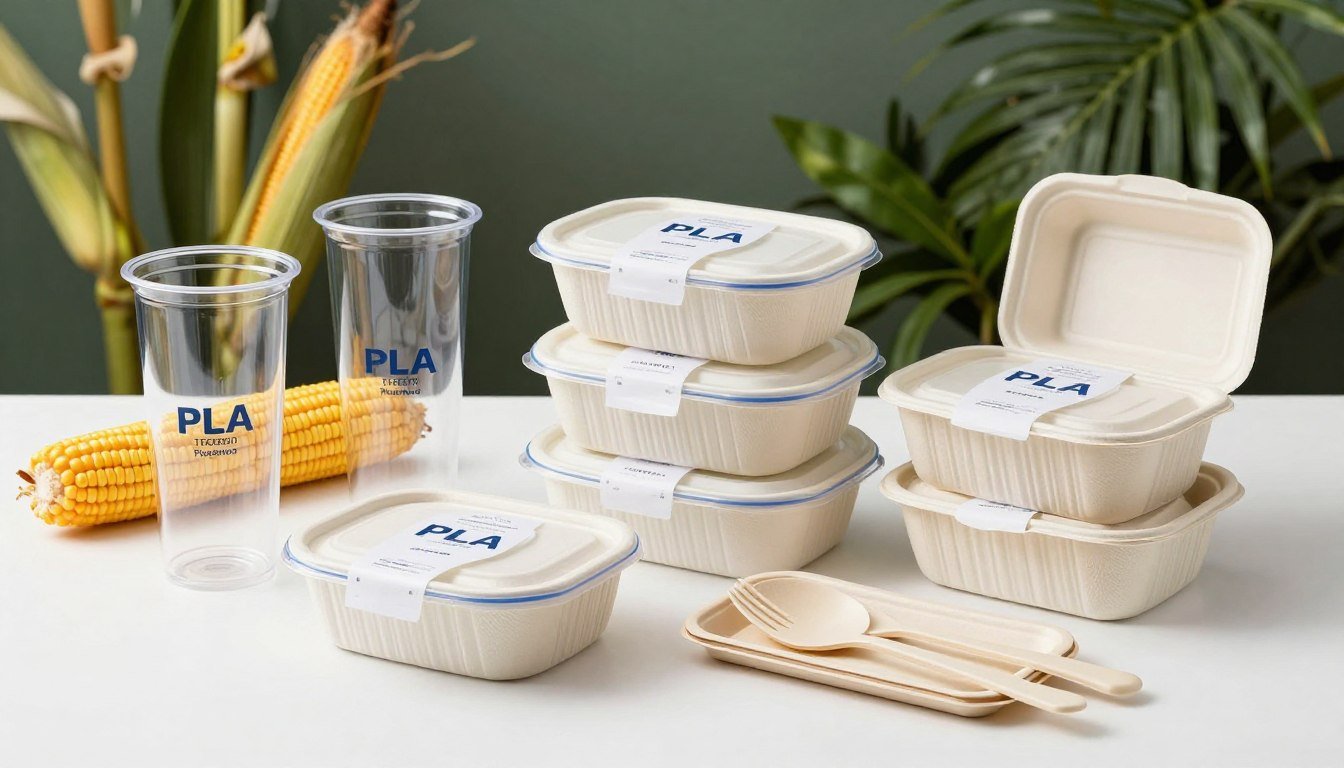
- PBAT + PLA / Starch (TPS): By blending PBAT with PLA or Thermoplastic Starch, manufacturers can produce compostable cutlery, straws, and coffee capsules that are tough enough for daily use but fully biodegradable.
- Modified Coatings: Used as a biodegradable coating for paper cups and trays, providing an oil-resistant barrier that doesn’t interfere with paper recycling or composting streams.
Manufacturers often blend PBAT with PLA or starch to optimize performance and cost. These formulations balance mechanical properties with biodegradability requirements.
Emerging Industrial Frontiers
The unique soft-touch and hygienic profile of PBAT are driving innovation in:
- Hygiene & Medical: Soft, breathable back-sheets for diapers and sanitary products.
- Technical Textiles: Biodegradable fibers for agricultural netting and erosion control fabrics.
3D printing filaments incorporating PBAT enable production of compostable printed objects. This application combines additive manufacturing with environmental responsibility.
Case Study: From high-toughness courier bags to breathable fruit packaging, see how our resins perform in the field. Read our PBAT Applications & Case Studies for localized performance data.
Explore PBAT Solutions for Your Industry
Our material specialists help manufacturers identify optimal PBAT formulations for specific applications. Discover how biodegradable plastics can meet your sustainability targets while maintaining product performance.
Advantages and Disadvantages of PBAT
Understanding the balance between PBAT’s high-performance benefits and its technical constraints is essential for selecting the right resin grade and optimizing production costs.
Advantages of PBAT Biodegradable Plastic
- Superior Mechanical Flexibility: PBAT offers exceptional elongation at break (>500%) and tear resistance, matching or exceeding the performance of conventional LDPE.
- Certified Industrial Compostability: Fully compliant with international standards (EN 13432 and ASTM D6400), ensuring 100% biodegradation into CO₂, water, and biomass in industrial facilities.
- Operational Compatibility: As a “drop-in” resin, it works seamlessly with existing LDPE/HDPE blown film and extrusion equipment, eliminating the need for expensive machinery upgrades.
- Excellent Blending Synergy: It acts as a vital “toughening agent” when blended with PLA or Thermoplastic Starch (TPS), allowing manufacturers to customize the stiffness and biodegradation rate of the final product.
- Oil and Chemical Resistance: PBAT exhibits naturally high resistance to oils and fats, making it a premium choice for compostable food-service packaging and soil-contact mulch films.
- Regulatory Compliance: Approved for food-contact applications in major global jurisdictions, providing a secure path for international trade and market entry.
Limitations of PBAT Biodegradable Plastic
- Economic Considerations (Higher Unit Cost): The raw material cost typically exceeds traditional PE.(Solution: Blend with TPS or mineral fillers to optimize total formula costs.)
- Sensitivity to Moisture (Hygroscopic): PBAT can absorb ambient moisture, which may affect melt quality.(Solution: Pre-drying is essential for stable extrusion.)
- Barrier Property Constraints: PBAT has higher water vapor and oxygen permeability than PE.(Solution: Best for “breathable” produce bags or multi-layer films.)
- Heat Sensitivity: A lower melting point (110–120°C) limits its use in high-heat applications.(Solution: Modification required for high-heat applications.)
- End-of-Life Infrastructure Dependency: Reliable biodegradation requires access to industrial composting facilities.(Solution: Ideal for markets with organic waste collection.)
- Petroleum-Based Origins: Although 100% biodegradable, most current PBAT is fossil-derived.Future Outlook: The industry is actively transitioning toward Bio-PBAT to further reduce the total carbon footprint of the resin.
Solution Partner Tip: Pure PBAT is often cost-prohibitive for mass production. Explore our PBAT Modification & Compounding Guide to learn how to optimize formulas using PLA and TPS for better econ
What is the Difference Between PBAT and PLA?
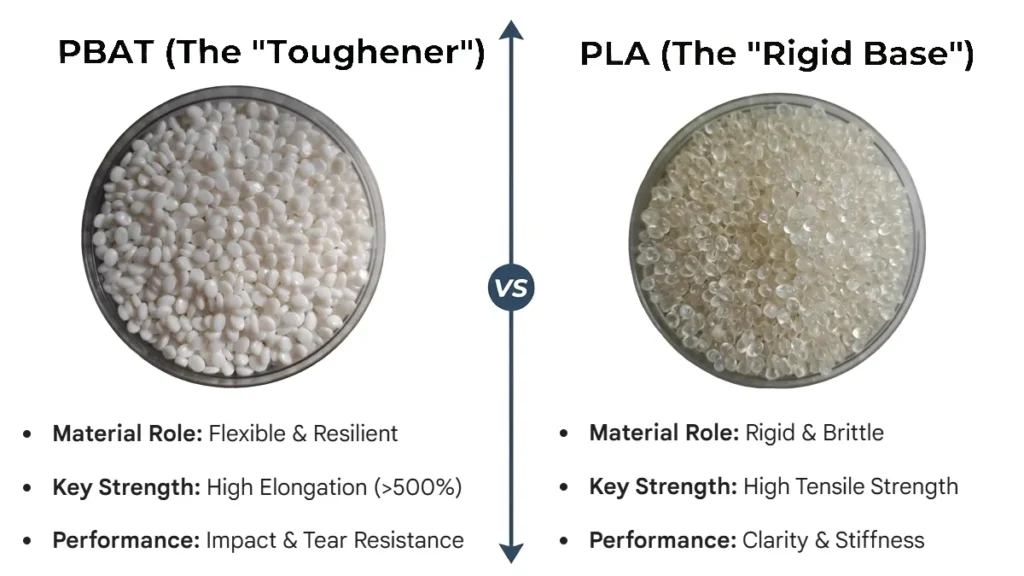
PBAT and PLA represent two distinct mechanical extremes in the bioplastic spectrum. While PLA (Polylactic Acid) provides high tensile strength and rigidity, its inherent brittleness often leads to cracking and processing failures in flexible applications. PBAT resin acts as the essential “toughness engine,” providing the high elongation and impact resistance required to transform rigid bio-polymers into durable, marketable products.
Performance Comparison at a Glance
| Feature | PBAT Resin (The “Toughener”) | PLA Resin (The “Rigid Base”) |
| Material Role | Flexible & Resilient | Rigid & Brittle |
| Mechanical Strength | Superior Elongation (>500%) | High Tensile Strength |
| Processing Window | Lower temp (110-120°C); Energy efficient | Higher temp (150-160°C) |
| Key Advantage | High impact & tear resistance | Excellent clarity & stiffness |
| Primary Limitation | Lower barrier properties | Highly prone to cracking/shattering |
| Best Application | Blown films, mailers, mulch | Cups, cutlery, 3D printing |
➜ Explore More: To get a detailed breakdown of industry use cases, check out our guide on PLA vs PBAT: Which Biodegradable Polymer is Best for Your Application?
The Synergy: Why PBAT is Non-Negotiable
In professional compounding, the goal is rarely to use PBAT or PLA in isolation, but rather to leverage their synergy. PBAT serves as the continuous phase in high-performance flexible formulations:
- The “Toughness Fix”: Incorporating PBAT into a PLA matrix prevents the “shattering” effect, creating a compound that is both stiff enough to hold shape and flexible enough to resist tearing.
- Processing Stability: PBAT improves the melt strength of the polymer blend. This is critical during film blowing, where it stabilizes the bubble and prevents costly production downtime due to film breakage.
- Economic Flexibility: As a technical consultant, we recommend PBAT-based blends to facilitate the inclusion of mineral fillers or Thermoplastic Starch (TPS). This strategy significantly lowers the overall cost per kilogram while maintaining mechanical integrity.
Technical Selection Tip: For flexible packaging (bags, mailers, or liners), PBAT should be your primary matrix. If you are manufacturing rigid containers but facing issues with “brittleness” or “edge-cracking,” adding a 15–30% loading of PBAT will drastically improve the product’s impact resistance and consumer durability.
Why Choose Our PBAT Materials
Selecting a PBAT supplier is a strategic decision that impacts your product’s performance, market entry speed, and bottom-line profitability. We don’t just supply resin; we provide a comprehensive manufacturing partnership designed to scale your sustainable production.
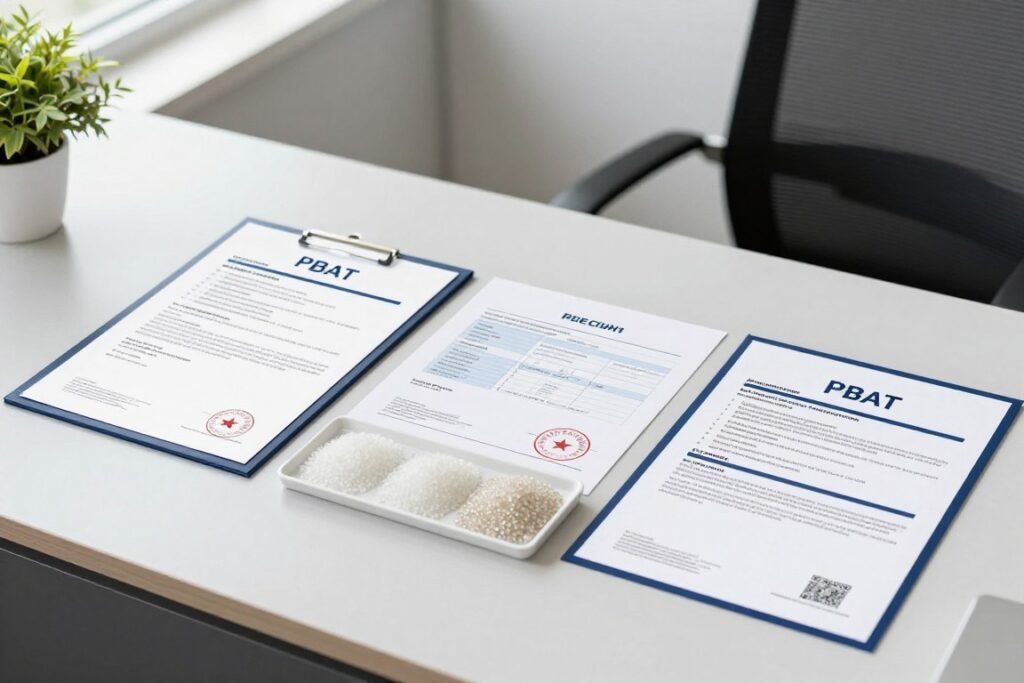
Certified Quality Standards
Navigating international environmental regulations is complex. We eliminate the risk by providing fully certified resins that serve as your passport to global markets.
- Certified Biodegradability: 100% compliance with EN 13432, ASTM D6400, and FDA/EU food-contact standards.
- Batch Consistency: Rigorous lot-to-lot testing for Melt Flow Rate (MFR) and mechanical parity to ensure zero downtime on your production line.
- Full Traceability: Complete documentation support for your environmental claims and regulatory audits.
Technical Consultancy & Cost Optimization
As specialists in TPS (Thermoplastic Starch) and PLA modification, we help you balance eco-responsibility with economic reality.
- Formula Engineering: Our experts provide optimized blending ratios (PBAT+TPS/PLA) that reduce raw material costs by up to 30% without sacrificing film integrity.
- Processing SOPs: We provide tailored extrusion parameters and troubleshooting support to maximize your yield and stabilize bubble formation during high-speed production.
- Custom Compounding: Beyond neat resin, we offer specialized masterbatches and compounds tailored to your specific puncture-resistance or clarity requirements.
Reliable Supply Chain & Logistics
In a volatile chemical market, we provide the stability your production schedule demands.
- Global Distribution Network: Strategic warehousing ensures efficient delivery and reduced lead times for manufacturers worldwide.
- Flexible Order Quantities (MOQ): We support both high-volume industrial runs and smaller-scale development projects with equal priority.
- Inventory Buffering: Our proactive stock management shields you from sudden market fluctuations and raw material shortages.
Conclusion
In summary, PBAT plastic is the definitive “drop-in” solution for manufacturers transitioning from conventional PE to sustainable, compostable packaging. By leveraging its exceptional flexibility, tear resistance, and blending synergy, you can achieve 100% regulatory compliance without sacrificing mechanical performance.
The key to commercial success with PBAT lies in formulation optimization. Whether you are looking to toughen brittle PLA, reduce material costs through TPS (Starch) blending, or stabilize your film-blowing process, selecting the right resin grade is the first step toward a market-ready product.
📩 Ready to Optimize Your Formula?
Navigating the complexities of biodegradable resins requires more than just a supplier; it requires a technical partner. We provide:
- Custom Blending Advice: Tailored PBAT/PLA/TPS ratios for your specific application.
- Processing Support: Specialized SOPs for stable extrusion and bubble stability.
- Global Logistics: Reliable supply and compliance documentation for international markets.
Get in touch today for a technical consultation, TDS (Technical Data Sheets), or to request a sample batch for your next production run.
- Email: jerry@salesplastics.com
- WhatsApp/WeChat: +61 468862776
- Website: SalesPlastics.com
Frequently Asked Questions (FAQs)
Is PBAT really biodegradable?
Yes, absolutely. Unlike “oxo-degradable” plastics that merely break down into invisible microplastics, PBAT is chemically and biologically biodegradable. It is designed to be fully consumed by microorganisms, leaving behind no persistent synthetic residues.
Is PBAT toxic?
No, PBAT is non-toxic and biocompatible. High-quality PBAT resin contains no harmful plasticizers (such as BPA or phthalates) or heavy metals. It is specifically engineered to be metabolized by microorganisms into CO₂, water, and natural biomass. Our PBAT grades comply with rigorous international safety standards for soil and aquatic health, ensuring no eco-toxicity remains after biodegradation.
Does PBAT leave microplastics?
No. It is critical to distinguish PBAT from “oxo-degradable” plastics. Oxo-plastics merely fragment into smaller pieces, whereas PBAT is chemically biodegradable. Microorganisms digest the polymer chains at a molecular level. In a managed composting environment, the material undergoes complete mineralization, meaning it disappears entirely and does not contribute to persistent microplastic pollution.
How is PBAT made?
PBAT is synthesized through the polycondensation of three monomers: adipic acid, 1,4-butanediol (BDO), and terephthalic acid (PTA). Although these monomers are currently fossil-based, their specific “random copolymer” molecular structure creates “weak links” that microbes can break down. As a technical partner, we ensure our resins have a high synthesis purity, which is vital for consistent melt strength and stable film blowing.
What are the disadvantages of PBAT?
While PBAT is a high-performance material, it has inherent characteristics that require professional formulation optimization:
- Low Rigidity: It is too soft for structural use. (Strategic Fix: We recommend blending with PLA to enhance stiffness.)
- Cost Gap: It carries a premium over traditional PE. (Strategic Fix: We consult on TPS (Starch) modification to significantly reduce total material costs.)
- Moisture Barrier: It has higher water vapor permeability than PE. (Strategic Fix: We provide specialized grades or multi-layer solutions for moisture-sensitive goods.)
Is PBAT and PLA safe?
Yes, both are globally recognized as safe and highly regulated materials. PLA is bio-based (derived from renewable starch) and widely used in food-contact and medical applications. PBAT provides the necessary industrial toughness for flexible formats. When blended, they create a 100% compostable solution that meets FDA and EU 10/2011 food-contact requirements. We provide full certification support to ensure your products meet all global safety and environmental compliance standards.