


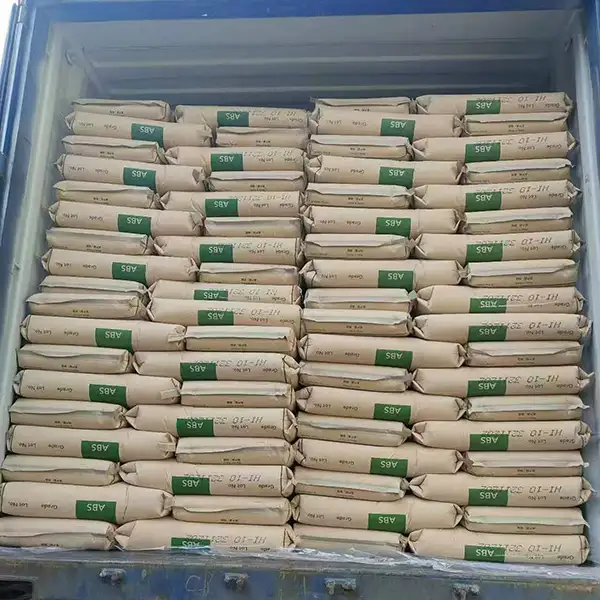
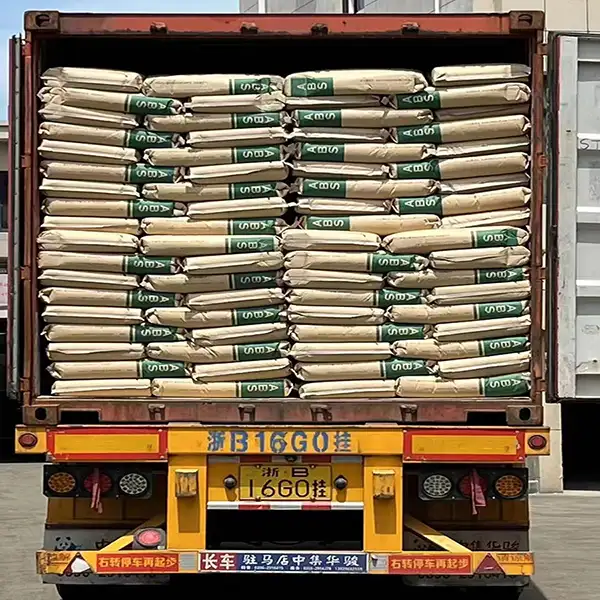

ABS resin
Appearance:
ABS resin typically exhibits a milky white or off-white appearance.
HS Code: 39033010
Chemical Formula: (C8H8)x·(C4H6)y·(C3H3N)z
Other Names:
- Acrylonitrile Butadiene Styrene (ABS)
- ABS Polymer
- ABS Plastic
- ABS Copolymer
- ABS Pellets
- ABS Granules
Identifiers:
- CAS Number: Since ABS is made up of acrylonitrile, butadiene, and styrene, each monomer has its own unique identifiers:
- Acrylonitrile: 107-13-1
- Butadiene: 106-99-0
- Styrene: 100-42-5
Properties
- Density (ρ): 0.9–1.53 g/cm3; median, 1.07 g/cm3
- Flammability: 1.00
- Thermal conductivity (k): 0.1 W/(m·K)
- Linear thermal expansion coefficient (α): 12×10−5 K−1
Sales Plastics ABS resins are as strong as your morning coffee and perfect for applications such as injection molding, 3D printing, and more. Contact us today to get your ABS polymer solution!
Our Contact Is as Solid as Our Resin!
supply Various Grades of ABS pellets
| Grade No. | Manufacturer | Melt Flow | IZOD Impact | Material Properties | Applications |
| GP-22 | INEOS Styrolution | 19 | 22 | Download Datasheet | General-purpose ABS for appliance housings, household, and sanitary appliances |
| HI-10 | INEOS Styrolution | 5.5 | 35 | Download Datasheet | High-impact ABS for automotive parts, appliance housings, and components requiring superior toughness |
| GP-35 | INEOS Styrolution | 34 | 19 | Download Datasheet | General-purpose ABS for automotive, thin-wall telecommunications components, and toys |
| HH-112 | INEOS Styrolution | 5.5 | 11 | Download Datasheet | High heat-resistant ABS for automotive interiors |
| HH-106 | INEOS Styrolution | 7 | 16 | Download Datasheet | High heat-resistant ABS for automotive interiors |
| PA-707 | Chi Mei | 23 | – | Download Datasheet | General-purpose ABS for automotive and electronics |
| PA-747 | Chi Mei | 12 | – | Download Datasheet | Medical-grade ABS for healthcare applications |
| PA-757 | Chi Mei | 22 | – | Download Datasheet | High heat-resistant ABS for consumer electronics |
| PA-777B | Chi Mei | 6.7 | – | Download Datasheet | High heat-resistant ABS for household appliances |
| PA-737 | Chi Mei | 33 | – | Download Datasheet | High heat-resistant ABS for electrical enclosures |
| PA-707K | Chi Mei | 1.9 | 14 | Download Datasheet | General-purpose ABS for automotive and electronics applications |
| PA-757K | Chi Mei | 22 | – | Download Datasheet | General-purpose ABS for appliance housings |
| D-2400 | Chi Mei | 5.5 | 12 | Download Datasheet | ABS for auto parts and general products |
| D-2200 | Chi Mei | 7.5 | 20 | Download Datasheet | Impact-resistant ABS components |
| D-1200 | Chi Mei | 5 | – | Download Datasheet | ABS for simple-structure plastic products |
| D-2300 | Chi Mei | 7.5 | 15 | Download Datasheet | ABS for medium-sized appliance parts |
| HP181 | LG Chem | 40 | 25 | Download Datasheet | ABS for automotive interiors and electronics parts |
| HP171 C9012 | LG Chem | 25 | 23 | Download Datasheet | ABS for electronic device casings |
| AF312B | LG Chem | 55 | 22 | Download Datasheet | ABS for thin-wall consumer electronics parts |
| AF312C | LG Chem | 55 | 23 | Download Datasheet | Flame-retardant ABS for electrical components |
| FR310C | LG Chem | 48 | 20 | Download Datasheet | ABS for appliance and industrial electrical enclosures |
| HP100H | LG Chem | 6.5 | 45 | Download Datasheet | Impact-resistant ABS for automotive exterior parts |
| AF312A | LG Chem | 60 | 20 | Download Datasheet | ABS for complex-shaped household items |
| HI-121H | LG Chem | 23 | 22 | Download Datasheet | ABS for office equipment components |
| XR404 | LG Chem | 7 | 14–16 | Download Datasheet | Stable ABS for industrial parts |
| XR401 | LG Chem | 9 | 25–27 | Download Datasheet | ABS for sports equipment protective components |
Ineos, a leading chemical company, has been involved in the production and supply of ABS through its operations and subsidiaries. View All
| Grade No. | Manufacturer | Brand | Melt Flow (g/10 min) | IZOD Impact (kJ/m²) | Technical Datasheet (PDF) | Application |
| GP-22 | INEOS Styrolution | INEOS Styrolution | 19 | 22 | GP-22 ABS Resin Datasheet | General-purpose ABS for appliance housings and sanitary applications |
| HI-10 | INEOS Styrolution | INEOS Styrolution | 6 | 35 | HI-10 High Impact ABS Datasheet | High impact ABS for automotive and appliance parts |
| GP-35 | INEOS Styrolution | INEOS Styrolution | 34 | 19 | GP-35 ABS Resin Datasheet | General-purpose ABS for toys and automotive components |
| HH-112 | INEOS Styrolution | INEOS Styrolution | 6 | 11 | HH-112 High Heat ABS Datasheet | High heat ABS for automotive interiors |
| HH-106 | INEOS Styrolution | INEOS Styrolution | 7 | 16 | HH-106 ABS Datasheet | High heat ABS for automotive interiors |
| H701 | INEOS Styrolution | INEOS Styrolution | 9 | 24 | H701 ABS Datasheet | ABS for automotive and home appliance use |
| P2MC | INEOS Styrolution | INEOS Styrolution | 25 | 23 | P2MC ABS Datasheet | ABS for automotive parts and interior decoration |
| 4000PG | INEOS Styrolution | INEOS Styrolution | 7 | 23 | 4000PG ABS Datasheet | ABS for molding of automotive interior components |
| H801 | INEOS Styrolution | INEOS Styrolution | 9 | N/A | H801 ABS Datasheet | ABS for sturdy appliance housings |
| ABSOLAC 100 | INEOS Styrolution | ABSOLAC | >=8.0 | >=35.0 | ABSOLAC 100 ABS Datasheet | Automotive interior parts |
| ABSOLAC 120 | INEOS Styrolution | ABSOLAC | >=18 | >=20.0 | ABSOLAC 120 ABS Datasheet | Radiator grilles, light housing,helmets, instrument panels/consoles, |
| ABSOLAC 140 | INEOS Styrolution | ABSOLAC | >=26 | >=22.0 | ABSOLAC 140 ABS Datasheet | Automotive exterior parts |
| ABSOLAC 300 | INEOS Styrolution | ABSOLAC | >=30 | >=20.0 | ABSOLAC 300 ABS Datasheet | Home appliance components |
| ABSOLAC 320 | INEOS Styrolution | ABSOLAC | 16 | 20 | ABSOLAC 320 ABS Datasheet | Refrigerator & washer parts |
| ABSOLAC 380 | INEOS Styrolution | ABSOLAC | >=35 | >=13.0 | ABSOLAC 380 ABS Datasheet | High – gloss products |
| ABSOLAC 920 NATURAL | INEOS Styrolution | ABSOLAC | >=27 | >=16.0 | ABSOLAC 920 NATURAL ABS Datasheet | Computer keyboard frames, mouse housings |
| ABSOLAC 150/160 | INEOS Styrolution | ABSOLAC | >=20 | >=15.0 | ABSOLAC 150/160 ABS Datasheet | Dashboard, door trims, mirror housings. |
| ABSOLAC 700 | INEOS Styrolution | ABSOLAC | >=25 | >=13.0 | ABSOLAC 700 ABS Datasheet | Home appliance casings, toys, structural parts. |
| NOVODUR E 502 | INEOS Styrolution | NOVODUR | 4 | 23 | NOVODUR E 502 ABS Datasheet | Interior & exterior parts,Plated fittings. |
| ABSOLAC DP 03H | INEOS Styrolution | ABSOLAC | >=7.0 | >=35.0 | ABSOLAC DP 03H ABS Datasheet | Electronics enclosures, toys, housings. |
| ABSOLAC 120HR | INEOS Styrolution | ABSOLAC | >=16 | >=20.0 | ABSOLAC 120HR ABS Datasheet | Mixer components, appliance parts, Helmets, protective gear. |
| ABSOLAC XT04 M | INEOS Styrolution | ABSOLAC | 10 | 18 | ABSOLAC XT04 M ABS Datasheet | appliance components, lampshade, housing, hairdryer parts, iron |
| ABSOLAC XT04 P | INEOS Styrolution | ABSOLAC | 4 | N/A | ABSOLAC XT04 P ABS Datasheet | automotive interior parts, appliance components, lampshade |
| ABSOLAC XT04 PM | INEOS Styrolution | ABSOLAC | 5 | 18 | ABSOLAC XT04 PM ABS Datasheet | automotive interior parts, microwave oven housings |
| ABSOLAC 200EP | INEOS Styrolution | ABSOLAC | 20 | >=28.0 | ABSOLAC 200EP ABS Datasheet | Metallized automotive parts, camera parts, sanitary fittings |
| NOVODUR M 204 | INEOS Styrolution | NOVODUR | 35 | 25 | NOVODUR M 204 ABS Datasheet | Automotive trims, electronic casings, and industrial components. |
| ABSOLAC DP 29M | INEOS Styrolution | ABSOLAC | 23 | 23 | ABSOLAC DP 29M ABS Datasheet | Front lamp holders, side bodies, Battery box cases, mud guards. |
| NOVODUR M201AS | INEOS Styrolution | NOVODUR | 18 | 20 | NOVODUR M201AS ABS Datasheet | Household appliances, laundry dryers, washing machines |
| NOVODUR 250 | INEOS Styrolution | NOVODUR | 38 | N/A | NOVODUR 250 ABS Datasheet | Machine covers, control panels,Decorative/structural elements. |
| NOVODUR 440 | INEOS Styrolution | NOVODUR | 20 | 19 | NOVODUR 440 ABS Datasheet | Home appliances, electrical and electronics, general injection |
| NOVODUR 450 | INEOS Styrolution | NOVODUR | 27 | N/A | NOVODUR 450 ABS Datasheet | Not mentioned in the documents, further search needed |
| NOVODUR SBM-90 | INEOS Styrolution | NOVODUR | 13 | 15 | NOVODUR SBM-90 ABS Datasheet | other appliances in direct contact with drinking water |
| NOVODUR H802 | INEOS Styrolution | NOVODUR | 8 | N/A | NOVODUR H802 ABS Datasheet | Mirror housings, spoilers, exterior trims,Device housings, heat-resistant components. |
| NOVODUR H950 | INEOS Styrolution | NOVODUR | 4 | 17 | NOVODUR H950 ABS Datasheet | High – heat – resistant parts |
| NOVODUR H604 | INEOS Styrolution | NOVODUR | 8 | 21 | NOVODUR H604 ABS Datasheet | Painted automotive parts |
| NOVODUR H605 | INEOS Styrolution | NOVODUR | 25 | 17 | NOVODUR H605 ABS Datasheet | High – flow heat – resistant parts |
LG Chem is one of the largest chemical companies in the world and a subsidiary of LG Group. View All
| Grade No. | Manufacturer | Melt Flow (g/10 min) | IZOD Impact (kJ/m²) | Data Sheet | Application |
| HP171 | LG Chem | 20 – 32 | 16 | DOWNLOAD | General-purpose ABS resin, also used in monitor frames |
| HP171A | LG Chem | 20 – 32 | 24 | DOWNLOAD | For toy cars/blocks, valued for strength and colorability. |
| HP100 | LG Chem | 12 | 40 | DOWNLOAD | ideal for natural color applications |
| AF312A | LG Chem | 60 | 20 | DOWNLOAD | Used in IT equipment components |
| AF312B | LG Chem | 55 | 22 | DOWNLOAD | ABS for thin-wall consumer electronics parts |
| AF312C | LG Chem | 55 | 23 | DOWNLOAD | Flame-retardant ABS for electrical components |
| MRC171L35 | LG Chem | 20.2 | 18 | DOWNLOAD | ABS resin used in OA equipment and small appliances |
| MRC171L50 | LG Chem | 20.21 | 17 | DOWNLOAD | Same as MRC171L35, ideal for compact electronics |
| MRC171Z85 | LG Chem | 20.21 | 14 | DOWNLOAD | ABS solution for OA parts, designed for better flowability |
| FR310A | LG Chem | 48 | 20 | DOWNLOAD | Appliances, battery cases |
| HP100S-NP | LG Chem | 8 | 43 | DOWNLOAD | |
| FR-500 | LG Chem | 60 | 18 | DOWNLOAD | Automobile, home appliance parts |
| HT-550 | LG Chem | 24 | 15 | DOWNLOAD | Automobile, home appliance parts |
| HI-130 | LG Chem | 10 | N/A | DOWNLOAD | Automobile, electrical applications |
| XR409H | LG Chem | 3 | 17~18 | DOWNLOAD | Automobile, home appliance parts |
| HI-140 | LG Chem | 15 | 42 | DOWNLOAD | |
| FR500H | LG Chem | 18 | 22 | DOWNLOAD | Electrical, electronic applications |
| ER460 | LG Chem | 22 | 24 | DOWNLOAD | Automobile interiors, e – products |
SABIC is a major producer of ABS, marketing it under their CYCOLAC™ Resin brand. View All
| Grade No. | Manufacturer | Brand | MFI | IZOD Impact | Data Sheet | Application |
| BDT5510 | Sabic | CYCOLAC | 14 | 293 | Download | Automotive interior & exterior, lighting |
| BDT6500 | Sabic | CYCOLAC | 3.3 | 186 | Download | Automotive interior & exterior, lighting |
| DL100 | Sabic | CYCOLAC | 7 | 700 | Download | Appliances, automotive interior |
| DL100LG | Sabic | CYCOLAC | 10 | 380 | Download | Automotive interior & exterior, lighting |
| DL200H | Sabic | CYCOLAC | 9 | 620 | Download | rear mirror/lighting housing; warm air blower |
| EX39 (F) | Sabic | CYCOLAC | 4 | 464 | Download | Food contact, sheet extrusion |
| EX58 (F) | Sabic | CYCOLAC | 4 | 432 | Download | Food contact, sheet extrusion |
| EX75 | Sabic | CYCOLAC | 9 | 421 | Download | Multi-purpose, sheet extrusion |
| EXABS01 | Sabic | CYCOLAC | 4 | 411 | Download | Multi-purpose, sheet extrusion |
| FR15 (U) | Sabic | CYCOLAC | 40 | 213 | Download | Electronic housing, switches, computer |
| X8409AC | Sabic | CYCOLAC | 4 | 854 | Download | Power tools, others |
| X8619 | Sabic | CYCOLAC | 18 | N/A | Download | Power tools, others |
Chi Mei Corporation, a leading Taiwan-based performance materials company, is renowned as the world’s largest vendor of ABS resins. View All
| Grade No. | Manufacturer | Melt Flow | IZOD Impact | Properties | Application |
| PA-707 | Chi Mei | 23 | N/A | Download | General purpose, automotive, electronics |
| PA-747 | Chi Mei | 12 | N/A | Download | Medical grade, healthcare applications |
| PA-757 | Chi Mei | 22 | N/A | Download | High heat resistance, consumer electronics |
| PA-777B | Chi Mei | 7 | N/A | Download | High heat resistance, household appliances |
| PA-737 | Chi Mei | 33 | N/A | Download | High heat resistance, electrical enclosures |
| PA-707K | Chi Mei | 2 | 14 | Download | In computer and phone casings. |
| PA-757K | Chi Mei | 22 | N/A | Download | General-purpose ABS, appliance housings, etc. |
| D-2400 | Chi Mei | 6 | 12 | Download | Auto parts, general plastic products |
| D-2200 | Chi Mei | 8 | 20 | Download | Impact-resistant components |
| D-1200 | Chi Mei | 5 | N/A | Download | Simple-structure plastic products |
| D-2300 | Chi Mei | 8 | 15 | Download | Medium-sized appliance parts |
| PA-727 | Chi Mei | 18 | N/A | Download | Electronics housing |
| PA-797 | Chi Mei | 10 | N/A | Download | Automotive interior parts |
| PA-717C | Chi Mei | 15 | N/A | Download | Office equipment shells |
| D-180 | Chi Mei | 1.7 | N/A | Download | Television cabinets |
| D-1000 | Chi Mei | 4.6 | N/A | Download | Computer monitors housing |
| PA-1730 | Chi Mei | 30 | N/A | Download | Appliance parts |
| D-190 | Chi Mei | 2.1 | N/A | Download | Audio equipment cases |
| PA-717CK | Chi Mei | 14 | N/A | Download | Furniture decoration parts |
| D-120 | Chi Mei | 0.7 | N/A | Download | Toys and game consoles |
We're here to meet all your ABS resin needs
ABS resin FAQs
What is ABS
Composition and Structure
ABS is a copolymer consisting of three main monomers:
Acrylonitrile (AN): Approximately 20% by weight, offering enhanced chemical resistance and heat stability.
Butadiene: Around 30%, which contributes excellent toughness and impact resistance.
Styrene: Roughly 50%, providing improved flow properties and a glossy surface finish.
This specific blend of monomers results in an abs plastic polymer that balances rigidity with impact resistance, making it a preferred material in numerous industrial applications.
Physical and Mechanical Properties
Density: Typically ranges from 1.04 to 1.06 g/cm³.
Glass Transition Temperature (Tg): About 105°C. Being an amorphous material, ABS does not have a distinct melting point but rather a transition zone.
Heat Deflection Temperature: Generally between 80–100°C, depending on the grade and additives.
In terms of mechanical performance:
Tensile Strength: Approximately 40–50 MPa.
Impact Strength: ABS is well-known for its excellent impact resistance, making it ideal for applications requiring high toughness.
Elongation at Break: Varies from 10% to 50%, depending on the specific formulation.
These characteristics ensure that acrylonitrile butadiene styrene resin is a robust material, widely used in injection molding and other fabrication processes.
Applications and Market Data
ABS resin is extensively used in:
Injection Molding: For manufacturing structural components, electronic housings, automotive parts, and consumer goods.
3D Printing and Prototyping: Due to its ease of processing and favorable mechanical properties.
Market data indicates a steady global demand for abs polymer and pellets abs. Industries such as automotive, electronics, and household appliances continue to drive the growth of the ABS market. Major manufacturers, including BASF and LG Chem, provide detailed technical data sheets on abs pellets and abs copolymer products, supporting engineers and designers in material selection.
Polymerization Process
The process of abs polymerization involves the controlled reaction of the three monomers to form a homogenous acrylonitrile butadiene styrene copolymer. This process ensures that the final product maintains consistent quality, performance, and processability, which is critical when producing abs plastic pellets for industrial use.
What is ABS/PC
ABS/PC resin is a polymer blend that combines the toughness and ease of processing of ABS with the enhanced heat resistance and strength of polycarbonate (PC). Here are some data points supporting its properties:
Composition: Typically a blend ranging from 60/40 to 70/30 (ABS:PC), though formulations can vary.
Density: Generally around 1.10–1.20 g/cm³, depending on the exact blend.
Glass Transition Temperature (Tg):
ABS: ~105°C
PC: ~150°C
The blend usually exhibits an intermediate Tg, enhancing heat resistance compared to pure ABS.
Mechanical Properties:
Tensile Strength: Often in the range of 45–55 MPa.
Impact Resistance: Superior to pure ABS, making it ideal for high-stress applications.
Applications: Used in automotive parts, electronics housings, and other applications requiring improved thermal and mechanical performance.
This blend leverages the best of both polymers, resulting in a material that’s both durable and capable of withstanding higher temperatures.
is abs material dangerous
ABS (Acrylonitrile Butadiene Styrene) is a common plastic used in 3D printing, LEGO bricks, and car parts. When solid, it’s safe, non-toxic, strong, and fine for everyday use.
A few things to note:
- Heating: Melting ABS (like in 3D printing) releases fumes that might irritate your lungs or eyes. It’s only a risk if you breathe lots of it in a stuffy room, but normal use is okay.
- Burning: If it catches fire, it gives off toxic gases like carbon monoxide—dangerous in a fire, not regular use.
- Touching: Solid ABS is safe to touch and won’t bother your skin.
Basically, it’s safe for normal stuff. Just ventilate when melting it, and don’t burn it.
Classification of ABS Resin
Below is a classification of ABS resin based on its applications, properties, processing methods, physical forms, and aesthetic variations.
1. Based on Application
This category focuses on how ABS resin is tailored for specific uses:
- General-purpose ABS: Standard resin for a broad range of applications where specialized properties aren’t critical, such as household items.
- High-impact ABS: Enhanced toughness and impact resistance, suitable for automotive parts or protective equipment.
- Flame-retardant ABS: Includes additives to resist ignition and slow flame spread, ideal for electronics and electrical housings.
- Heat-resistant ABS: Offers improved thermal stability for high-temperature environments, like automotive interiors.
- Transparent ABS: A variant with some transparency, used in design-focused applications such as lighting fixtures.
2. Based on Processing Method
ABS resin can be optimized for different manufacturing techniques:
- Injection molding ABS: Formulated for easy flow and moldability, used in complex parts like casings or toys.
- Extrusion ABS: Designed for extrusion processes (e.g., sheets or profiles), ensuring good surface finish and stability.
- Blow molding ABS: Suited for hollow parts like containers, with properties supporting uniform wall thickness.
3. Based on Physical Form
ABS resin is available in various forms depending on its intended use:
- Pellets: The most common form, used in injection molding and extrusion.
- Powder: Applied in niche processes like rotational molding or as a coating material.
- Filament: Used in 3D printing (FDM technology) for prototypes and custom parts.
4. Industry-Specific Classifications
Certain industries require specialized ABS grades:
- Automotive-grade ABS:
- Interior components: Prioritizes aesthetics and scratch resistance.
- Exterior components: Focuses on impact resistance and weatherability.
- Electronics-grade ABS: Often flame-retardant, used for device housings.
- Consumer goods-grade ABS: Balances cost and durability for items like toys.
5. Based on Aesthetic Properties
ABS can be customized for visual appeal:
- Natural (uncolored) ABS: Off-white, typically painted post-processing.
- Pre-colored ABS: Available in various colors, reducing the need for painting.
- Special effect ABS: Features unique finishes like metallic or glow-in-the-dark effects.
Application Scenarios of ABS Resin
ABS resin, or Acrylonitrile Butadiene Styrene, is a versatile thermoplastic polymer widely utilized across multiple industries due to its excellent combination of strength, impact resistance, and ease of processing. Here’s an overview of its key applications:
1. Automotive Industry
- Interior Components: ABS is used for dashboards, door panels, and trim because of its durability, ability to be molded into complex shapes, and high-quality surface finish, enhancing both functionality and aesthetics.
- Exterior Parts: Bumpers, grilles, and mirror housings benefit from ABS’s impact resistance and weatherability, making it ideal for withstanding minor collisions and environmental exposure.
- Under-the-Hood: Heat-resistant ABS grades are employed in battery cases and engine covers due to their thermal stability.
2. Electronics and Electrical
- Device Housings: ABS is a go-to material for casings of smartphones, laptops, and televisions, offering strength, lightweight properties, and flame-retardant options for safety.
- Connectors and Switches: Its electrical insulation properties make it suitable for components in electrical systems, ensuring reliability and safety.
3. Consumer Goods
- Toys: ABS is famously used in products like LEGO bricks, valued for its durability, safety, and vibrant color options.
- Household Appliances: Items such as vacuum cleaners, coffee makers, and food processors utilize ABS for its chemical resistance, ease of cleaning, and aesthetic versatility.
4. Construction
- Pipes and Fittings: ABS is popular in plumbing for its corrosion resistance, ease of installation, and ability to handle pressure, making it a cost-effective choice.
- Profiles and Sheets: Used in wall panels and roofing, ABS provides durability and impact resistance for outdoor applications.
5. Medical Devices
- Equipment Housings: Certain ABS grades are used in medical device casings due to their biocompatibility, chemical resistance, and ease of sterilization, meeting healthcare standards.
6. 3D Printing
- Prototyping: ABS filament is widely used in 3D printing (FDM technology) for creating strong, functional prototypes that can be easily post-processed, simulating final product properties.
7. Sports and Recreation
- Protective Gear: Helmets and shin guards made from ABS offer high impact resistance and lightweight protection.
- Sporting Goods: Golf club heads and luggage benefit from ABS’s durability and portability.
8. Packaging
- Containers: ABS is used in food containers and cosmetic packaging for its chemical resistance and ability to be molded into attractive designs.
9. Furniture
- Chairs and Tables: ABS components like chair legs and tabletops leverage its strength, light weight, and design flexibility for stylish, durable furniture.
10. Aerospace
- Interior Components: ABS is used in aircraft panels and trim for its lightweight nature, flame retardancy, and durability, adhering to aviation safety standards.
Advantages of ABS Resin
ABS’s widespread adoption stems from its key properties:
- Mechanical Strength: High impact resistance and toughness suit it for demanding uses.
- Processing Versatility: Easily molded, extruded, or shaped into complex parts.
- Aesthetic Flexibility: Can be colored, painted, or textured for diverse finishes.
- Customizability: Additives can enhance flame retardancy, heat resistance, or transparency as needed.
How is ABS Made?
Polybutadiene Rubber Formation
First, butadiene is polymerized to form rubber particles (typically via emulsion polymerization).Grafting Reaction
A mixture of styrene and acrylonitrile is then polymerized in the presence of polybutadiene. The SAN (styrene-acrylonitrile) chains graft onto the rubber particles, creating a two-phase structure with rubber domains dispersed in a rigid matrix.Polymerization (Emulsion or Mass Process)
Emulsion Polymerization: Uses water as a medium, common for general-purpose ABS.
Mass Polymerization: Solvent-free and results in high-purity ABS, often used in high-gloss or medical-grade products.
Degassing and Finishing
After polymerization, volatile compounds are removed. The molten ABS is then extruded into strands, cooled in a water bath, and cut into pellets.Drying and Packaging
The final ABS pellets are dried to reduce moisture and then packed for shipment or further processing (e.g., injection molding, extrusion).