


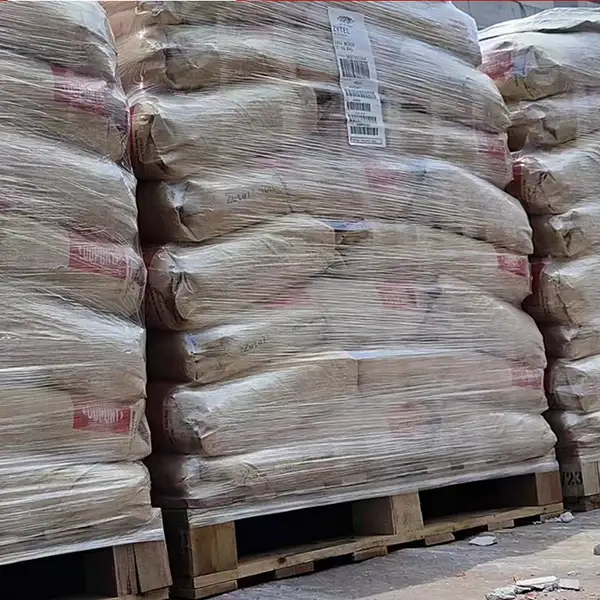

Polyamide (PA resin)
Appearance: Polyamide pellets typically appear as opaque to semi-translucent, off-white, creamy, or yellowish in color, depending on the specific type and additives.
HS Code: 39081000
Other Names:
- Polyamide
- Nylon (common trade name)
- Polyamide resin
- PA polymer
- Polymeric amide
- Nylon polymer
Identifiers:
- CAS Number: 63428-83-1
- ECHA InfoCard: e.g., PA6: 100.105.943
- UNII: e.g., PA6: 5M8RTH0U1Q
- CompTox Dashboard (EPA): DTXSID5091145 (for PA6, as an example)
Properties:
Molecular Formula: C6H11NO)n for PA6, (C12H22N2O2)n for PA66
Density:
1.13–1.15 g/cm³ (PA6, crystalline)
1.14–1.16 g/cm³ (PA66, crystalline)
Amorphous grades slightly lower (~1.08–1.10 g/cm³)
Melting Point:
PA6: 215–225°C (419–437°F; 488–498 K)
PA66: 255–265°C (491–509°F; 528–538 K)
Other types (e.g., PA11, PA12) range from 170–200°C (338–392°F; 443–473 K)
This covers the basics for PA, focusing on common types like PA6 and PA66 (Nylon 6 and Nylon 6,6), which dominate industrial use. If you want a deeper dive into a specific polyamide variant or additional properties (like tensile strength or water absorption), let us know!
Our Contact Is as Solid as Our Resin!
supply Various Grades of PA pellets
PA6 is easier to process, has better surface aesthetics, and is more cost-effective, making it suitable for complex or aesthetic parts. View All
| Grade No. | Manufactuer | Brand | CHARPY NOTCHED 23°C (kJ/m²) | Properties |
| B3K | BASF | ULTRAMID | 5.5 | DOWNLOAD |
| B3L | BASF | ULTRAMID | 10 | DOWNLOAD |
| B3EG6 | BASF | ULTRAMID | 15 | DOWNLOAD |
| B3WG6 | BASF | ULTRAMID | 15 | DOWNLOAD |
| B3HG7 | BASF | ULTRAMID | 15 | DOWNLOAD |
| B3WG7 | BASF | ULTRAMID | 14 | DOWNLOAD |
| B3G8 | BASF | ULTRAMID | 14 | DOWNLOAD |
| B3WG10 LF | BASF | ULTRAMID | 22 | DOWNLOAD |
| B3ZG3 | BASF | ULTRAMID | 16 | DOWNLOAD |
| B3GK24 | BASF | ULTRAMID | 5 | DOWNLOAD |
| B3K6 | BASF | ULTRAMID | 3.5 | DOWNLOAD |
| B3M6 | BASF | ULTRAMID | 9 | DOWNLOAD |
| 7335F | DUPONT | ZYTEL | 4 | DOWNLOAD |
| 7300T | DUPONT | ZYTEL | 15 | DOWNLOAD |
| 7331T | DUPONT | ZYTEL | 16 | DOWNLOAD |
| 73G20L | DUPONT | ZYTEL | 15 | DOWNLOAD |
| 73G30HSL | DUPONT | ZYTEL | 12 | DOWNLOAD |
| 73G45HSL | DUPONT | ZYTEL | 23 | DOWNLOAD |
| 73G35HSL | Celanese | ZYTEL | 21 | DOWNLOAD |
| Grade No. | Manufactuer | Brand | CHARPY NOTCHED 23°C (kJ/m²) | Properties |
| A3K | BASF | ULTRAMID | 5 | DOWNLOAD |
| A3W | BASF | ULTRAMID | 6 | DOWNLOAD |
| A3Z | BASF | ULTRAMID | 90 | DOWNLOAD |
| A4H | BASF | ULTRAMID | 5.7 | DOWNLOAD |
| A3WG3 | BASF | ULTRAMID | 8 | DOWNLOAD |
| A3EG5 | BASF | ULTRAMID | 12 | DOWNLOAD |
| A3HG5 | BASF | ULTRAMID | 8.7 | DOWNLOAD |
| A3WG5 | BASF | ULTRAMID | 12 | DOWNLOAD |
| A3EG6 | BASF | ULTRAMID | 13 | DOWNLOAD |
| A3WG6 | BASF | ULTRAMID | 13 | DOWNLOAD |
| A3HG6 HR | BASF | ULTRAMID | 10.4 | DOWNLOAD |
| A3EG7 | BASF | ULTRAMID | 14 | DOWNLOAD |
| A3HG7 | BASF | ULTRAMID | 11.9 | DOWNLOAD |
| A3WG7 | BASF | ULTRAMID | 14 | DOWNLOAD |
| A3WG7 HRX | BASF | ULTRAMID | 12 | DOWNLOAD |
| A3WG8 | BASF | ULTRAMID | 13 | DOWNLOAD |
| A3EG10 | BASF | ULTRAMID | 18 | DOWNLOAD |
| A3WG10 | BASF | ULTRAMID | 18 | DOWNLOAD |
| A3WGM53 | BASF | ULTRAMID | 8 | DOWNLOAD |
| A3ZG6 | BASF | ULTRAMID | 19 | DOWNLOAD |
| A3K R01 | BASF | ULTRAMID | 5 | DOWNLOAD |
| A3U32 | BASF | ULTRAMID | 3 | DOWNLOAD |
| A3UG5 | BASF | ULTRAMID | 7.5 | DOWNLOAD |
| A3U42G6 | BASF | ULTRAMID | 8 | DOWNLOAD |
| A3X2G5 | BASF | ULTRAMID | 13 | DOWNLOAD |
| A3XZG5 | BASF | ULTRAMID | 25 | DOWNLOAD |
| A3X2G7 | BASF | ULTRAMID | 14 | DOWNLOAD |
| A3X2G10 | BASF | ULTRAMID | 13 | DOWNLOAD |
We're here to meet all your Polyamide resin needs
Polyamide (PA resin) FAQs
How is Polyamide produced?
Polyamide is generally produced through condensation reactions between diamines and dicarboxylic acids, or through ring-opening polymerization of lactams, such as caprolactam for PA6. These polymerization processes result in long-chain polymers with repeating amide (–CONH–) units, giving polyamides their characteristic strength, thermal resistance, and durability. Different synthesis methods lead to various types of polyamide resins, such as PA6 and PA66, each exhibiting distinct melting points, crystallinity, and mechanical properties.
After polymerization, the molten polyamide is typically extruded through a die to form strands. These strands are then rapidly cooled—usually in a water bath—to solidify the material. Once cooled, the strands are fed into a pelletizer, which cuts them into uniform cylindrical or lenticular pellets. These pellets are then dried to remove moisture and packaged for storage or downstream processing, such as injection molding or extrusion. The pellet form ensures ease of handling, consistent feeding in processing equipment, and stable material quality.
What are the key physical and mechanical properties of PA resin?
Density: Typically ranges from 1.12 to 1.15 g/cm³.
Tensile Strength: Commonly between 70 and 90 MPa.
Melting Point: For example, PA66 melts around 255°C, while PA6 melts near 220°C.
Impact Resistance: Known for good toughness, making it suitable for demanding applications.
These data points support the use of PA resin in applications where durability and strength are critical.
What are the common applications of Polyamide (PA resin)?
PA resins are used in many industries due to their balanced properties:
Automotive: Parts like gears, bearings, and under-the-hood components benefit from PA’s mechanical strength and thermal resistance.
Electrical: Its good insulating properties make it useful for connectors and housings.
Textiles: Nylon fibers, derived from PA resin, are used in fabrics and carpets for their durability.
Consumer Goods: Widely found in items such as kitchen utensils, sporting goods, and various molded components.
What are the main types of Polyamide used in industry?
PA6: Offers good processability and mechanical properties.
PA66: Known for higher stiffness and heat resistance compared to PA6.
Other PA Grades: Variants like PA11 and PA12 are used when lower density or enhanced chemical resistance is required.
Each type is chosen based on specific performance criteria and end-use requirements.
How does PA resin compare to other engineering plastics?
Compared to many other thermoplastics, PA resin offers a superior balance of strength, flexibility, and resistance to wear. For example, its tensile strength of 70–90 MPa and high thermal stability make it more suitable for heavy-duty applications than many commodity plastics. However, its moisture absorption can be higher, which may affect dimensional stability under certain conditions.
What are the current market trends for Polyamide?
The demand for PA resins remains steady, driven by the automotive, electrical, and consumer goods sectors. Research into improving moisture resistance and developing sustainable recycling practices continues. Market reports suggest moderate growth with an emphasis on lightweight and high-performance materials in industrial applications.